

Why a Loft Studio Might Be Your Perfect Space
A loft studio offers a unique blend of industrial charm and open-concept living that sets it apart from traditional apartments. If you're looking to book one for creative work or considering it as your next home, here's what you need to know at a glance:
Quick Guide to Loft Studios:
- What it is: A single, open space with high ceilings, large windows, and exposed architectural elements like brick, ductwork, or pipes
- Best for: Photography, film shoots, events, creative projects, or open-concept living
- Key features: Industrial-chic aesthetic, abundant natural light, flexible layouts
- Booking: Available by the hour for creative projects, or as residential rentals with lease terms
- Capacity: Varies by space, typically ranging from intimate gatherings to 50+ people for event studios
Loft studios emerged from an artistic movement in mid-1800s Paris, where artists converted abandoned industrial buildings into combined living and working spaces. The trend later exploded in New York's SoHo district during the 1960s and 70s, when creative professionals sought affordable, spacious alternatives to traditional apartments.
Today, loft studios serve dual purposes. Some function as rental spaces for creative professionals—offering photographers, filmmakers, and event planners a curated environment with professional equipment and distinctive backdrops. Others are residential apartments that capture the loft aesthetic with soaring ceilings and industrial design elements.
The defining characteristic? That open, airy feeling created by minimal walls, expansive windows, and exposed structural elements that celebrate the building's history rather than hide it rather than hide it behind drywall.
Whether you're booking a loft studio for a three-hour photoshoot or signing a lease for year-round living, understanding what makes these spaces unique will help you make the right choice.
What Defines a Loft Studio? The Ultimate Comparison
The concept of a loft has a rich history, deeply intertwined with urban architecture and artistic expression. Its evolution has significantly influenced modern apartment design, giving rise to the distinct loft studio.
The journey of the loft began in mid-19th century Paris, where artists, seeking large, affordable spaces to live and work, began occupying abandoned industrial buildings. These cavernous spaces, with their high ceilings and abundant natural light, were perfect for studios. This trend migrated across the Atlantic, gaining significant traction in New York City's SoHo district during the 1960s and 70s. Artists and creative professionals, drawn to the expansive and inexpensive former factories and warehouses, transformed them into vibrant living and working environments. This industrial conversion movement cemented the loft's identity: a space characterized by its architectural heritage, exposed structural elements, and a sense of raw, urban authenticity.
Modern interpretations of the loft often replicate this aesthetic in newly constructed buildings, blending the industrial past with contemporary comforts. These spaces, including the loft studio, offer a unique blend of historical charm and modern functionality.
Loft Studio vs. Traditional Apartments
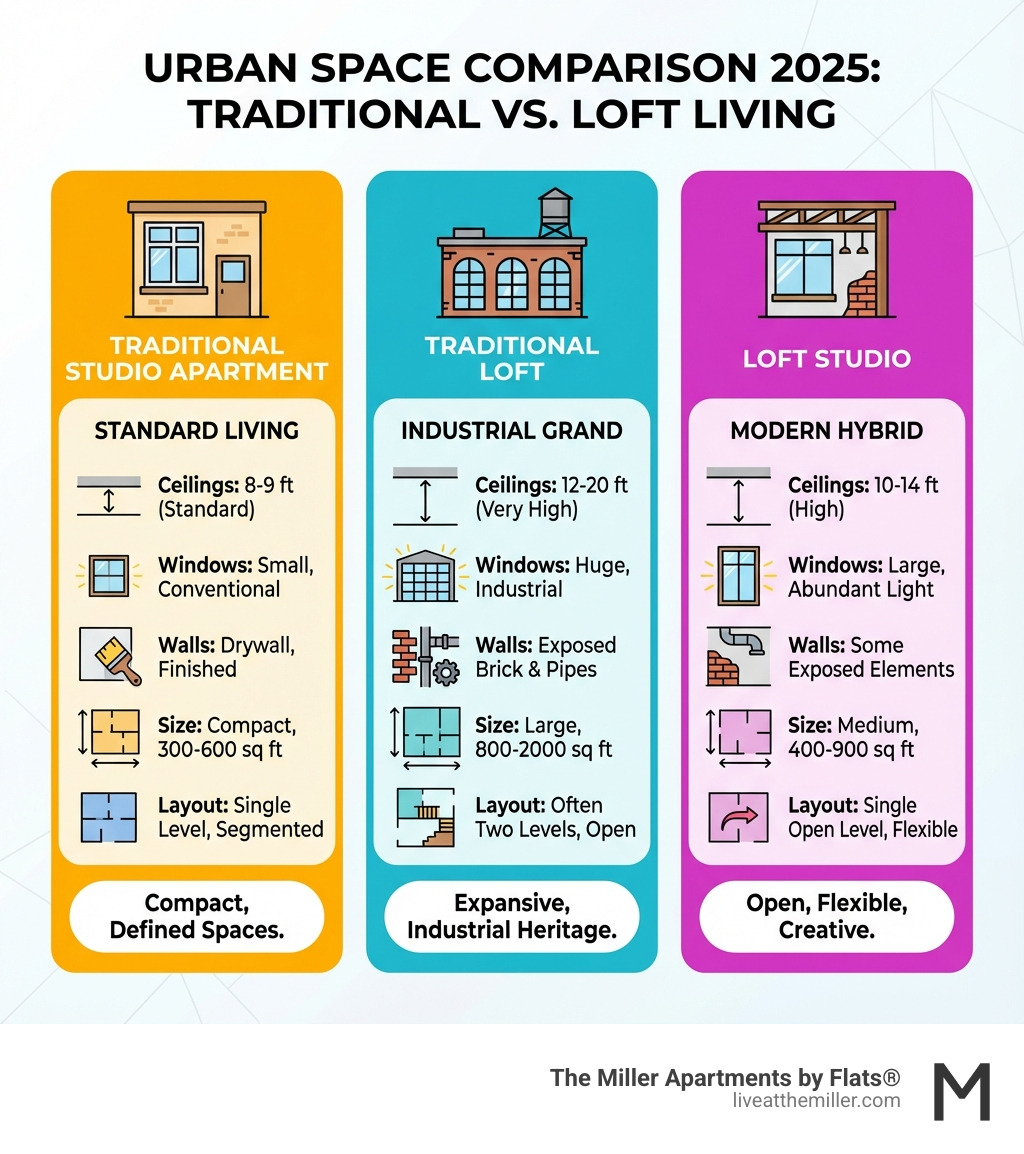
Understanding the differences between a loft studio, a traditional loft, and a standard studio apartment is key to appreciating their unique appeals. While all three offer distinct living experiences, their architectural characteristics set them apart.
| Feature | Traditional Studio Apartment | Traditional Loft Apartment | Loft Studio Apartment |
|---|---|---|---|
| Ceiling Height | Standard (typically 8-9 feet) | Very high (often 12-20 feet) | High (typically 10-14 feet) |
| Window Size | Standard | Large, often floor-to-ceiling | Large, expansive |
| Exposed Elements | Hidden by drywall | Exposed brick, ductwork, pipes, pillars | Some exposed elements (e.g., brick, concrete) |
| Layout | Single main room (bedroom, living, kitchen combined), separate bathroom | Open-concept, often with a second level/mezzanine for sleeping or work | Single, open space (bedroom, living, kitchen combined), separate bathroom |
| Overall Size | Compact and efficient (typically 300-600 sq ft) | Sprawling and airy (often 800-2000 sq ft) | Medium (typically 400-900 sq ft) |
| Construction Style | Conventional residential building | Converted industrial/commercial building | Can be converted or newly constructed with loft aesthetic |
As seen, a loft studio bridges the gap, offering the open-concept feel and aesthetic of a traditional loft but often within a single, more manageable level, similar to a studio apartment.
Key Characteristics of a Loft Studio Space
A loft studio is immediately recognizable by a set of distinct features that contribute to its industrial-chic aesthetic and open, airy feel. These characteristics often stem from the historical origins of lofts, even in modern constructions.
At the forefront are the high ceilings, which are significantly taller than those found in standard apartments. This vertical space creates a sense of grandeur and allows for creative layout possibilities. Complementing these high ceilings are large, expansive windows, often reaching from floor to ceiling. These windows flood the space with natural light, offering an advantage in terms of comfort and ambiance.
The defining characteristic of a loft studio is its open floor plan. There are minimal partitions, meaning the living, sleeping, and kitchen areas often flow seamlessly into one another, with only the bathroom typically enclosed. This open layout fosters versatility and a sense of spaciousness.
Further enhancing the industrial appeal are exposed structural elements. This can include visible brick walls, concrete or wood flooring, and even exposed ductwork or pipes crossing below the high ceiling. These elements celebrate the building's raw materials and history, giving the space a unique character. While traditional studios hide these signs of construction, a loft studio proudly displays them.

The Allure of Open Spaces: Pros and Cons of Loft Studio Living
Choosing a loft studio, whether for residential living or a temporary creative project, is more than just selecting a space; it's embracing a particular lifestyle. The aesthetic appeal of these open, industrially-inspired environments is undeniable, but it comes with its own set of functional trade-offs.
A loft studio provides a Living room that is often the focal point of the entire space.
The Advantages: Why People Love Them
The unique design of a loft studio offers several compelling advantages, making it a popular choice for many:
- Versatility and Flexible Layout: The open floor plan and high ceilings offer immense flexibility in arranging furniture and defining zones. This allows for a space that can easily adapt to different needs, whether for living, working, or entertaining. The height of the ceilings provides many possibilities for layout and decoration, encouraging creative expression.
- Abundant Natural Light: With large, expansive windows, loft studios are often drenched in natural light. This not only creates a bright and welcoming atmosphere but can also positively impact mood and productivity.
- Sense of Spaciousness: Despite potentially being a single room, the high ceilings and open layout contribute to a profound sense of spaciousness and airiness, making the area feel much larger than its actual footprint.
- Unique Character and History: Many loft studios are either housed in converted industrial buildings or are newly constructed with a nod to this historical aesthetic. Exposed brick, concrete, and visible structural elements lend a unique character and charm that traditional apartments often lack.
- Ideal for Creative Projects: The generous space and natural light make loft studios particularly well-suited for artists, photographers, and other creatives. The open canvas allows for large setups and adaptable environments. Learn more about creative layouts in our guide on How to Decorate a Loft-Style Apartment.
The Challenges: Practical Considerations to Keep in Mind
While the appeal of a loft studio is strong, be aware of the potential disadvantages and challenges:
- Lack of Privacy: The open-concept design, while offering spaciousness, inherently reduces privacy. Sound travels easily across the entire space, and there are few walls to create secluded areas. This can be a significant consideration for those sharing the space or who value personal solitude.
- Potential for Higher Utility Usage: The high ceilings and large windows, while aesthetically pleasing, can pose challenges for thermal insulation. Heating or cooling a large, open volume of air can lead to increased utility costs, as the space may take longer to reach and maintain a comfortable temperature.
- Storage Solutions: Unlike traditional apartments with built-in closets and cabinetry, loft studios often come with a lack of integrated storage. This necessitates creative solutions like freestanding units, modular shelving, or careful decluttering. For those with many personal belongings, off-site storage might even become a consideration.
- Noise Travel: In an open environment, noise from within the apartment or from neighbors can travel more freely. This can impact the quiet enjoyment of the space, especially in urban settings.
- Finding Suitable Decor for Large Walls: The expansive, uninterrupted walls of a loft studio can be daunting to decorate. Standard-sized artwork might look lost, requiring larger pieces or creative wall arrangements to achieve balance and visual interest. Large windows can also pose privacy issues and make finding suitable window coverings challenging and costly.
From Blank Canvas to Creative Hub: Utilizing Your Loft Studio
A loft studio is inherently a multi-purpose space, offering a versatile environment that can transition seamlessly from a cozy living area to a dynamic creative hub. Its open layout is a blank canvas, inviting occupants to define and redefine its purpose as needed. This adaptability is part of its core appeal, especially for those seeking spaces that inspire creativity and productivity.

A Space for Living and Entertaining
For residential use, a loft studio requires thoughtful planning to create distinct functional zones without traditional walls. This is achieved through clever interior design strategies:
- Defining Zones with Furniture: Large area rugs can effectively delineate living, dining, and sleeping areas, grounding each space and providing visual separation. For example, a plush rug under a sofa and coffee table clearly marks the living room. Similarly, a distinct dining table and chairs can create a dedicated eating area.
- Using Rugs to Create Areas: Beyond defining zones, rugs also add warmth, texture, and acoustic dampening to a large, open space. They help to absorb sound, making the loft studio feel more intimate.
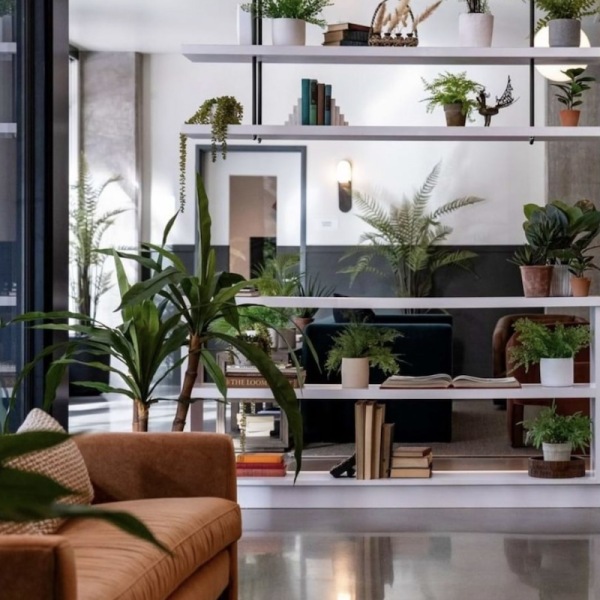
- Strategic Furniture Placement: Using the back of a sofa or a tall bookcase as a subtle room divider can create privacy for a sleeping area or define a home office nook. Freestanding islands or separate cabinets can provide much-needed storage and counter space in a Kitchen area that might lack extensive built-in cabinetry.
- Harmonious Decor: To unify the open space, choosing harmonious patterns and colors across different zones is essential. This creates a cohesive flow and prevents the space from feeling disjointed.
- Modern Studio Apartment Ideas: For more inspiration on how to maximize and style your open space, explore Modern Studio Apartment Ideas and our Apartment Design Ideas Complete Guide.
A Space for Creating: Photography, Film, and Events
Beyond residential living, the architectural features of a loft studio make it an ideal setting for a myriad of creative and professional endeavors. These spaces are specifically designed with versatility in mind, catering to various needs:
- Photography Studio: The abundant natural light, high ceilings, and often neutral backdrops (like exposed brick or plain walls) are perfect for photo shoots, including portraits, product photography, and branding sessions. Many rental loft studios come equipped with professional lighting gear and backdrops.
- Film Set: The open layout provides ample room for camera setups, lighting, and sound equipment, making it suitable for film shoots, interviews, and video podcasts.
- Event Space: For intimate gatherings, workshops, or small corporate events, a loft studio offers a stylish and adaptable venue. Its unique aesthetic often requires minimal additional decoration.
- Co-working: The spaciousness and inspiring environment can also serve as an excellent co-working space for freelancers or small teams.
- Potential Uses:
- Branding photoshoots and content creation
- Video podcasts and film shoots
- Product launches and castings
- Pop-up shops and workshops
- Small, intimate events like baby showers, masterminds, and yoga classes
- Engagement photoshoots and small gatherings
- Dedicated writing studios, designed with creativity in mind
The blend of industrial style and modern amenities in a loft studio provides an inspiring backdrop for any creative or professional pursuit. For more design tips, check out our Industrial Style Apartment Design Tips.
How to Choose and Book the Perfect Loft Studio
Whether you're looking to rent a loft studio for a creative project or seeking one as your new home, several key considerations will guide your choice. Focusing on location, amenities, and understanding booking policies will ensure you find a space that perfectly meets your needs. In locations like Vancouver, WA, loft studios are increasingly sought after for their blend of modern design and urban convenience.
Key Features and Amenities to Look For
When selecting a loft studio, especially for professional use, a detailed assessment of its features and available amenities is crucial:
- Natural Light Direction and Quality: For photographers and filmmakers, understanding the window orientation (e.g., east, north-facing) and how light changes throughout the day is paramount. Some studios offer V-Flats to control and bounce natural light.
- Included Equipment: Many rental loft studios provide a range of equipment, such as studio strobes with modifiers, continuous lights, light stands, C-stands, reflectors, and seamless paper backdrops. Inquire about what's included to avoid bringing your own or incurring additional rental costs.
- Available Props and Furniture: Check if the studio offers a selection of props, furniture, or unique textures (like exposed brick walls) that can be incorporated into your project. Some might even offer specialized systems, such as a Replica Surfaces System for product photography.
- Green Room or Prep Area: A dedicated space for wardrobe, hair, and makeup, often referred to as a "Green Room," can be invaluable for larger productions. This area might also serve as an additional shooting space.
- Kitchenette Facilities: Access to a kitchenette, microwave, or refrigerator can be very convenient for longer shoots or events, allowing for catering or meal prep.
- Parking and Accessibility: Especially in urban areas like downtown Vancouver, WA, understanding parking options (dedicated spots, street parking, loading zones) and accessibility (elevators, ramps) is important for logistical planning.
Understanding Rental Policies and What to Expect
Booking a loft studio for an event or photoshoot involves more than just selecting the space; it requires a clear understanding of the rental policies:
- Hourly Rates and Booking Minimums: Rental loft studios are typically booked by the hour, often with a minimum booking length. Rates can vary based on weekdays versus weekends or peak hours.
- Capacity Limits: Each studio will have a maximum guest capacity. Be sure your planned attendance fits within these limits, as exceeding them can lead to additional fees or cancellation.
- Included Time for Setup and Cleanup: Most rental periods include time for load-in, setup, the actual activity, and cleanup. It's crucial to factor this into your booking duration to avoid rushing or incurring overtime charges.
- Cancellation Policies: Familiarize yourself with the cancellation and rescheduling policies. Many studios offer full refunds within a short window after confirmation or allow rescheduling if done more than 24 hours in advance, but reservations may be non-refundable otherwise.
- Rules on Noise and Furniture: Studios often have specific house rules regarding noise levels, especially if located in a multi-tenant building. Policies on moving furniture and props are also common; typically, items should be picked up, not dragged, and returned to their original positions.
- Cleaning Responsibilities: While some studios offer cleaning services for a fee, renters are usually expected to tidy the space, sweep used areas, wash dishes, and take out trash if bins are full. Specific restrictions on materials like glitter or paint, and associated cleaning fees, should also be noted.
- Security Cameras: Some studios may have security cameras in main areas. Understanding their presence and any rules regarding tampering is important.
Frequently Asked Questions about Loft Studios
What is the main difference between a loft and a studio?
The primary distinction between a traditional loft and a standard studio apartment lies in their architectural characteristics and layout. A traditional loft is typically characterized by its industrial origins, featuring exceptionally high ceilings, expansive windows, exposed structural elements like brick walls or ductwork, and often includes a second level or mezzanine that overlooks the main living space. These spaces are usually quite large, stemming from converted factories or warehouses.
In contrast, a standard studio apartment is generally a smaller, single-room dwelling with conventional ceiling heights and windows. All primary functions—living, sleeping, and cooking—are combined within this one main room, with only the bathroom being a separate, enclosed space.
A loft studio blends these concepts. It maintains the aesthetic appeal of a loft, boasting high ceilings (typically 10-14 feet), large windows, and some exposed architectural details. However, like a studio, it usually comprises a single, open level rather than a multi-level layout, offering a spacious yet contained environment.
Are loft studios difficult to furnish?
Furnishing a loft studio can present unique challenges due to its open space, high ceilings, and often large, uninterrupted walls, but it also offers immense creative opportunities. The key is to approach it strategically.
- Defining Zones: Without physical walls, it's crucial to define functional areas (living, sleeping, dining) using furniture placement. Placing a sofa to create a natural boundary for a living area, or using a tall shelving unit as a divider, can effectively create distinct zones.
- Using Rugs: Area rugs are invaluable in a loft studio. They not only anchor furniture groupings but also visually delineate different areas, adding warmth and texture to vast expanses of concrete or wood flooring. Using large rugs can make the space feel more welcoming and cozy.
- Utilizing Vertical Space: The high ceilings are an asset. Employ tall bookcases, floor-to-ceiling curtains, or large-scale artwork to draw the eye upwards and make the most of the vertical dimension.
- Storage Solutions: Due to the often minimalist design, loft studios may lack built-in storage. Opt for furniture with integrated storage, freestanding wardrobes, or modular shelving systems. For those with many personal belongings, a careful decluttering process might be necessary, as living in a smaller, open space often encourages greater organization.
For more ideas and inspiration on how to make the most of your open-concept living, check out our guide on Apartment Ideas.
What should I look for when booking a loft studio for a photoshoot?
When booking a loft studio for a photoshoot, several factors are critical to ensure the space meets your specific creative needs:
- Natural Light Quality and Direction: This is often paramount for photographers. Inquire about the studio's window orientation (e.g., east-facing for morning light, north-facing for consistent, soft light) and how the natural light behaves throughout the day. Some studios offer tools like V-Flats to help control and bounce light effectively.
- Variety of Backdrops and Textures: Look for diverse options within the studio, such as exposed brick walls, plain white walls, textured surfaces, or a selection of seamless paper backdrops. This provides versatility for different shots and moods.
- Included Lighting Equipment: Confirm what professional lighting gear is provided. This might include studio strobes, continuous lights, various modifiers (softboxes, umbrellas), and light stands. Having these readily available can save you time and the hassle of transporting your own equipment.
- Props and Furniture: Check if the studio offers a selection of aesthetically pleasing props or furniture that complements its style. This can significantly improve your set design without needing to bring external items.
- Green Room or Prep Area: For shoots requiring wardrobe changes or hair and makeup, a dedicated Green Room or a separate prep area is highly beneficial.
- Acoustics and Noise Control: While open spaces are great for visuals, they can sometimes be challenging for audio. If your shoot involves video or sound recording, inquire about the studio's acoustics and any potential external noise.
- Studio Policies: Understand policies regarding moving furniture, capacity limits, the use of special effects (like smoke machines), and cleanup expectations to ensure a smooth and compliant session.
Conclusion
The loft studio represents a compelling intersection of history, design, and functionality, offering a unique living and working environment that stands out from conventional spaces. Its appeal lies in the harmonious blend of industrial character—seen in its high ceilings, expansive windows, and exposed elements—with the adaptability required for modern living and creative pursuits. Whether as a residential apartment or a dynamic rental space for photography, film, or events, the loft studio provides a versatile canvas for personal expression and professional endeavors.
For those seeking a space that embodies this blend of industrial charm and contemporary sophistication, exploring communities that honor this aesthetic is the next step. At The Miller Apartments, located in the vibrant Vancouver Waterfront neighborhood of Vancouver, WA, residents find luxury apartments that seamlessly integrate modern design with the city's rich industrial history. With amenities designed for wellness and community, The Miller offers a unique living experience where convenience, comfort, and sophistication converge in a prime location.
If the allure of open spaces, abundant natural light, and a distinctive urban aesthetic resonates with you, then a loft studio might just be your perfect match. Find modern design apartments at Discover modern design apartments and find a space that truly inspires.