

What Is a Garden Level Apartment?
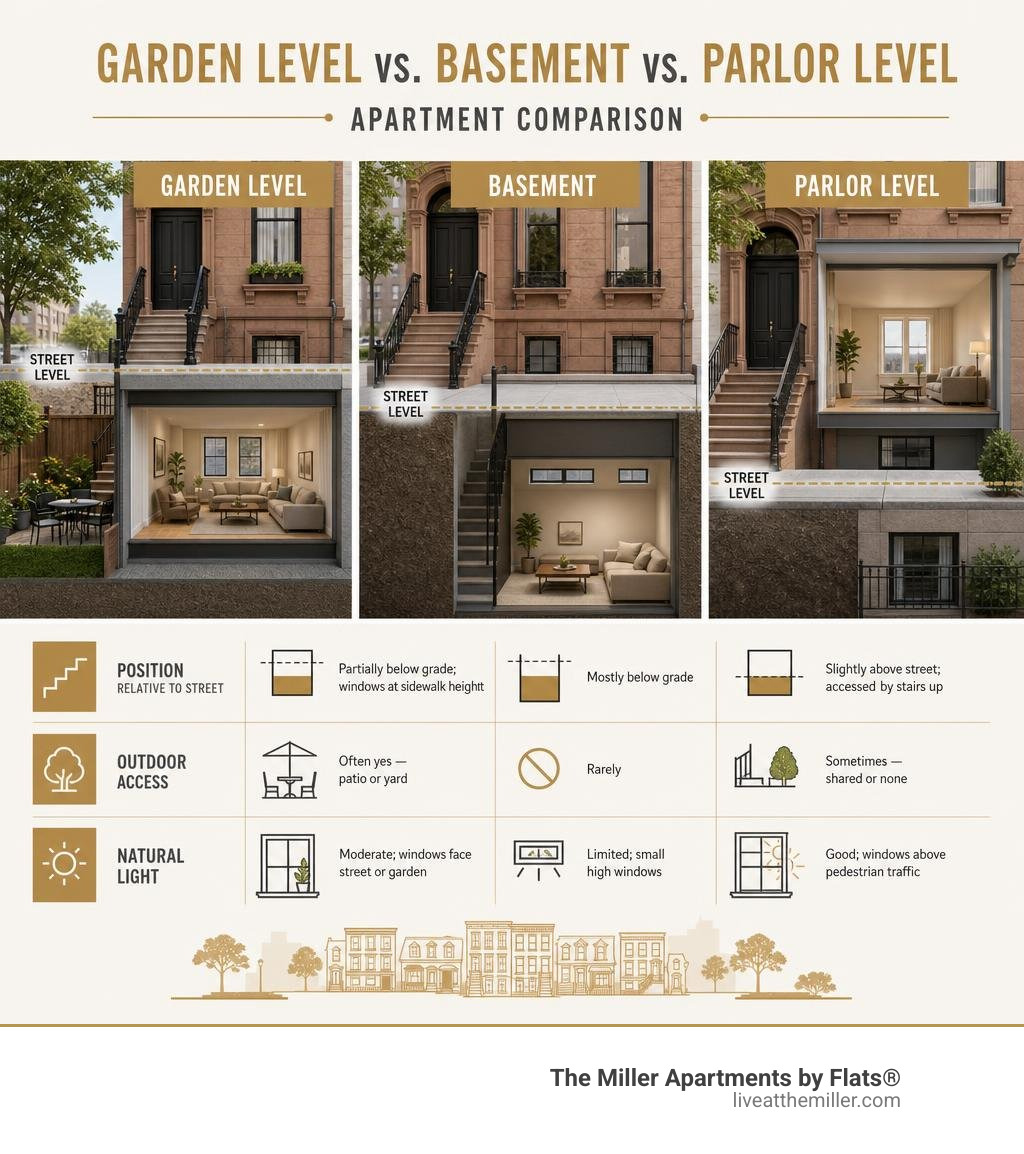
Garden level apartments are units positioned partially below street grade - typically between a basement and the first floor - with windows that sit at or near sidewalk level and direct access to outdoor space like a patio or yard.
Here is a quick breakdown of how they compare to similar apartment types:
| Apartment Type | Position Relative to Street | Outdoor Access | Natural Light |
|---|---|---|---|
| Garden Level | Partially below grade; windows at sidewalk height | Often yes - patio or yard | Moderate; windows face street or garden |
| Basement | Mostly below grade | Rarely | Limited; small high windows |
| Parlor Level | Slightly above street; accessed by stairs up | Sometimes - shared or none | Good; windows above pedestrian traffic |
The concept has a longer history than most people realize. The term "garden apartment" was first used in 1917 by the Queensboro Corporation in Jackson Heights, Queens - originally referring to low-rise complexes built around shared green space. Over time, the label evolved to describe individual ground-floor units with direct backyard or patio access in brownstones and townhouses across cities like New York.
Today, the appeal is real but so are the trade-offs. A garden level unit can mean a private outdoor space, easier entry, and cooler summer temperatures. It can also mean less natural light, more moisture, and street-level privacy concerns.
Whether that trade-off works for you depends on your lifestyle, your priorities, and knowing exactly what to look for before you sign a lease.
Understanding Garden Level Apartments
When navigating the rental market, terminology can easily become confusing. Ground floor, walk-in level, below-grade, and garden level are often tossed around interchangeably by housing providers. However, a true garden level apartment has distinct structural characteristics that set it apart from other configurations.
To understand these units, it helps to look at how they sit relative to the curb level. In architectural terms, "below-grade" simply means that a portion of the living space sits below the level of the surrounding ground. A garden level unit is typically a walk-in level residence where the floor is slightly lower than the street, but the windows are still large enough to sit fully above the ground line.
This layout offers a unique perspective on the surrounding environment. Instead of looking down at the street from a high vantage point, residents view the world at eye level with the sidewalk landscaping, grass, and garden beds. This specific orientation can make a home feel deeply connected to the outdoors, provided the interior layout is optimized correctly. For a closer look at how below-grade layouts can be maximized for comfort, you can read this Basement Apartment Layout Guide.
Garden Level Apartments vs. Basement Units
The distinction between a garden level unit and a standard basement apartment comes down to elevation, legal definitions, and structural layout.
In many municipal building codes, a clear line is drawn between a basement and a cellar:
- Basement: A story of a building that is partly below curb level, but has at least half of its clear height above the established curb level. Because of this height, basements can legally be rented as residential living spaces, provided they meet local egress and safety requirements.
- Cellar: A space that has more than half of its height below the curb level. Under standard housing codes, cellars are deemed unsuitable for primary residential occupancy and cannot legally be rented as apartments.
A garden level apartment sits higher than a traditional basement. Because more of the unit is above the ground, the windows are substantially larger, allowing for better ventilation and more natural light. Furthermore, true garden units are defined by their direct physical connection to an outdoor area, whereas basement units are often fully enclosed with no direct patio access. To explore the historic charm and design of ground-level homes, check out this guide on Beautiful Garden Homes in NYC.
Garden Level Apartments vs. Parlor Level Units
In classic townhouse and brownstone architecture, the parlor level refers to the first floor that sits elevated above the street, typically accessed by climbing a short flight of outdoor stairs (often called a stoop).
Historically, the parlor level was the grandest floor of the building, featuring the highest ceilings, the largest windows, and the formal reception rooms. In contrast, the garden level sat directly underneath the parlor floor. It originally housed the service entrance, the kitchen, and informal dining areas because of its easy, stair-free access to the street and the rear yard.
Today, this historical layout means that choosing between a parlor level and a garden level unit involves weighing different architectural benefits:
- Access: Parlor units require climbing stairs to enter, while garden units offer a walk-in entry with few or no steps.
- Ceiling Height: Parlor floors boast soaring ceilings, while garden levels tend to have more modest, cozy ceiling heights.
- Outdoor Space: While parlor residents must walk downstairs to reach a yard, garden level residents often enjoy direct, private access right through their back door.
The Benefits of Ground-Level Living
Living close to the earth comes with a distinct set of practical advantages that upper-floor residents rarely experience. For those who prioritize convenience, outdoor connection, and temperature regulation, a ground-level home can be an ideal fit.

One of the most significant draws of a garden level apartment is the direct outdoor access. Having a private or semi-private patio, courtyard, or garden bed allows residents to easily engage in container gardening, dine alfresco, or simply step outside for fresh air without navigating corridors, stairwells, or elevators. For individuals who enjoy cultivating plants or hosting small outdoor gatherings, this feature is highly desirable. To learn more about maximizing your personal green space, read our Apartments Outdoor Spaces Guide.
Additionally, these units are highly popular among pet owners. Standard rental buildings often make pet ownership challenging due to the need to navigate long hallways and elevators multiple times a day. A ground-floor layout simplifies daily routines, making it incredibly easy to step outside. While pet policies vary by property, a limit of up to two pets is common, and the walk-in nature of these apartments makes managing companion animals much more convenient.
Another notable benefit is natural climate control. Because garden level apartments are partially nestled into the earth and shaded from direct, overhead sunlight, they naturally remain much cooler during the warm summer months. This natural insulation can significantly reduce the reliance on air conditioning, leading to more manageable utility bills during seasonal temperature spikes.
Finally, accessibility is a major factor. Moving heavy furniture, carrying groceries, and managing daily commutes is inherently simpler when there are no stairs or elevators to worry about. For anyone managing mobility challenges or simply seeking a more streamlined daily flow, the walk-in level of a garden apartment offers unmatched convenience.
Potential Drawbacks and How to Mitigate Them
While the benefits of ground-level living are appealing, prospective residents must also consider the unique challenges that come with living closer to the street and the soil. Fortunately, with the right strategies, most of these issues can be easily managed.
Light and Privacy
Because these units sit lower than upper-floor apartments, they naturally receive less direct sunlight. This can sometimes result in a darker interior atmosphere. Additionally, because windows sit near sidewalk height, pedestrians walking by may have a direct line of sight into the home.
- Mitigation: To maximize ambient light without sacrificing your privacy, consider using static-cling window film. This allows natural light to filter through while completely obscuring the view from the outside. Utilizing sheer cafe curtains is another excellent strategy, as they block the lower portion of the window while leaving the top open to the sky. Inside, hanging large mirrors opposite windows will help bounce light throughout the rooms. For more design inspiration on bright interiors, see our guide on Apartments with Natural Light.
Moisture and Humidity
Being partially below-grade means that garden level homes are more susceptible to dampness, high humidity, and potential water intrusion during heavy rainfall.
- Mitigation: Investing in a high-quality dehumidifier is a simple and highly effective way to maintain comfortable indoor humidity levels and prevent musty odors. Ensuring that furniture is kept slightly away from exterior walls also promotes healthy air circulation. When touring a property, always check the exterior grading and gutters to ensure that rainwater is directed away from the building foundation.
Pest Management
Proximity to soil and outdoor foliage means that ground-level units are naturally more accessible to common household pests like ants, spiders, and occasional rodents.
- Mitigation: Preventing pests is primarily a matter of sealing entry points and maintaining consistent cleanliness. Residents should use silicone caulk or weatherstripping to seal any small gaps around windows, doors, and baseboards. It is also wise to inquire about the building's professional extermination schedule to ensure regular, preventative maintenance is performed.
What to Look for During an Apartment Inspection
Before committing to a garden level apartment, performing a thorough, targeted inspection is essential. Because these units interact directly with the ground, certain details require closer scrutiny than they would on higher floors.
Use the following checklist to evaluate key structural and safety features during your walk-through:
| Feature to Inspect | What to Look For | Why It Matters |
|---|---|---|
| Water Damage & Mold | Peeling paint, musty odors, water stains along baseboards, or soft drywall. | Indicates past or ongoing moisture issues that can affect indoor air quality. |
| Ceiling Height | Measure the clearance; ensure it feels open and meets local building codes. | Low ceilings can make a below-grade space feel cramped and restrict light flow. |
| Window Integrity & Bars | Ensure window locks are robust; check for secure, well-installed security bars. | Crucial for street-level security and peace of mind. |
| Drainage Systems | Look for street-level gutters, catch basins, or sump pumps near the entryway. | Prevents pooling water and potential flooding during heavy rainstorms. |
| Cell Reception | Check your mobile signal strength in every room of the apartment. | Thicker below-grade walls can sometimes block cellular signals. |
Evaluating these details beforehand ensures that your living experience will be comfortable and worry-free. For additional tips on arranging and optimizing your space once you move in, refer to our Apartment Design Ideas Complete Guide.
Frequently Asked Questions about Garden Level Living
Are garden level apartments safe?
Yes, garden level apartments can be entirely safe places to live. Because they are located at street level, safety is a common consideration for prospective residents. Most professional housing providers equip these units with heavy-duty window locks, security bars, or reinforced entry doors. Residents can further enhance their peace of mind by installing smart security cameras, utilizing privacy window films, and ensuring that outdoor patio areas are kept well-lit at night.
Do garden level apartments have more pests?
While ground-level homes are closer to natural pest habitats, a well-maintained building should not have significant pest issues. Pest control is largely a reflection of overall building maintenance, proper sealing of foundation cracks, and regular professional extermination services rather than just the floor level itself. Regular cleaning, sealing food in airtight containers, and keeping exterior doors closed will keep pests at bay.
Are garden level apartments damp?
They can be more prone to higher humidity levels due to their proximity to the ground. However, modern construction techniques, proper foundation insulation, and active ventilation systems mitigate this issue effectively. Utilizing a personal dehumidifier and maintaining consistent indoor heating and cooling will keep the air feeling fresh and dry year-round.
Conclusion
A garden level apartment offers a unique opportunity to enjoy the convenience of walk-in living, direct connection to outdoor spaces, and natural temperature regulation. While there are natural trade-offs like reduced direct sunlight and street-level privacy considerations, these challenges are easily managed with thoughtful design choices and proactive maintenance.
If you are looking for a living experience that seamlessly blends modern sophistication with exceptional comfort, consider exploring your options at The Miller Apartments by Flats. Located in the vibrant Vancouver Waterfront neighborhood of Vancouver, WA, our community offers luxury residences designed with a nod to the area's rich industrial history.
With premium wellness amenities including an on-site day spa, a state-of-the-art fitness center, and a collaborative coworking lounge, living here emphasizes both relaxation and community. Ready to find your perfect layout? Explore Floor Plans today to discover a home that perfectly complements your lifestyle.