

Why Basement Apartment Layout Planning Matters
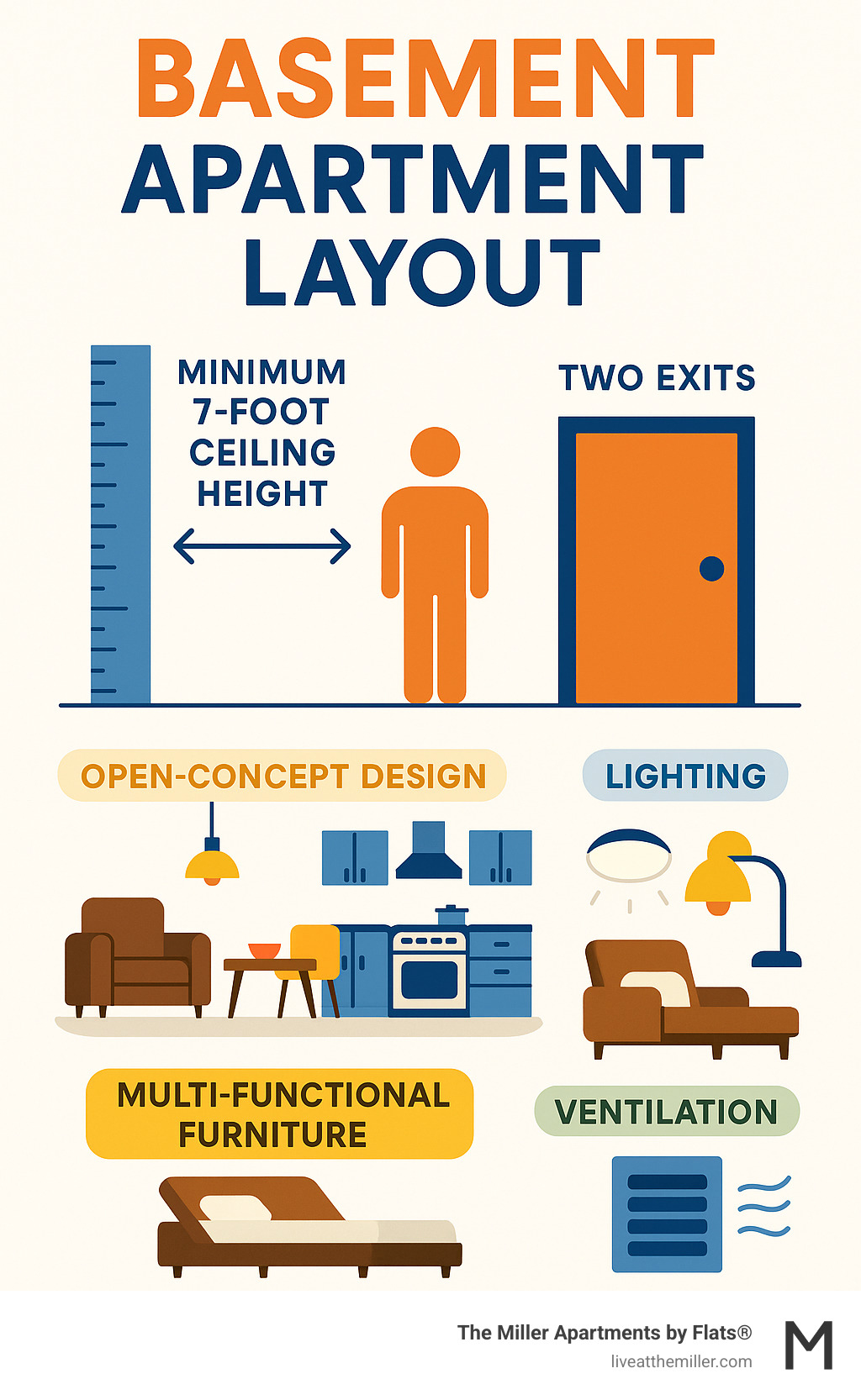
A well-designed basement apartment layout can transform an underused space into a comfortable, functional living area that adds significant value to your property. Key essentials for a successful layout include ensuring a minimum 7-foot ceiling height (check local codes), providing two separate exits for safety, and using an open-concept design to maximize perceived space. Strategic lighting, multi-functional furniture, and proper ventilation are also crucial.
A smart layout that addresses the unique challenges of below-grade living can significantly boost a home's value. Successful basement apartments often feature open-concept designs that combine living, dining, and kitchen areas. This approach maximizes natural light and creates the illusion of more space, which is vital in compact basements. Modern layouts also prioritize flexibility, using furniture and area rugs for room division rather than permanent walls to maintain an airy feel.
Foundations of a Functional Layout: Codes, Comfort, and Considerations
A successful basement apartment layout starts with addressing the unique challenges of below-grade spaces, such as moisture, lighting, and safety requirements. Addressing these issues open ups flexible use potential that can improve a property's value and functionality.
Moisture control is the first priority. Sealing foundation cracks, installing proper drainage, and using moisture-resistant materials are essential. Next, focus on ventilation to ensure fresh air circulation for a healthy environment. A well-executed basement conversion can offer a compelling return on investment, as noted in reports like the Cost vs. Value report. For design ideas, see how contemporary principles work in basement settings by exploring more info about modern design apartments.
Key Elements of a Functional Basement Apartment Layout
Every functional layout requires several non-negotiable elements.
- A separate entrance is often legally required and provides privacy.
- The kitchen can range from a compact kitchenette to a full-sized setup, but proper ventilation is key.
- A full bathroom with a toilet, sink, and shower or tub is a standard requirement.
- The living area should be welcoming, often integrated into an open-concept design.
- The sleeping area, whether a separate room or a nook, benefits from proximity to a window for light and air.
- Natural light access is critical. Maximize it with large egress windows and strategic design.
Comparing Layouts: Studio vs. One-Bedroom Basement Apartment Layout
Choosing between a studio and a one-bedroom layout depends on square footage, budget, and intended use.
- Studio Layouts (375-550 sq ft): These maximize the feeling of open space. Pros include lower construction costs and better light distribution. The main con is limited privacy. Studios are well-suited for individuals, short-term rentals, or guest suites. See examples of efficient design in studio apartments in Vancouver WA.
- One-Bedroom Layouts (550-1000+ sq ft): These offer clear separation between living and sleeping areas. Pros include greater privacy and defined zones. Cons include higher construction costs and the need for more space. They are ideal for long-term rentals or in-law suites.
Navigating Building Codes and Living Requirements
Building codes are legal requirements for safety and comfort.
- Ceiling Height: A 7-foot minimum is typical.
- Egress Requirements: Two exits are mandatory for safety, usually a main entrance plus properly sized egress windows in bedrooms.
- Plumbing Stacks: Positioning the kitchen and bathroom near existing plumbing lines can significantly reduce installation costs.
- Electrical Panel Upgrades: Adding an apartment often requires upgrading the electrical panel to handle the increased load.
- Local Zoning Laws: Check municipal regulations for secondary suites, which may have rules on parking, occupancy, and entrances.
Maximizing Space with a Smart Basement Apartment Layout
Working with a basement space can feel like solving a puzzle, but perceived limitations can become opportunities for innovative design. The secret to a successful basement apartment layout is embracing the space's unique characteristics.

Open-concept living transforms a compact basement into a space that feels surprisingly spacious by removing visual barriers between the kitchen, living, and dining areas. This borrows square footage from each area to benefit the whole.
Strategic room division creates distinct areas for different activities without blocking light and air. Furniture arrangement is key; leave at least 18 inches between pieces and 30 inches for main walkways to ensure comfortable traffic flow. For inspiration on modern living spaces, explore more info about studio apartments in Vancouver WA.
Embracing the Open-Concept
The open-concept approach is effective in basements as it addresses limited space and light. Combining the kitchen, living, and dining areas creates a modern, social environment that feels larger than its dimensions.
- Creating Zones: Use furniture placement to define zones without walls. A sofa can create a conversation area, while a dining table near the kitchen establishes an eating zone.
- Area Rugs: Rugs are excellent for defining spaces, such as anchoring a seating area to designate it as the living room. They also add warmth to basement floors.
- Furniture Placement: Position large pieces where they won't block natural light. Choose furniture proportional to the space to avoid a cramped feeling.
- Maximizing Light Flow: An open design allows light from a single window to illuminate the entire living space.
Strategic Room Division Without Walls
Create separation while maintaining an open feel with dividers that allow light and air to flow.
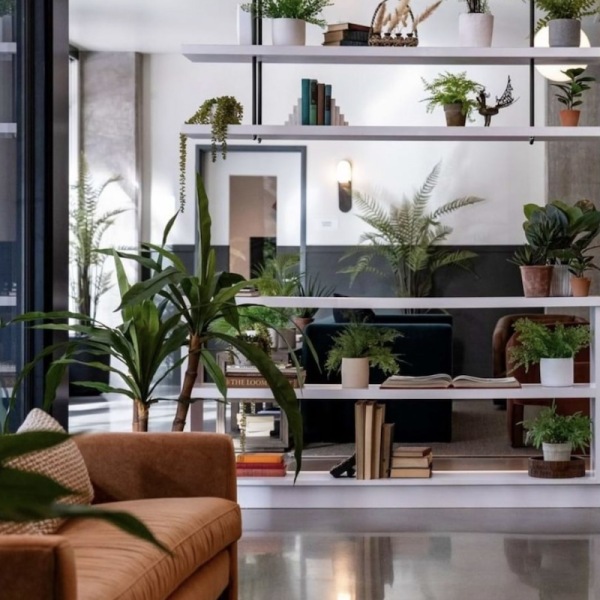
- Bookshelves: Open-backed bookshelves can separate areas while providing storage and maintaining light flow.
- Sliding Barn Doors: These are stylish and save floor space, making them ideal for bathrooms or bedrooms.
- Curtains: Hung from ceiling tracks, curtains offer flexible, instant privacy.
- Folding Screens: These offer ultimate flexibility and can be moved or stored as needed.
- Glass Partitions: A more permanent option, glass provides sound separation while keeping the space feeling open and bright.
Design and Decor: Making it Bright and Inviting
With thoughtful design, a basement apartment layout can be transformed from a dark space into a bright, cozy home. The goal is to create an illusion of spaciousness and warmth to counteract the below-grade environment. The strategic use of color, lighting, and reflective surfaces work together to make the space feel larger and more welcoming. For more inspiration, exploring more info about modern apartment living room design can offer valuable insights.

The Power of Color and Light
Color choices dictate the perceived size and mood of a basement apartment.
- Light Color Schemes: Use a light color palette for walls, ceilings, and large furniture. Whites, pastels, and light neutrals reflect light, making the space feel larger and brighter. They create a calm, cohesive atmosphere and provide a versatile backdrop for decor.
- Accent Colors: Use saturated colors as accents through pillows, artwork, or small decor to add personality without overwhelming the space.
- Maximizing Natural Light: Keep window treatments minimal, such as sheer curtains, to maximize available light. Enlarging windows where code permits can make a significant difference.
Effective Lighting Strategies
Artificial lighting is a critical design element. A layered approach creates depth, warmth, and functionality.
- Ambient Lighting: Recessed lights are ideal for low ceilings, providing general illumination with a clean look. Wall sconces add a soft, warm glow.
- Task Lighting: Use pendant lights over kitchen islands or dining areas, and under-cabinet lights in the kitchen. Reading lamps and desk lamps are also essential for specific activities.
- Layered Lighting: Combine ambient, task, and accent lighting to create a dynamic environment. Dimmable lights are highly beneficial for adjusting brightness and mood.
Using Mirrors and Furniture to Create Space
Mirrors and carefully selected furniture can make a small layout feel larger.
- Multi-functional Furniture: In compact spaces, furniture should serve multiple purposes. Consider sofa beds, ottomans with storage, wall-mounted desks or shelves, and foldable tables to save space.
- Mirrors: Placing a large mirror opposite a window or light source amplifies light and makes the room appear brighter. Mirrors also create an illusion of depth, making a small room feel wider. Clear glass storage units can also improve the feeling of openness.
Practical Solutions for Comfort and Livability
A successful basement apartment layout prioritizes long-term comfort and livability. This involves practical considerations like storage, durable flooring, and soundproofing to create a peaceful and healthy living environment.

Smart Storage and Organization
Efficient storage is paramount to keeping a small space feeling organized and spacious.
- Built-in and Vertical Storage: Use built-in shelving and tall, narrow storage units to maximize vertical space without taking up floor area.
- Under-Stair Storage: This often-overlooked area is ideal for pull-out drawers, cabinets, or open shelves.
- Open Shelving: In kitchens, open shelving can make the space feel more expansive than bulky upper cabinets.
- Hidden Storage Furniture: Use ottomans with lift-up tops, beds with built-in drawers, and coffee tables with concealed compartments.
Best Flooring and Soundproofing Options
Flooring in a basement needs to be moisture-resistant, comfortable, and ideally help with sound control.
- Durable Flooring: Luxury vinyl plank (LVP) offers excellent moisture resistance and durability with a wood or stone look. Engineered hardwood can also work in some basements. Ceramic or porcelain tile is highly durable and moisture-resistant, perfect for bathrooms and kitchens.
- Area Rugs: Essential for any flooring type, area rugs add warmth, absorb sound, and help define zones in an open-concept layout.
- Soundproofing: Insulate walls, ceilings, and around pipes to reduce noise transfer. Sound-dampening drywall is another effective option for creating a quieter environment.
Adding Coziness and Personality
Thoughtful decor can transform a basement into a warm, inviting home.
- Layering Textures: Introduce warmth and visual depth with plush throws, soft rugs, and velvet cushions. These elements also absorb sound.
- Wall Art and Plants: Personalize the space with wall art. Low-light plants like snake plants, ZZ plants, and pothos bring life into the space and can help improve air quality. For households with pets, ensure any plant choices are safe for them. You can find more information on creating a welcoming space for pets by exploring more info about pet-friendly apartments in Vancouver.
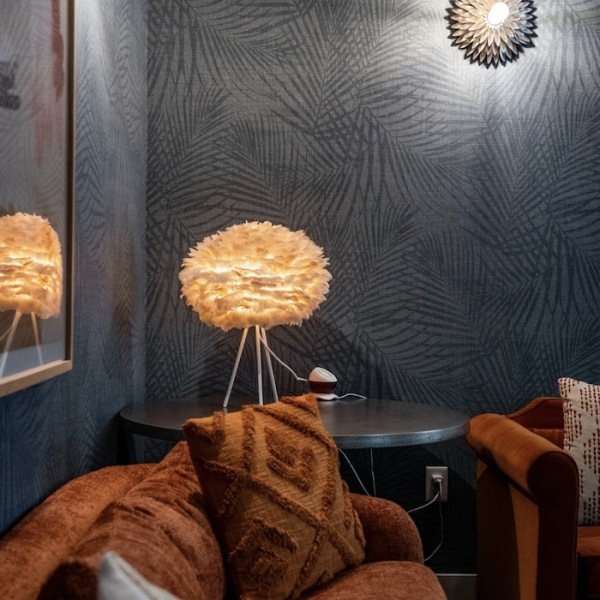
- Personal Touches: Unique lamps, decorative objects, and comfortable seating make a space feel like home.
Frequently Asked Questions about Basement Apartment Layouts
How can I make a small basement apartment feel larger?
To make a small basement apartment layout feel larger, use light colors on walls and ceilings to reflect light. Place large mirrors opposite windows to create an illusion of depth. An open-concept layout removes visual barriers, allowing light to flow freely. Use area rugs and furniture to define zones without building walls. Choose multi-functional furniture like sofa beds and storage ottomans, and use wall-mounted shelves to keep floors clear. Finally, use layered lighting to eliminate dark corners and create a bright, welcoming environment.
What are the most important things to consider before converting a basement?
Before starting a conversion, check local building codes. Most areas require minimum ceiling heights (typically 7 feet) and two separate exits, including egress windows in bedrooms. Moisture control is critical; ensure the space is thoroughly waterproofed. Plan for electrical and plumbing upgrades, as adding a kitchen and bathroom increases the load on your systems. Positioning the new layout near existing plumbing can significantly reduce renovation costs. Also, review local zoning laws for regulations on secondary units, and consider any structural limitations of your home.
How can I improve ventilation and air quality in a basement apartment?
Good air quality starts with moisture control. Use mechanical ventilation, such as exhaust fans in the kitchen and bathroom, to remove moisture at the source. A whole-apartment ventilation system or a dehumidifier can also make a dramatic difference. Use fans to promote strategic air circulation and prevent stagnant air. Maximize natural ventilation by choosing windows that open. Finally, low-light indoor plants like snake plants and pothos can help filter indoor air pollutants while adding life to the space.
Conclusion
Thoughtful planning is the key to a successful basement apartment layout, changing an underused area into a valuable living space. The process involves navigating building codes, managing moisture, and using smart design to maximize light and space. Key strategies include embracing open-concept living, choosing multi-functional furniture, and using a light color palette. With layered lighting, clever storage, and the right flooring, a basement can become just as comfortable and functional as any other part of a home.
Great design has the power to transform daily living and improve comfort. The Miller Apartments offers a look at how thoughtful design comes to life. Explore the community's floor plans to see examples of how efficient and stylish layouts create exceptional living spaces. Explore the floor plans.