

Why Natural Light Transforms Your Living Experience
Apartments with natural light aren't just brighter—they're fundamentally better places to live. Research shows that abundant daylight affects everything from your sleep quality to your productivity, making it one of the most sought-after features in modern rental homes.
What makes apartments with natural light special:
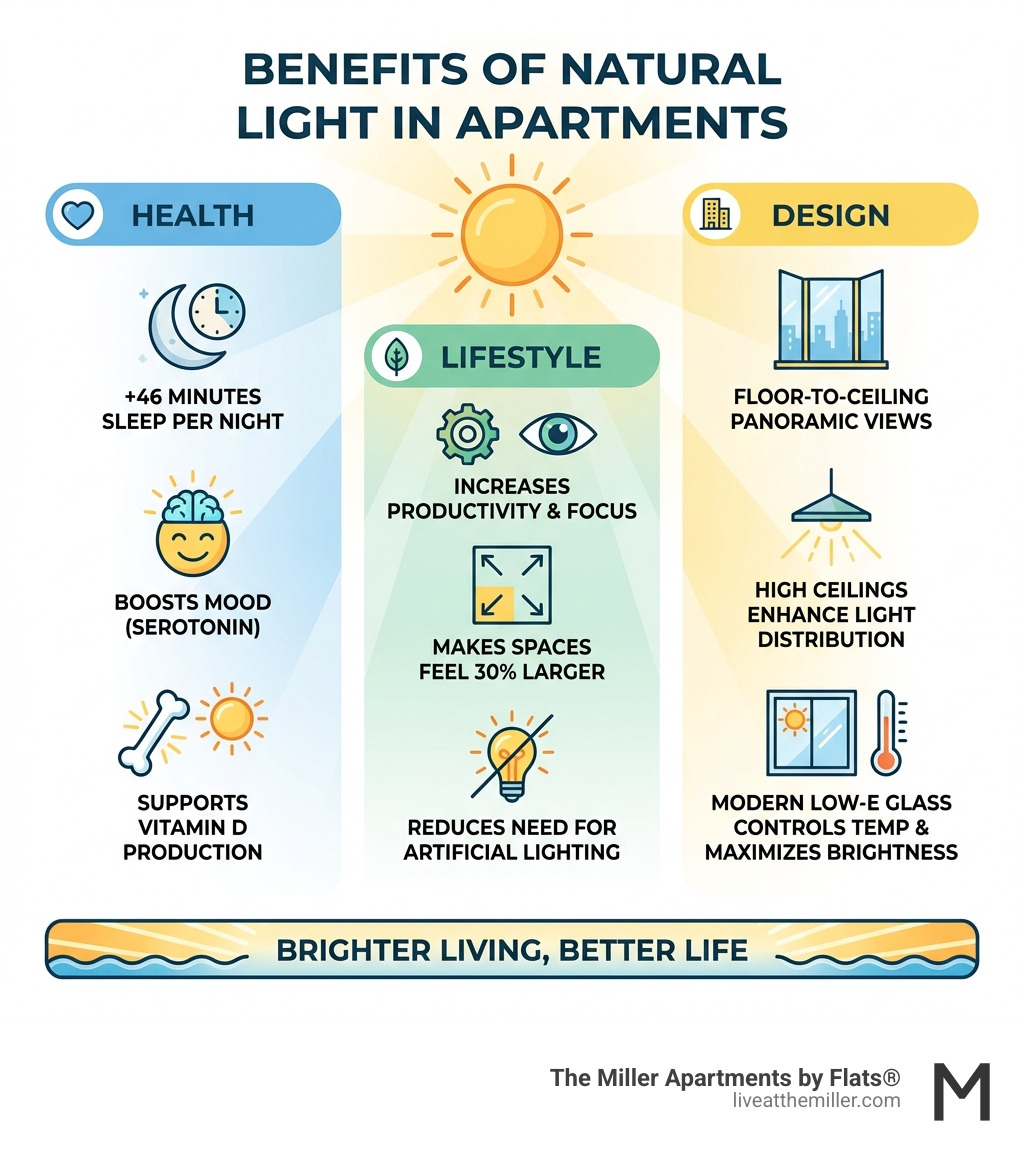
- Health benefits - Workers in offices with windows sleep 46 minutes more per night and receive 173% more white light exposure
- Mood enhancement - Natural light triggers serotonin production, reducing stress and improving mental clarity
- Energy efficiency - Modern Low-E glass and double-glazing maximize light while controlling temperature
- Space perception - Floor-to-ceiling windows make apartments feel up to 30% more spacious
- Premium value - Light-filled units typically command 10-20% higher rental rates due to lifestyle improvement
Over 80% of new luxury apartments in major U.S. cities now feature expansive windows as standard. This isn't just a design trend—it's a response to what renters actually want and need.
The transformation is real. As one resident described it: "I never realized how much artificial lighting was affecting my mood until I moved here. Now I feel more energized during the day and sleep better at night."
Whether you're working from home, practicing yoga in your living room, or simply enjoying your morning coffee, natural light changes how you experience every moment in your space. It's the difference between merely occupying an apartment and truly living in it.
The Science of Sunshine: Why Renters Seek Apartments with Natural Light
The human body is biologically wired to respond to the sun. When individuals choose apartments with natural light, they are doing more than picking a beautiful aesthetic; they are supporting their internal biological clocks. This connection is primarily driven by the circadian rhythm, the internal 24-hour cycle that tells the body when to wake up and when to sleep.
Exposure to natural light early in the day triggers the production of serotonin, often referred to as the "happy hormone." This neurotransmitter is essential for stabilizing mood and promoting a sense of well-being. Furthermore, research published in the Journal of Clinical Sleep Medicine highlights that people who spend their days in sun-drenched environments experience significantly better sleep quality. Without enough daylight, the body may struggle to produce melatonin at night, leading to restlessness.
Beyond the biological benefits, the way light interacts with a home's interior can redefine the living experience. For those interested in how to arrange their furniture to better capture these rays, exploring modern apartment living room design can provide inspiration for creating a layout that feels both open and illuminated.
Health and Wellness in Apartments with Natural Light
Living in a space bathed in sunlight offers a constant, passive wellness boost. The presence of Vitamin D, which the body synthesizes through skin exposure to UV rays, is vital for bone health and immune function. In a home with expansive windows, even indirect sunlight can help maintain these levels.
Luminous views also play a psychological role in reducing stress. The concept of biophilic design—bringing the outdoors in—suggests that seeing the sky, trees, or cityscapes through clear glass creates a sense of expansiveness. This prevents the "boxed-in" feeling often associated with urban living, replacing it with mental clarity and a brighter outlook on the day.
Maximizing Productivity in Apartments with Natural Light
For the modern professional, the home has become the primary office. Productivity levels are closely tied to environmental factors, and light is at the top of that list. Natural light reduces eye strain compared to harsh fluorescent or dim artificial bulbs, allowing for longer periods of focus without fatigue.
A well-lit workspace helps maintain high energy levels throughout the afternoon when many people experience a "slump." By integrating sunlight into the home's functional areas, renters can stay more alert and motivated. For those looking to overhaul their entire living space to better suit a productive lifestyle, a complete guide to apartment design ideas can offer strategies for balancing work and relaxation in a light-filled environment.
Architectural Features That Maximize Daylight
Modern architecture has evolved to prioritize transparency and light. In Vancouver, WA, and beyond, luxury buildings are utilizing specific design elements to ensure that every square inch of a residence feels bright.
One of the most impactful features is the use of floor-to-ceiling windows. These glass walls offer panoramic views and allow light to penetrate deep into the floor plan. To complement these large windows, high ceilings—often reaching 9'6" or higher—create a loft-like atmosphere that encourages light to bounce and distribute evenly.
However, large windows require smart technology to remain comfortable. Engineers use Low-E (low-emissivity) glass and double glazing to manage heat. These coatings reflect infrared light, keeping heat out during the summer and trapping it inside during the winter, all while allowing visible light to pass through. Additionally, open layouts and strategic building orientations facilitate cross-ventilation, ensuring the air stays as fresh as the light is bright. These features are often hallmarks of a modern luxury apartment interior, where sophistication meets functional design.
Understanding Light-Filled Lower Level Spaces
Not all sun-drenched spaces are located on the top floor. A unique option that savvy renters often love is the daylight basement. Unlike a traditional basement that is fully underground and often dark or damp, a daylight basement is partially above ground. This allows for full-sized windows and, in many cases, private entrances that lead directly to the outdoors.
Daylight basements offer a blend of privacy and light that is hard to find in standard units. Because they are partially underground, they stay naturally cooler in the summer, which can lead to more manageable utility costs. Renters should, however, be diligent when inspecting these spaces. It is important to check for proper egress windows (for safety and legality) and ensure the unit has adequate ventilation and moisture control to prevent humidity buildup.
| Feature | Traditional Basement | Daylight Basement |
|---|---|---|
| Light Levels | Minimal to none | Abundant natural light |
| Windows | Small, high "window wells" | Full-sized, standard windows |
| Access | Internal stairs only | Often includes a private exterior door |
| Temperature | Consistently cold | Naturally cool but brighter |
| Pricing | Generally lower | Fluid; often more affordable than high-rises |
Creative Uses for Bright Lower Level Spaces
Because of their unique layout and private feel, light-filled lower levels are incredibly versatile. They aren't just for sleeping; they can be transformed into specialized zones that enhance a renter's lifestyle.
- Home Office: The quiet nature of a lower level combined with natural light makes it a perfect, distraction-free zone for deep work.
- Yoga or Home Gym: The naturally cooler temperatures are ideal for physical activity, while the sunlight provides the energy needed for a workout.
- Art or Music Studio: Large windows provide the "true" light artists need to see colors accurately, and the semi-private nature of the space helps contain sound.
- Entertainment Lounge: These spaces can easily house a large media setup, with the windows providing a pleasant backdrop for social gatherings.
- Guest Suite: With a private entrance and plenty of light, these units feel like a self-contained home-within-a-home for visiting friends or family.
Practical Tips for Brightening Your Living Space
Even in apartments with natural light, there are ways to amplify the brightness and protect the interior. Decorating a sun-filled home requires a balance between embracing the rays and managing the intensity of the sun.
Mirror placement is one of the oldest and most effective tricks in the book. By identifying where sunbeams hit the wall during the day and hanging a mirror in that exact spot, a resident can reflect light into the darker corners of the room. Using a light color palette—whites, beiges, and soft pastels—for walls and large furniture pieces also helps, as these colors reflect light rather than absorbing it. For those living in more compact layouts, these modern small apartment interior design tips can help maximize every photon of light.
Maintaining the windows is equally vital. A thin film of dust or smog can block a surprising amount of light; a monthly cleaning ensures the glass remains crystal clear. To manage privacy without sacrificing brightness, sheer curtains or solar shades are excellent choices. They filter the light to prevent glare while keeping the room luminous. For those worried about their belongings, UV-blocking window films can protect furniture fabrics from fading without obstructing the view.
Frequently Asked Questions about Light-Filled Living
Do floor-to-ceiling windows make the apartment too hot? Modern luxury units use advanced glass technology. Double-pane windows with Low-E coatings are designed to block the heat-producing infrared rays of the sun while letting the visible light through. Many residents also use automated solar shades that can be programmed to lower during the peak heat of the afternoon.
How can I protect my furniture from sun fading? In apartments with natural light, furniture fading is a valid concern. To prevent this, residents can use clear UV-protective window films. Additionally, placing sensitive materials like leather or dark wood away from direct sun paths and rotating rugs or cushions periodically ensures even aging.
Are pets allowed in these apartments? Most modern, light-filled communities are pet-friendly. It is standard for these buildings to have a two-pet limit per apartment. Pets often enjoy these units even more than humans do, as they provide plenty of "sun puddles" for lounging and large windows for watching the neighborhood activity.
What are the requirements for applying for a luxury light-filled apartment? The application process typically involves income verification (usually requiring 2.5 to 3 times the monthly rent), a credit check, and a review of rental history. Because these units are in high demand, having your documentation ready—such as government ID and recent pay stubs—is essential. Many buildings now offer virtual tours, allowing prospective renters to see the light levels at different times of day before visiting in person.
Conclusion
Finding the perfect home is about more than just square footage; it is about finding a space that makes you feel energized and inspired. Apartments with natural light provide a foundation for wellness, productivity, and a sophisticated lifestyle that artificial lighting simply cannot replicate.
In the Vancouver Waterfront neighborhood of Vancouver, WA, The Miller Apartments offers a premier living experience that blends modern design with the city’s industrial history. Residents can enjoy the benefits of a wellness-focused community, complete with a day spa, fitness center, and coworking lounge. By choosing a home that prioritizes daylight and sophisticated architecture, renters can enjoy a lifestyle that is as bright as the views outside their windows. If you are ready to see how high-end design can transform your daily routine, you can discover modern apartment building design ideas that make every day feel like a breath of fresh air.