

Why Modern Small Apartment Interior Design Matters More Than Ever
Modern small apartment interior design has become essential as urban living spaces continue to shrink. With the average new apartment in the US decreasing by 10% since 2010, and 60% of millennials choosing to live in cities, knowing how to maximize compact spaces is no longer optional-it's necessary.
Quick Answer: Key Principles for Modern Small Apartment Design
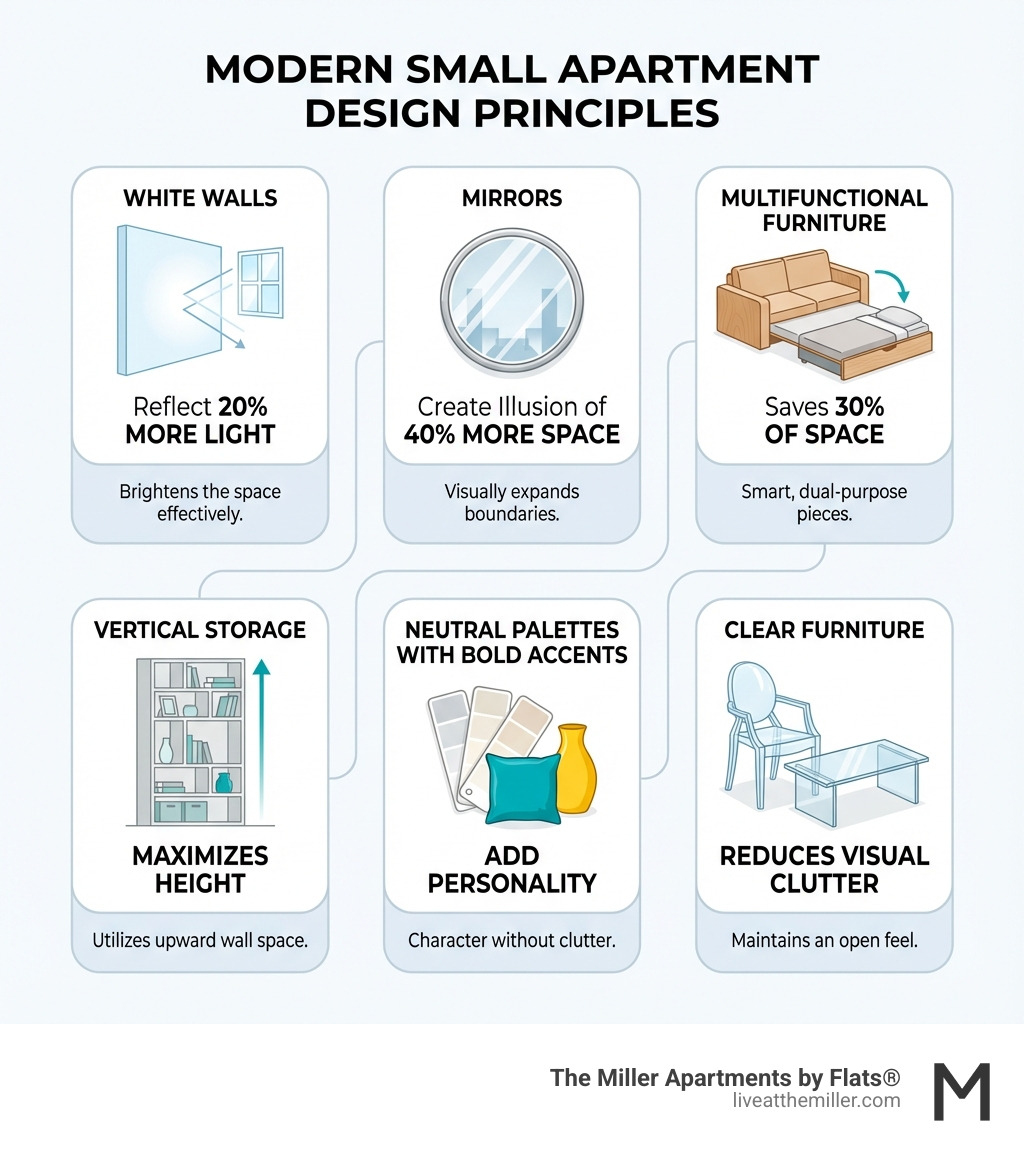
- Use light colors and mirrors to create the illusion of 40% more space
- Choose multifunctional furniture that saves up to 30% of your floor area
- Maximize vertical space with wall-mounted storage and floor-to-ceiling elements
- Create distinct zones using rugs, furniture placement, or room dividers
- Keep it minimal with intentional decor that serves multiple purposes
- Incorporate clear furniture (glass, acrylic) to reduce visual clutter
Small spaces often get unfair criticism. But here's the truth: compact apartments offer advantages you won't find in sprawling floor plans. They're easier to clean, can be more cost-effective to maintain, and force you to be intentional about what you own. The real challenge isn't the size-it's making every design decision count.
When you're working with limited square footage, every piece of furniture and decor needs to work hard. A coffee table that doubles as storage. A mirror that bounces light across the room. A rug that defines your living area without walls. These aren't just nice-to-haves. They're the foundation of functional, stylish small apartment living.
The good news? Thoughtful design choices can transform even a 300-square-foot studio into a space that feels open, organized, and uniquely yours. You don't need more rooms to create a home that reflects your personal style and supports your lifestyle.
The Art of Illusion: Core Principles for Making Small Spaces Feel Ample
Making a small apartment feel open and ample, rather than cramped, is a masterclass in strategic design. The goal is to create an illusion of greater space and brightness, avoiding the common misconception that small means cluttered or restrictive. Thoughtful design choices can overcome these challenges, demonstrating that even a modest footprint can be functional and stylish.
Using Light and Color
One of the most impactful strategies in modern small apartment interior design is the clever use of light and color. Painting walls white, for instance, can make a room feel up to 20% larger and brighter. It's more than just a trend for clean, bright spaces; it's a designer trick to open up a room. By pairing sleek white paint with natural colors in furniture and decor, you can achieve a sense of expansiveness without sacrificing warmth.
A minimal color palette, predominantly featuring neutral tones, is highly beneficial. This approach prevents visual clutter and creates a serene, cohesive atmosphere. However, minimalism doesn't mean boring. You can introduce colorful accents through artwork, throw pillows, or other decor to infuse personality without overwhelming the space.
Embracing natural light is equally crucial. Opt for sheer window treatments instead of heavy blackout curtains or outdated blinds. Simple, light-filtering options allow maximum sunlight to penetrate the room, instantly making it feel larger and more inviting. For an added touch of elegance and to create visual height, consider hanging floor-to-ceiling draperies. When hung from where the wall meets the ceiling and allowed to slightly puddle on the ground, they draw the eye upward, making the room feel taller.
Even with bold colors, effective strategies exist to prevent the space from feeling busy. If you love vibrant hues, keep your palette to a minimum, perhaps focusing on one accent wall or a key piece of furniture, and ensure the rest of the room remains as neutral as possible. This balance allows the bold elements to pop without closing in the space. For more ideas on how to achieve a modern and spacious look, explore Modern Interior Design Ideas for Small Apartments.
The Magic of Mirrors and Clear Furnishings
Mirrors are truly like magic in modern small apartment interior design, capable of making a room appear up to 40% larger. Their power lies in their ability to reflect light and create an illusion of depth. Strategically placed mirrors can bounce natural light across the room, brightening even the darkest corners and making windows appear larger. A full-length floor mirror in a hallway or a corner can add significant visual space. Maximizing mirrors means placing them opposite windows, between windows, or behind lamps to double illumination and expand the perceived dimensions of the room.
Alongside mirrors, clear furniture pieces made of glass, lucite, or acrylic are invaluable. These transparent items virtually disappear into the room, reducing visual clutter and allowing the eye to see more of the space around them. A clear coffee table or console table adds an element of class with its sleek finish, while maintaining an airy feel. This improves the sense of spaciousness, making the room feel less crowded and more open, as if the furniture isn't even there.
Creating Visual Height and Depth
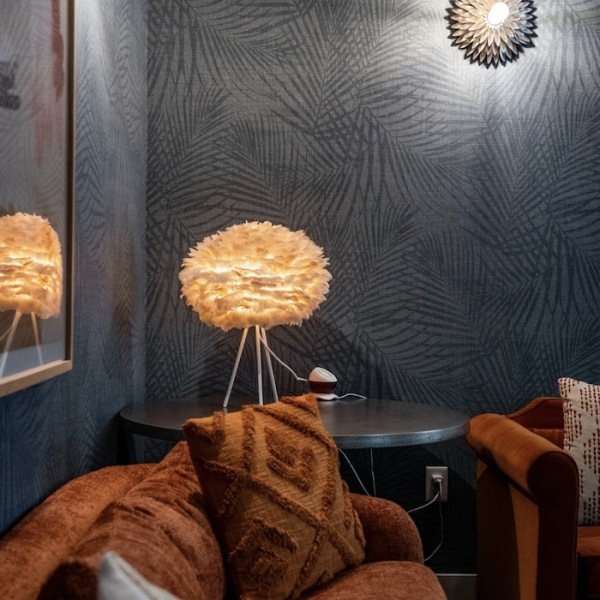
When designing a compact room, creating visual height and depth is essential to avoid a cramped atmosphere. One effective method is through layered lighting. This involves combining an overhead light source with eye-level lights such as lamps, sconces, or unique table pieces. Layered lighting creates visual interest, brightens darker corners, and adds depth, making the space feel more dynamic and less flat. For rooms with low ceilings, choosing a white shade pendant light that blends into the ceiling can create visual height without cluttering the room. Alternatively, a large pendant lamp can exaggerate ceiling height, drawing the eye upwards.
Low-slung furniture also plays a significant role in making a room feel larger. Pieces that sit closer to the floor, such as a floor bed or a low-profile sofa, leave more wall space above them. This negative space tricks the eye into perceiving the ceilings as higher and the room as more spacious.
Additionally, incorporating linear patterns can create the illusion of additional length and width. This could be through a rug with a striped design or subtly patterned wallpaper. These lines draw the eye across the room, making it feel more expansive. Emphasizing vertical space, whether through tall, slender decor items or by drawing the eye upwards with ceiling lights, makes the apartment feel airier. For more inspiration on how to apply these principles, explore Modern Design Apartments.
Smart Furnishings: The Key to Functional Modern Small Apartment Interior Design
In modern small apartment interior design, furniture isn't just about aesthetics; it's about intelligent solutions that maximize every square foot. Every design decision in a limited space must work hard to reflect personal style while simultaneously maximizing functionality. The beauty of compact living is that it encourages creativity in fitting multiple functions into a single space, allowing you to create a home that truly serves your needs.
Choosing Multifunctional and Scaled Furniture
Multifunctional furniture is the MVP of small apartment living, capable of saving up to 30% of your floor area. Pieces that serve dual or even triple duty are crucial for optimizing space. Consider a Murphy bed that folds away to free up floor space during the day, or a fold-down desk that transforms a wall into a workspace when needed.
Nesting tables are another excellent example, offering flexible surface areas that can be expanded for entertaining or tucked away when not in use. Ottomans and poufs are highly versatile, serving as extra seating, footrests, or even makeshift coffee tables, often with the added benefit of hidden storage. Prioritizing furniture pieces that offer multiple functions, such as benches with hidden storage, significantly reduces clutter and improves versatility.
Even in very small apartments, you don't have to sacrifice luxury. Opt for small-scale, luxurious furniture pieces. A smaller sofa upholstered in a rich fabric or a compact armchair with delicate detailing can lift the space without overwhelming it. The key is to choose items that fit the scale of the room while delivering on both comfort and style.
The Power of Layout and Arrangement
The way furniture is arranged can dramatically impact the perceived size and functionality of a small apartment. For narrow rooms, the best strategy involves selecting furniture with small dimensions and airy, leggy pieces. Placing key furnishings, such as your sofa or large bookcases, against the walls maximizes floor space and maintains clear pathways.
L-shaped seating is a smart choice for optimizing space in small living rooms. An L-shaped couch can provide ample seating while efficiently utilizing a corner, making the most of tiny square footage. Surprisingly, even a large sectional sofa can work in a small space if it hugs the walls, creating a cozy, welcoming atmosphere that maximizes seating without feeling cramped.
When arranging furniture, aim to facilitate both conversation and TV viewing. Instead of solely orienting everything towards the screen, create intimate conversation areas. Position chairs or a rocking chair to face the couch, allowing for easy interaction.
Finally, consider the visual weight of your furniture. Accent furniture with delicate frames, such as a glass-top coffee table with thin gold legs, can reduce visual noise and make the room feel lighter and more open. This allows the eye to flow through the space, contributing to a less cluttered perception. For more insights on optimizing your living space, refer to Modern Apartment Living Room Design.
Using Textiles, Patterns, and Decor to Add Personality
In modern small apartment interior design, textiles, patterns, and decor are powerful tools for infusing personality and enhancing the sense of space without adding clutter. Mixing and matching textures is key to creating a cohesive and appealing aesthetic, especially when working with a minimal color palette. Layering multiple soft textiles like rugs, blankets, and bedding in shades of white or complementary neutrals can blur lines and create a rich, coherent look. Think fluffy rugs paired with sleek towels, or linen bedding with plush throws.
Don't shy away from incorporating patterns in small living rooms. While it might seem counterintuitive, patterns can make a tiny room feel expansive and energizing. The trick is to use them thoughtfully, perhaps on a large rug to define a zone, or on throw pillows to add visual interest. Linear patterns, for instance, can create the illusion of additional length and width, drawing the eye across the space.
Speaking of rugs, going big with a rug can make a tiny space feel much larger. An oversized rug anchors a seating area, grouping the furniture and making the entire zone appear more substantial and defined.
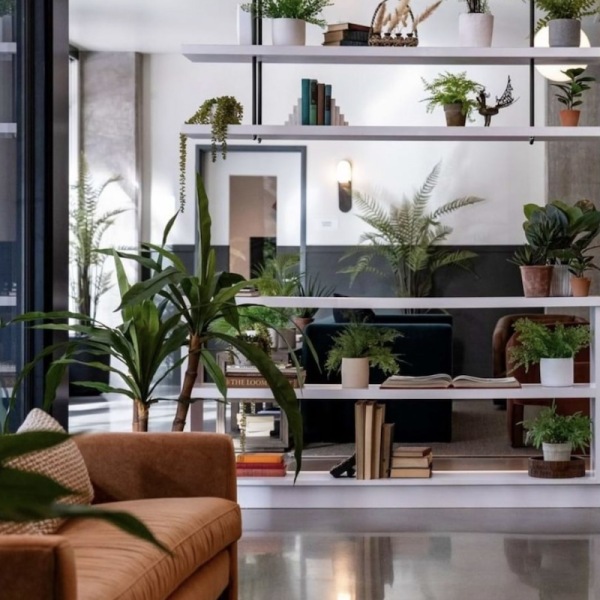
When it comes to decor, accept the "power of threes." Grouping items in threes (e.g., three vases, three candles) is a simple design principle that adds visual interest without taking up excessive real estate. Minimal decor is generally beneficial in small bedrooms, creating a serene and calm atmosphere. Accessorize minimally with ambient lighting and greenery to keep the space feeling organized and functional. Incorporating plants or faux greenery improves the feel of a small apartment by bringing a touch of nature indoors, adding color and freshness without demanding much space. For more ideas on how to personalize your apartment, check out Apartment Ideas.
Maximize Every Inch: Strategic Storage and Zoning Solutions
In a small apartment, every square foot counts, making strategic storage and zoning solutions paramount for a clutter-free and organized living environment. The goal is to create designated areas and hidden storage, ensuring that the space feels intentional and functional, not just packed.
Clever Storage to Conquer Clutter
Smart storage solutions are the backbone of a successful modern small apartment interior design. Hidden storage is your best friend, keeping essentials out of sight and maintaining a clean aesthetic. Think beyond traditional cabinets; look for furniture with built-in storage, like ottomans with lift-off tops or beds with drawers underneath.
Vertical storage is a game-changer for maximizing space. Wall-mounted shelving, whether open or closed, draws the eye upward and uses often-overlooked vertical real estate. In home offices, double bookshelves mounted on the wall can organize books and supplies while maintaining a chic, clean vibe. Open shelving, in particular, can make a space feel larger and add visual height by creating an airy display.
Don't forget creative alternatives for storage. Windowsills can be used for displaying decorative items or small plants, while under-bench storage (e.g., baskets tucked beneath a seating bench) keeps clutter out of the way. For items like blankets, a leaning ladder offers a stylish and space-saving vertical storage solution. The key is to integrate storage seamlessly, making it feel like an extension of the architecture rather than an add-on. For more storage solutions, refer to wall-mounted storage.
Defining Zones in a Studio or Open-Plan Apartment
Creating distinct zones within a studio or open-plan apartment is crucial for functionality and a sense of order. Since there are no walls to designate rooms, clever strategies are needed to define different functional areas.
Room dividers are an obvious, yet effective, solution. These can range from freestanding screens to curtains, or even open shelving units that allow light to pass through while still providing a visual separation.
Rugs are incredibly versatile for zoning. A large rug can delineate a distinct living area from a sleeping or dining space within a studio apartment. By anchoring the furniture for a specific function onto a single rug, you create a perceived "room" without physical barriers.
Color blocking is another creative way to visually separate areas. Painting one wall in a bold color can define a living room from a sleeping area, for instance. This adds visual interest and clarifies the different functions of the space.
Furniture itself can act as a room divider. A dining table strategically placed can serve as a natural boundary between the kitchen/dining area and the living room. Similarly, the back of a sofa can delineate a living space. Embracing a multipurpose room concept means intentionally carving out different functional areas within a single space, such as a dining area that doubles as a workspace.
Even small architectural features like alcoves can be transformed into functional and cozy living areas. With soft textures, appropriate lighting, and well-chosen furniture, an alcove can become a dedicated reading nook or a comfortable seating area. Defining an accent area, perhaps with a unique piece of art or a striking wall treatment, can also add visual interest and help differentiate zones. For detailed ideas on optimizing your studio, check out Modern Studio Apartment Ideas.
Room-by-Room Modern Design for Small Apartments
Designing each room in a small apartment requires an intentional approach, focusing on maximizing space, enhancing functionality, and maintaining a cohesive aesthetic. Designer-approved solutions can transform even the smallest kitchens and powder rooms into intentional, rather than overcrowded, spaces.
The Hardworking Modern Small Apartment Living Room
The living room is often the heart of the home, and in a small apartment, it needs to be exceptionally hardworking. The "Keep It Simple, Sweetie" (K.I.S.S.) principle is highly applicable here: curate a well-edited collection of a few accessories rather than many small pieces, which can make the room feel cluttered.
Integrating a TV into a small living room without it dominating the space is a common challenge. Instead of a bulky entertainment unit, consider mounting the TV above a small credenza or dresser; this anchors the TV and provides valuable storage underneath. A mounted TV on a panel, especially one that blends with the wall color or material, can make the screen virtually disappear when not in use. Some even hide flat-screen TVs within a gallery wall using a DIY frame, turning it into a piece of art.
If your apartment features a fireplace, use it as a focal point. Arrange furniture around it to create a cozy conversation area. The fireplace can also serve as a creative display space: showcase oversized artwork above the mantel, display personal trinkets (tchotchkes) on the mantelpiece, or use it as a backdrop for a pop of color with vibrant wallpaper and accessories. For a touch of nature, the natural shelf of a built-in fireplace can even be used as a plant stand. This multi-purpose approach ensures every element contributes to the room's functionality and style. For comprehensive design advice, consult the Contemporary Apartment Interior Design Guide.
The Efficient and Intentional Kitchen
Making a small kitchen feel intentional rather than overcrowded is a hallmark of good modern small apartment interior design. One of the most effective solutions is opting for open shelving instead of traditional upper cabinets. Open shelves make the space feel larger, give the appearance of additional height, and can beautifully display dinnerware, preventing a closed-in feel. Natural wood shelves, for example, can replace upper cabinets to create an airy look.
If space doesn't allow for a full dining table, comfortable stools can create cozy island seating in the kitchen. Not only can these stools be tucked away when not in use, but the island itself adds valuable cooking surface area in kitchens with limited counter space. This multi-purpose design allows dining areas to serve multiple functions, from meal prep to a quick breakfast spot.
A small kitchen can be both aesthetically pleasing and deeply practical. Incorporate art on the walls and use a natural color palette. A mix of open and closed storage solutions can hold everything needed, from utensils to pantry items, ensuring everything is within arm's reach.
The Serene and Minimal Bedroom
In a small bedroom, the goal is to create a serene, calming atmosphere that feels open and functional. Minimal decor is key here. Accessorize minimally with ambient lighting and greenery to keep the space feeling calm, organized, and functional. Bedrooms with simple linen sets look airy and open, and incorporating plants makes the room feel fresher.
Mixing and matching textures is crucial for creating a cohesive and appealing aesthetic, especially within a minimal design. Layer soft textiles like plush blankets, natural fiber rugs, and linen bedding to add depth and warmth without visual clutter.
To save precious surface area on nightstands, consider wall-mounted lighting fixtures. Mounting sconces directly on the walls not only frees up space for plants or other decor but also creates a sleek, modern look. This smart solution helps maintain the minimalist aesthetic while providing essential illumination, enhancing the overall ambiance of the bedroom. For more minimalist ideas, refer to Modern Flat Interior Design.
The Luxurious Small Bathroom
Even a small bathroom or powder room can feel intentional and luxurious with the right design choices. The best approach to avoid overwhelming the space is to stick to a minimal color palette, predominantly neutrals. White walls and marble tiles, for instance, instantly create a clean, spa-like feel.
To make a small bathroom feel like a five-star hotel, keep all your linens white. The visual effect of crisp white towels, bath mats, and shower curtains is best. Improve this by mixing different textures: pair fluffy rugs with sleek towels and sheer curtains for a rich, layered look.
A touch of color and elegance can be introduced through matching hardware. In bathrooms with neutral color schemes, antique brass or gold accents in your lighting fixtures, faucets, and cabinet pulls add an expensive-looking flair. This consistency in hardware makes the space feel more luxe and layered, elevating the overall design. By focusing on these elements, even the most compact bathroom can exude sophistication and comfort.
Conclusion
Modern small apartment interior design is about changing compact living into a lifestyle of intentionality, functionality, and personalized style. By embracing the art of illusion with light colors, mirrors, and clear furnishings, and creating visual height, you can make any small space feel significantly more ample and inviting.
Smart furnishings, particularly multifunctional and scaled pieces, are crucial for optimizing every inch. Thoughtful layouts, combined with rich textures, patterns, and minimal decor, infuse personality without sacrificing precious space. Finally, strategic storage solutions and clever zoning techniques ensure a clutter-free environment where every corner serves a purpose.
Living in a small apartment offers unique advantages, from easier maintenance to a more curated lifestyle. It encourages you to be creative and efficient with your space, leading to a home that is truly custom to your needs and aesthetic.
Find how these principles come to life in the thoughtfully designed spaces available. Explore the modern apartment floor plans in Vancouver, WA, where contemporary design meets the city's industrial history. With amenities focused on wellness and community, The Miller Apartments offer a blend of convenience, comfort, and sophistication in a prime waterfront location. See how thoughtful designs maximize living well in every square foot. Explore modern apartment floor plans.