

Why Contemporary Apartment Building Design Matters
Contemporary apartment building design is reshaping how we live in urban spaces. Whether you're exploring sleek glass facades, eco-friendly rooftop gardens, or innovative use of natural light, modern apartment architecture prioritizes both aesthetics and functionality to create spaces that enhance daily life.
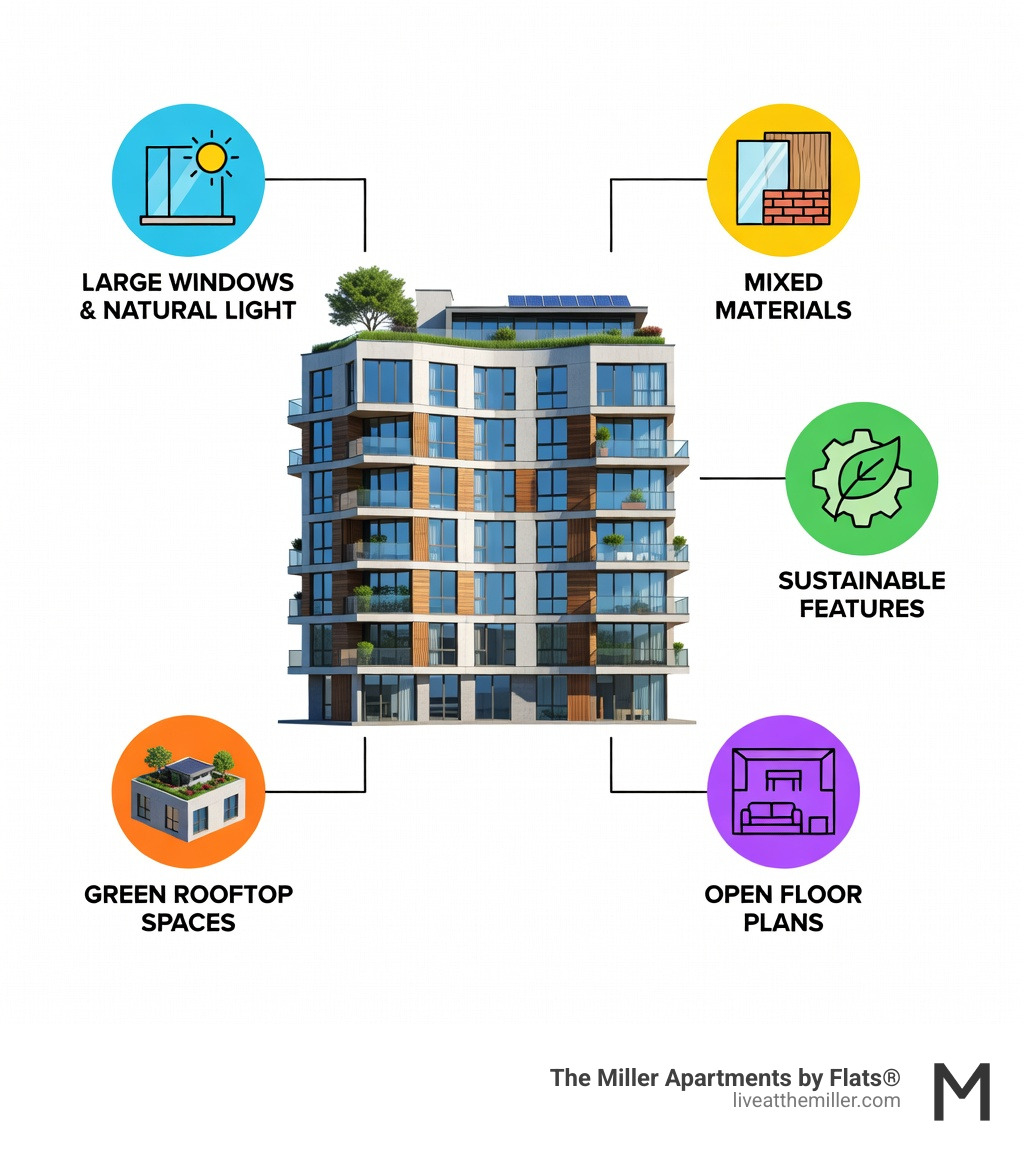
Key Elements of Contemporary Apartment Design:
- Large Windows & Natural Light - Floor-to-ceiling glass maximizes daylight and creates visual connections to the outdoors
- Mixed Materials - Combinations of glass, concrete, timber, and brick add textural depth and visual interest
- Sustainable Features - Rooftop gardens, vertical greenery, and energy-efficient systems reduce environmental impact
- Flexible Layouts - Open floor plans and adaptable spaces support modern lifestyles
- Luxury Amenities - Coworking lounges, fitness centers, and community spaces extend your living area
- Outdoor Integration - Balconies, terraces, and elevated parks bring nature into dense urban settings
The research shows that over 506,100 stock images exist for modern apartment exteriors alone, reflecting enormous demand for contemporary design. Buildings like Studio Gang's 11 Hoyt in Brooklyn demonstrate how undulating facades and "inhabitable" architectural elements can create extra interior space while maintaining striking curb appeal.
Modern apartment architecture isn't just about looking good. It's about solving real challenges -- maximizing natural light in dense cities, creating community in vertical living, and building sustainably for the future. From split massing that optimizes southern exposure to all-electric, net-zero-ready construction, today's designs balance form with environmental responsibility.
At The Miller Apartments by Flats, we understand that contemporary design should blend sophistication with livability. Located in Vancouver's Waterfront neighborhood, our community reflects these modern principles while honoring the area's industrial history.
Defining Characteristics of Contemporary Apartment Building Design
The soul of a modern building lies in its ability to break away from the "boxy" traditions of the past. Today's contemporary apartment building design focuses on a "wow" factor that serves both the resident and the city skyline. Curb appeal is no longer just for single-family homes; it is a vital component for apartment complexes that want to stand out in a competitive urban market.
One of the most striking features of modern design is asymmetry. Architects are increasingly moving away from perfectly mirrored structures, instead opting for staggered heights, jutting balconies, and irregular rooflines. This creates a sense of movement and visual rhythm that draws the eye. Furthermore, mixed-use developments are becoming the standard. By integrating retail spaces on the ground floor and residential units above, these buildings become self-sustaining ecosystems that "fuse neighborhoods together," providing a seamless transition from a vibrant street scene to a quiet residential retreat.
For those looking to dive deeper into the specifics of these aesthetics, exploring Modern Apartment Building Design Ideas can provide a blueprint for how these elements come together to create a cohesive living environment.
Blending Old and New Aesthetics
In regions like Vancouver, WA, where industrial history is rich, contemporary design often finds its strength in the "blend." This involves taking classic architectural elements--like sturdy brick and natural stone--and pairing them with sleek metallic accents and expansive glass.
This juxtaposition creates a timeless charm. The brick pays homage to the city's hardworking roots, while the metal and glass signal a forward-thinking, sophisticated future. This "industrial-chic" approach ensures that a building feels grounded in its community rather than like an alien structure dropped into a historic neighborhood.
The Role of Large Windows and Open Layouts
Interior design in modern apartments has shifted toward a "resident-first" philosophy. The inclusion of large windows is perhaps the most significant trend. While expansive glass can influence energy considerations, the trade-off is invaluable: natural light is a primary driver for happiness and productivity. Residents who work from home find that a sun-drenched living space is far superior to a dimly lit one.
Inside the units, Modern Design Apartments prioritize open floor plans. By removing unnecessary walls, designers improve traffic flow and allow light to penetrate deeper into the home. This creates a sense of spaciousness that makes even compact urban units feel grand and airy.

Materiality and Aesthetics in Modern Exteriors
The materials chosen for a building's exterior do more than just hold it up; they tell a story. In contemporary design, the palette has expanded to include a variety of textures that work in harmony.
- Glass Facades: These offer transparency and a connection to the surrounding environment, especially in waterfront locations.
- Precast Concrete: Often used for its durability, modern concrete can be shaped into undulating or scalloped forms to create a "wave-like" effect.
- Timber and Wood Panels: These add warmth and an organic feel, preventing a building from looking too cold or sterile.
- Board-form Concrete: This technique leaves the texture of the wood grain on the concrete surface, providing a sophisticated, tactile depth.
Innovative Trends in Contemporary Apartment Building Design
As urban density increases, architects are getting creative with how they use space. One emerging trend is the "inhabitable facade." This involves using angled panels or projecting bays to create extra interior nooks--like window seats or small alcoves--that extend beyond the main wall of the building.
We are also seeing a rise in "skinny towers" and buildings with wave-like facades. These designs aren't just for show; they are often engineered to maximize views and natural light for every resident, regardless of which side of the building they live on. For example, a leaf-shaped plan or tiered massing can help a building "step back" as it rises, creating space for private terraces and reducing the shadow cast on the street below. To see how these elements look in a completed project, check out a Modern Apartment Complex that utilizes these high-end materials.
Material Influence on Functionality
Materials are selected for their functional benefits just as much as their beauty. Reflective glass can help manage heat gain, while integrated venting in the facade ensures that high-rise units remain well-ventilated without the need for unsightly external units.
| Material | Aesthetic Appeal | Functional Benefit |
|---|---|---|
| Glass | Sleek, transparent, modern | Maximizes natural light and views |
| Concrete | Industrial, solid, textural | High durability and sound insulation |
| Timber | Warm, organic, inviting | Sustainable and provides natural insulation |
| Brick | Classic, grounded, historic | Low maintenance and timeless durability |
Sustainability and Green Living Integration
Modern living is increasingly synonymous with green living. Contemporary apartment building design now treats sustainability as a core requirement rather than an optional add-on. This is visible from the ground up, starting with all-electric, net-zero-ready designs that aim for a low-carbon future.
Rooftop gardens and vertical greenery are some of the most visible green features. These aren't just aesthetic choices; they provide essential rainwater retention, support local biodiversity by providing habitats for pollinators, and help cool the building naturally. In dense urban environments, these "sky parks" offer residents a much-needed connection to nature without having to leave the premises.
Maximizing Natural Light and Views in Dense Cities
In a crowded city, getting enough sunlight can be a challenge. Architects use "split massing" -- essentially breaking one large building into two or more smaller volumes -- to create internal courtyards. This allows southern exposure to reach units that would otherwise be stuck in the shade. These courtyards also serve as peaceful, wind-protected common areas for residents to gather.
The Impact of Energy Efficiency
Energy efficiency is built into the very shape of the building. For instance, a leaf-shaped plan can optimize environmental performance by reducing the energy load required for heating and cooling. Combined with advanced air filtration systems and sustainable material choices, these designs ensure that the building is as healthy for the planet as it is for the people living inside it.
Luxury Amenities and Urban Adaptation
The definition of "luxury" in apartment living has shifted from gold-plated fixtures to high-quality experiences and community-focused spaces. Modern complexes now feature amenities that act as a natural expansion of the resident's home.
- Coworking Lounges: With the rise of remote work, dedicated, high-speed-internet-equipped lounges are essential.
- Day Spas and Wellness Centers: Emphasizing self-care within the building.
- Fitness Centers and Saltwater Pools: High-end athletic facilities that rival private clubs.
- Pet-Friendly Facilities: Acknowledging that pets are part of the family, though most contemporary buildings maintain a policy of up to two pets per apartment to ensure a comfortable environment for everyone.
For a comprehensive guide on what to look for in these spaces, the Modern Apartment Building Design Guide offers deep insights into the amenities that define luxury today.
Redefining Common Spaces
Traditionally, amenities were hidden away in basements to save "salable" space for developers. Contemporary design flips this on its head. Common spaces are now often placed on the street level or on the top floors to maximize natural light and views.
These areas are designed for "spontaneous use"--meaning they aren't just rooms for a specific task (like a "theatre room" that sits empty 90% of the time), but rather flexible, open lounges where residents can naturally congregate, work, or relax. This street-level integration makes the building feel like a part of the city's pulse.
Waterfront and Mediterranean Influences
In locations like the Vancouver Waterfront, design often takes cues from the surrounding environment. Mediterranean-inspired elements--such as light-colored finishes, sophisticated textures, and thoughtful layouts that emphasize scenic views--create a "resort" feel in the heart of the city. This blend of urban lifestyle and waterfront ease is the pinnacle of modern apartment living.
Frequently Asked Questions about Contemporary Apartment Building Design
What are the defining features of modern apartment exteriors?
The most common features include asymmetry, a mix of materials (like glass, wood, and concrete), large floor-to-ceiling windows, and interesting geometric shapes. Curb appeal is prioritized through unique facade textures and integrated greenery.
How do contemporary buildings incorporate green spaces?
Greenery is integrated through rooftop gardens, internal courtyards, and sometimes even vertical forests or "green walls" on the facade. These spaces are designed to support biodiversity, manage rainwater, and provide residents with outdoor retreats.
Why is natural light so important in contemporary apartment building design?
Natural light is essential for resident well-being and productivity. It also helps reduce the need for artificial lighting during the day, contributing to energy efficiency. Architecturally, it creates a sense of openness and connects the interior living space to the outside world.
Conclusion
Unlocking the potential of modern living requires a thoughtful approach to contemporary apartment building design. It is a discipline that balances the bold aesthetics of the future with the practical needs of the present. From the industrial-inspired brickwork that honors a city's history to the cutting-edge sustainable features that protect our environment, every element serves a purpose.
At The Miller Apartments, we embrace these principles to offer a living experience that is as sophisticated as it is comfortable. Located in the vibrant Vancouver Waterfront neighborhood, our community is a testament to how wellness, community, and high-end design can coexist. Whether you are looking for a quiet corner in a coworking lounge or a breath of fresh air on a rooftop deck, modern design ensures your home is more than just an apartment--it's a lifestyle.
For more inspiration on how to elevate your living space, explore our Contemporary Apartment Interior Design Guide and discover the future of urban sophistication. Pricing for these modern spaces is fluid and subject to change, reflecting the dynamic nature of the Vancouver real estate market. We invite you to experience a new standard of living where convenience meets unparalleled design.