

1. What Renters Should Know About Apartments Washer Dryer in Unit vs. Hookups
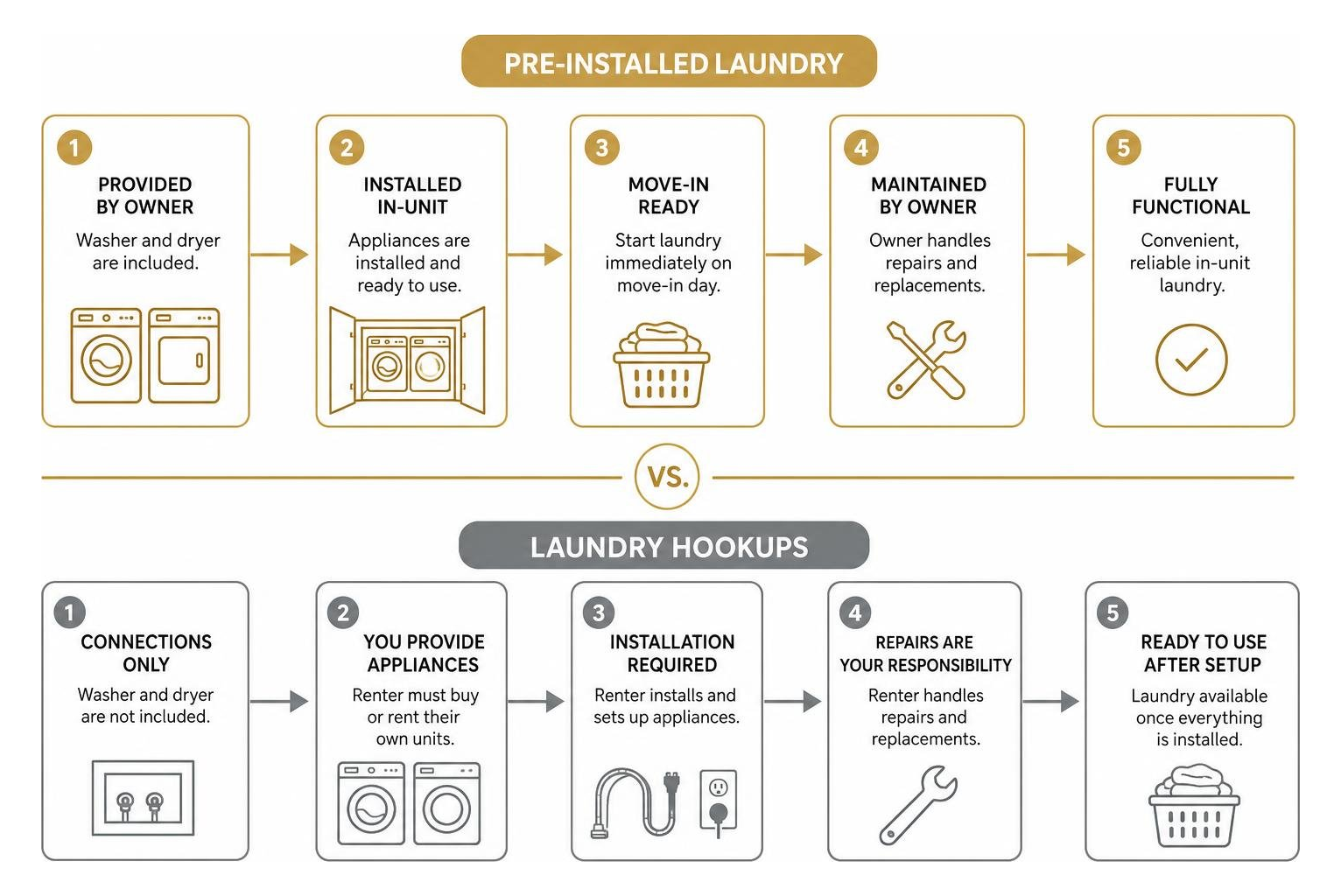
When browsing rental listings, amenity descriptions can sometimes be misleading. A listing might state laundry features prominently, but that does not always mean you can do a load of laundry the day you get your keys. Understanding the operational distinction between true in-unit appliances and connections is essential.
The Advantage of Pre-Installed Appliances in Apartments Washer Dryer in Unit Listings
Choosing apartments washer and dryer in unit means the property owner provides, installs, and maintains both the washing machine and clothes dryer inside your floor plan.
This setup delivers significant move-in readiness:
- Zero Capital Expenditure: You do not need to spend money purchasing or leasing heavy home appliances.
- Streamlined Moving Day: Moving team logistics are far simpler without needing to haul appliances upstairs or through narrow hallways.
- Included Maintenance: Appliance mechanical breakdowns are typically covered under standard property maintenance agreements rather than out-of-pocket repairs.
Having dedicated laundry machines inside your private living space eliminates community friction points. You no longer need to worry about neighbors leaving clothes in shared washers or dealing with broken coin mechanisms.
Understanding Washer and Dryer Hookups
Conversely, listings that advertise washer and dryer hookups simply feature the utility connections required to power appliances. These typically include a 240-volt electrical outlet (or gas line connection), hot and cold water supply lines, and a drainage pipe.
If you choose a home with hookups only:
- You must buy, lease, or transport your own matching washer and dryer set.
- You are responsible for proper installation, including secure water hoses and venting ducts.
- You may need professional assistance to connect utility connections safely.
- Uninstalled or improperly fitted connections present potential water leakage risks for which you may be liable.
2. Appliance Types, Sizes, and Layout Efficiency
Not all in-unit laundry appliances offer identical laundry capacities or installation requirements. Appliance dimensions and ventilation configurations dictate floor plan integration and wash load handling.

Full-Size vs. Stackable Apartments Washer Dryer in Unit Setups
Understanding what does in-unit laundry mean for apartments often comes down to spatial footprint and load capacities. Floor plans generally feature one of two main appliance styles:
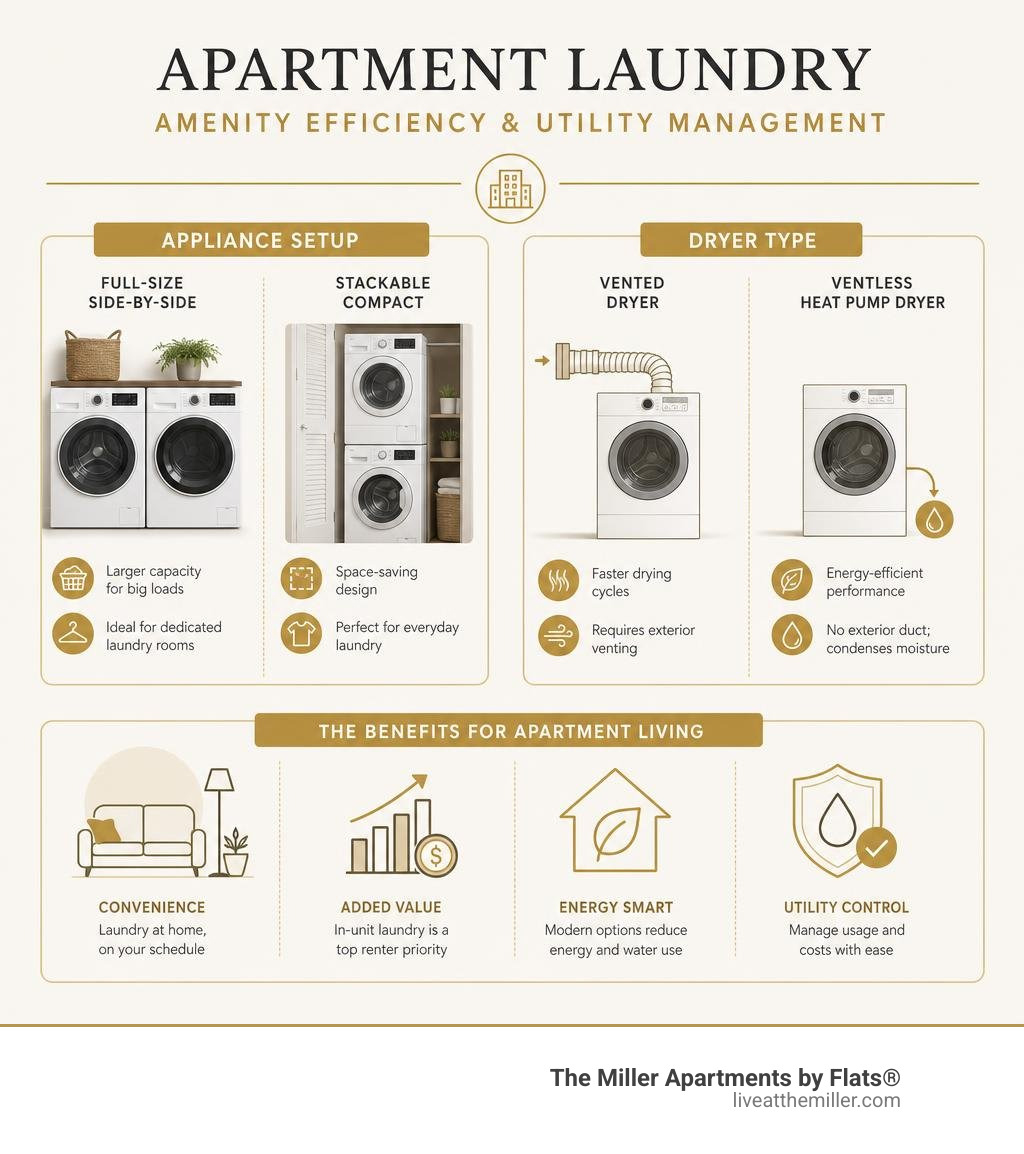
- Full-Size Side-by-Side Units: These offer maximum tub volume, perfect for washing bulk items like king-size comforters and heavy bedding. They are most commonly installed within dedicated laundry rooms or large utility closets.
- Stackable Compact Units: Stackable systems save valuable floor area by positioning the dryer directly above the washer. While individual load capacity is slightly smaller than full-size alternatives, these units easily clean everyday wardrobe items while preserving square footage in urban floor plans.
Ventless vs. Vented Dryers
The drying mechanism also plays a major role in appliance efficiency and indoor air circulation:
- Vented Dryers: Traditional dryers draw air from the room, heat it, and vent moisture outside through an exterior wall duct. They dry clothes quickly but require dedicated external ductwork.
- Ventless Heat Pump / Condenser Dryers: Ventless technology recirculates hot air and condenses moisture directly into a drainage line. These designs do not require exterior wall ducts, allowing flexible placement anywhere within an apartment. While cycle times may run slightly longer, ventless models are exceptionally energy-efficient and reduce heating loss during winter months.
3. Financial and Market Factors to Consider
In-unit laundry remains one of the top modern community features searched by prospective tenants on national rental portals like Zillow and Apartments.com.
Regional Availability and Property Standards
Availability often reflects building age and design standards. In modern rental communities, in-unit laundry is widely standard across studio, one-bedroom, and two-bedroom layouts.
When researching rental listings across different building styles:
- Modern Residential Buildings: Almost exclusively include pre-installed in-unit machines alongside luxury community amenities like day spas, fitness centers, and coworking lounges.
- Historic or Older Buildings: May offer shared community facilities or hookups only due to legacy plumbing limits.
If you prioritize modern home features, review complete property details carefully. Modern residential developments showcase how top layout designs incorporate full-size appliances directly into primary floor plans.
Utility Consumption and Energy Efficiency
Running private laundry appliances impacts your monthly utility bill based on usage patterns and appliance certifications.
To optimize energy and water usage, look for properties that install high-efficiency appliances:
- ENERGY STAR Certification: ENERGY STAR certified washers use approximately 20% less energy and 30% less water than standard models.
- Water Consumption: Front-loading washing machines draw significantly less water per cycle compared to older top-loading designs.
- LEED-Certified Developments: Sustainable developments integrate water-saving technology throughout the entire floor plan to optimize operational efficiency.
Review our complete apartments in-unit washer dryer guide 2026 for comprehensive tips on balancing amenity convenience with efficient utility usage.
4. Maintenance Responsibilities and Property Upkeep
While pre-installed laundry equipment offers great day-to-day comfort, keeping appliances working properly requires basic care and prompt attention to minor repairs.
Preventative Maintenance and Hose Inspections
Preventative care protects your wardrobe and prevents unexpected water damage inside your home.

- Clean Lint Screens Daily: Always clear the dryer lint filter before starting a new load to preserve airflow, shorten drying times, and eliminate fire risks.
- Inspect Supply Hoses: Periodically check the rubber or stainless-steel braided hose connections behind the washer for moisture, cracking, or bulging.
- Keep Machine Doors Open: After completing washing cycles, leave the washer door slightly open to let the drum air out and prevent mildew odor built-up.
- Avoid Load Overfilling: Overpacking the drum strains internal drive belts and motor assemblies, leading to uneven washing performance and potential mechanical breakdowns.
Reporting Appliance Repairs
In standard lease agreements, property management handles mechanical issues caused by normal wear and tear. If your washer fails to drain or your dryer stops heating:
- Submit an official online work order request immediately through your resident portal.
- Avoid trying to fix electrical or plumbing connections yourself.
- Clean out pooled standing water inside washer drums to protect nearby flooring.
5. How to Effectively Search and Filter Listings Online
Finding apartments washer dryer in unit requires using search tools properly during your online property search.

To narrow down choices efficiently:
- Use Exact Amenity Filters: Check the box specifically labeled In-Unit Washer & Dryer rather than generic terms like Laundry On-Site or Laundry Facilities.
- Filter out Hookups Only: Double-check property descriptions to ensure the unit includes actual appliances rather than just water lines.
- Set Up Instant Alerts: Save your filtered search criteria on rental portals to receive instant email notifications as soon as qualifying floor plans hit the market.
Verifying In-Unit Amenities During Apartment Tours
When taking a virtual tour or walking through an apartment in person, use this checklist to verify your laundry setup:
- [ ] Locate the laundry closet or room to confirm physical unit placement.
- [ ] Open machine doors to inspect drum capacity and check for clean interior surfaces.
- [ ] Confirm whether units are full-size or stackable to plan storage organization.
- [ ] Verify that nearby shelving or storage nooks exist for detergents and hampers.
Browsing listings with apartments with washer dryer included guarantees you secure modern living features matched to your personal lifestyle.
Frequently Asked Questions About In-Unit Laundry
Do apartments with in-unit laundry cost more in monthly utilities?
Running private appliances consumes water and electricity, which will be reflected on your utility statements. However, modern ENERGY STAR-rated washers and ventless dryers draw minimal power, often offset by eliminating coin-operated wash fees and travel costs to outside laundry facilities.
Are stackable washer dryer units as effective as full-size models?
Yes! Stackable units offer identical cleaning performance, variable cycle settings, and temperature options as full-size models. The main difference lies in total drum capacity per load.
What is the difference between laundry in-unit and laundry on-site?
In-unit laundry means washing and drying equipment is situated privately inside your apartment floor plan. On-site laundry means access to a shared laundry room located in a central building area, basement, or community center.
Conclusion
Securing an apartment with private in-unit laundry upgrades your daily routine, saving time while bringing everyday comfort right into your living space. By knowing what to look for - from appliance sizing and venting styles to proper maintenance routines - you can easily choose a floor plan that fits your exact needs.
If you are looking for modern living space paired with convenience, explore contemporary floor plans offering full amenity packages. apartments with in-unit laundry provide the seamless living experience you deserve. Explore luxury living with top amenities at The Miller Apartments to discover high-end design, upscale features, and unbeatable lifestyle comfort.