

Why Lighting Transforms Your Modern Living Space
Modern apartment lighting does more than just illuminate rooms—it shapes your entire living experience. The right lighting can make a compact studio feel spacious, transform a bedroom into a relaxing sanctuary, or turn your living room into an energizing social hub.
Quick Guide to Modern Apartment Lighting:
- Layer Your Light - Combine ambient (general), task (focused), and accent (decorative) lighting
- Choose Smart Fixtures - Opt for dimmable LEDs and smart bulbs for flexibility
- Match Light to Purpose - Use warm tones (2700K-3000K) for relaxation, cool tones (3500K-4000K) for productivity
- Maximize Natural Light - Complement daylight with strategic artificial lighting
- Consider Your Space - Use wall sconces and flush-mount fixtures for smaller apartments
According to industry data, proper lighting can improve productivity by up to 20% while LED lighting now accounts for over 90% of the market. With smart lighting present in 35% of US households and growing, the way we illuminate our homes is evolving rapidly.
Whether you're dealing with low ceilings, limited natural light, or just want to create a more inviting atmosphere, understanding the fundamentals of contemporary lighting design will help you make informed choices. From selecting the right fixtures for each room to embracing 2025's latest trends in smart technology and organic design, this guide will show you how to create a perfectly lit space that reflects your lifestyle.
The Three Layers of Light: A Foundation for Ambiance
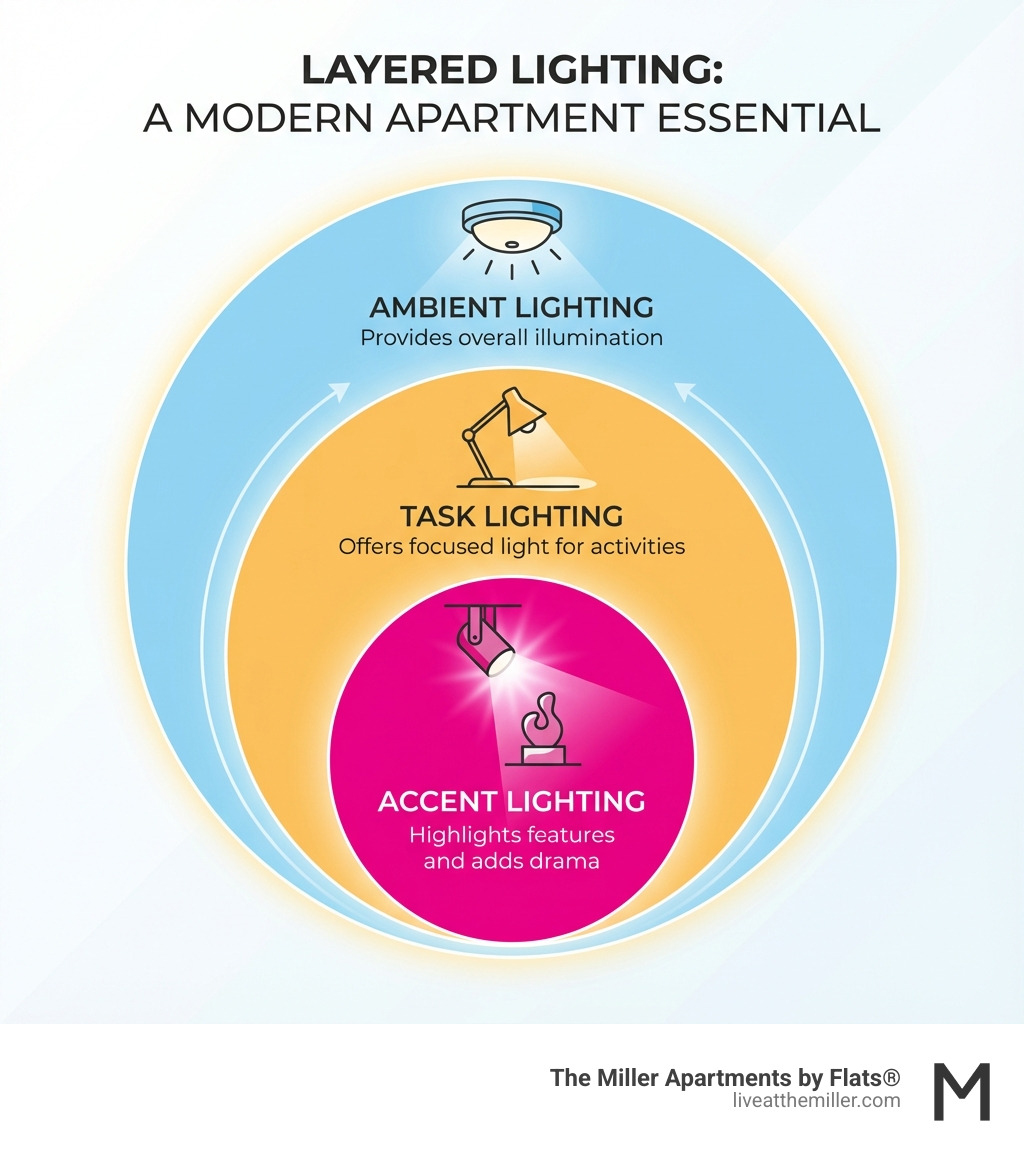
Effective modern apartment lighting is not about a single overhead fixture; it is about creating a rich mix of light that serves multiple purposes. This concept, often referred to as layered lighting, ensures that every corner of an apartment is functional, comfortable, and visually appealing. The three essential types of lighting—ambient, task, and accent—work in harmony to achieve this. By understanding and implementing these layers, residents can transform their living spaces, making them more inviting and adaptable. For a foundational understanding of lighting principles, one can refer to The Beginner's Guide to Lighting | AllModern .
Ambient Lighting: The General Glow
Ambient lighting provides the primary, general illumination for a room, ensuring a comfortable level of brightness without harsh shadows. It forms the base layer upon which other lighting types are built. In a modern apartment, this often comes from ceiling fixtures designed to distribute light evenly across the space.
Common ambient lighting fixtures include:
- Ceiling Lights: These can range from simple flush mounts that sit directly against the ceiling to more decorative semi-flush mounts that hang down slightly. Flush-mount fixtures are particularly useful in rooms with lower ceilings, providing whole-room illumination without encroaching on head space. Semi-flush lights, hanging about a foot down, offer a bit more style while still illuminating the entire room.
- Chandeliers: While often thought of as decorative, chandeliers can serve as excellent ambient light sources, especially in larger living or dining areas, diffusing light throughout the space.
- Recessed Lighting: Embedded into the ceiling, recessed lights offer a sleek, subtle look while emitting strong, widespread light. They are often used to provide uniform illumination in a minimalist modern design.
The goal of ambient lighting is to create a uniform base layer of light, making the room feel open and accessible. Without this foundational layer, other lighting elements would struggle to create a cohesive look.
Task Lighting: For Focus and Function
Task lighting is specifically designed to provide focused illumination for activities that require concentration, such as reading, cooking, or working. This type of lighting is crucial for preventing eye strain and improving efficiency in a modern apartment.
Examples of task lighting fixtures and their uses:
- Under-cabinet Lights: Essential in kitchens, these strips illuminate countertops directly, making meal preparation safer and more enjoyable. They save counter space and focus light where it's needed most.
- Desk Lamps: A must-have for any home office or study nook, a good desk lamp provides direct light for reading, writing, or computer work.
- Bedside Reading Lamps: Whether table lamps or wall-mounted sconces, these provide intimate, focused light for nighttime reading without disturbing others.
- Floor Lamps next to Chairs: A floor lamp with an adjustable arm positioned beside a favorite armchair creates an ideal reading nook.
The key to good task lighting is not just brightness, but contrast. It provides bright, focused light to increase visibility for specific activities. For those exploring efficient layouts, More info about Modern Studio Apartment Ideas can offer further insights into optimizing space and lighting.
Accent Lighting: To Highlight and Add Drama
Accent lighting is used to draw attention to specific architectural features, artwork, plants, or decorative objects, adding depth and visual interest to a room. It creates focal points and improves the overall aesthetic of a modern apartment.
Ways to incorporate accent lighting:
- Track Lighting: With adjustable heads mounted on a suspended rod, track lighting offers flexibility to angle light towards specific areas or objects, allowing residents to highlight different elements as their decor changes.
- Wall Sconces: These wall-mounted fixtures can flank a mirror or artwork, providing a subtle glow that draws the eye. They also save valuable surface space, contributing to a clean, modern aesthetic.
- Picture Lights: Small, dedicated lights mounted above artwork or photographs ensure these pieces stand out.
Accent lighting is about creating drama and mood. By strategically placing these lights, residents can sculpt their space, playing with light and shadow to create an engaging environment.

A Room-by-Room Guide to Key Fixtures
The art of modern apartment lighting lies in selecting the right fixtures for each space, balancing aesthetics with practical functionality. This custom approach ensures that every room not only looks good but also serves its purpose effectively. For a comprehensive guide on integrating design elements, consider A guide to contemporary apartment interior design.
The Living Room: A Versatile Hub
The living room is often the heart of a modern apartment, a versatile space for relaxation, entertainment, and socializing. Its lighting scheme should be equally versatile, allowing for different moods and activities.
- Layering is Key: Combine various light sources to create a rich and adaptable environment. A central ceiling fixture (ambient) can be complemented by floor lamps (task/ambient) and table lamps (task/accent). A common recommendation is to have five to seven light sources per room to ensure balanced illumination and avoid harsh shadows. Placing lighting fixtures in three of the four corners of the room can help expand the space visually.
- Dimmers for Mood Control: Dimmers are invaluable in the living room, allowing residents to adjust light intensity to suit the occasion—bright for cleaning, soft for movie night, or a warm glow for a cozy evening.
- Creating Conversation Zones: Position floor lamps and table lamps to define seating areas and create intimate conversation zones. For example, a sleek corner floor lamp can highlight a reading nook.
- Fixture Selection: For rooms with high ceilings, a sculptural chandelier can serve as a striking statement piece. For living rooms with a TV, track lighting offers adjustable illumination that can prevent glare on screens. Wall lights can also serve as neat, space-saving alternatives to table lamps, especially in smaller rooms. For more inspiration on illuminating this crucial space, explore Living Room Lighting Ideas and A guide to modern apartment living room design.
The Kitchen: Blending Functionality and Style
The kitchen in a modern apartment demands both robust functionality and appealing style. Lighting plays a pivotal role in achieving this balance.
- Pendant Lights over an Island: Pendant lights suspended above a kitchen island provide focused, stylish light for meal preparation, casual dining, or even working. Modern pendant lights and chandeliers are described as the embodiment of contemporary design and sophistication, adding radiance to any room. For an array of options, residents can view Modern Pendant Lights for Kitchen and Chandeliers for Dining Room | CB2 .
- Under-cabinet LED Strips: These are crucial for task lighting, brightly illuminating countertops where most food preparation occurs. They save valuable counter space and offer a clean, unobtrusive look.
- Bright Overhead Ambient Light: A flush-mount or recessed lighting system provides overall brightness, ensuring the entire kitchen is well-lit.
- Material and Finish Choices: Considerations like rattan pendant lights can bring a touch of nature indoors, while black or gold pendant lights can make bold or luxurious statements, respectively.
The Bedroom: Your Personal Sanctuary
The bedroom is a private retreat, and its lighting should foster relaxation and comfort. Soft, warm lighting is paramount for creating a serene atmosphere.
- Soft, Warm Lighting: Opt for bulbs with a warm white (2700K-3000K) color temperature to promote a calming and intimate ambiance. Dimmable options for all fixtures are highly recommended.
- Bedside Sconces to Save Space: Wall-mounted sconces on either side of the bed are an excellent choice for modern apartment bedrooms, freeing up space on nightstands while providing ample light for reading. They also add a touch of elegance and polish.
- Dimmable Ceiling Fixture: A central ceiling light with a dimmer allows for general illumination when needed, without being overly harsh.
- Table Lamps: Reading lamps on bedside tables contribute to an intimate feel. The type of bulb can also transform the mood; a soft pink bulb, for instance, can create a romantic glow.
The Home Office: Boosting Productivity
With many individuals working from home, a dedicated and well-lit home office is essential. Lighting here should prioritize focus and reduce eye strain.
- Bright, Focused Task Lamp: A high-quality desk lamp is non-negotiable for detailed work. It provides direct, focused light exactly where it's needed.
- Avoiding Screen Glare: Position task lighting carefully to prevent reflections on computer screens. Consider indirect lighting or adjustable fixtures.
- Using Cooler Light Temperatures: For an energizing effect that supports concentration, opt for 'cool white' bulbs (3500K-4000K). This contrasts with the warmer tones used in relaxing spaces.
- Productivity Statistic: It is worth noting that proper lighting can significantly impact work performance, with studies suggesting it can improve productivity by up to 20%.
2025 Trends: The Future of Modern Apartment Lighting
The world of modern apartment lighting is constantly evolving, blending technological advancements with a renewed appreciation for natural elements and artistic expression. The trends for 2025 highlight a shift towards more intelligent, sustainable, and aesthetically unique illumination solutions.

Smart and Human-Centric Technology
The integration of smart technology is a dominant trend, changing how residents interact with their lighting.
- Smart Bulb Integration: Smart bulbs allow for control via smartphone apps or voice commands, enabling adjustments to brightness, color, and even scheduling. This offers unparalleled flexibility and convenience.
- Circadian Rhythm Lighting Systems: A significant trend for 2025 is human-centric lighting, which focuses on aligning indoor illumination with natural circadian rhythms. These systems automatically adjust color temperature and intensity throughout the day to mimic natural daylight cycles, supporting optimal sleep, mood, and cognitive function. Such systems are designed to improve overall well-being by simulating natural light. Learn more about Human-centric lighting trends.
- Market Growth: The global smart lighting market is experiencing rapid expansion, valued at USD 12.5 billion in 2022 and projected to reach USD 39.8 billion by 2030, reflecting a compound annual growth rate (CAGR) of 15.6%. This growth underscores the increasing demand for intelligent lighting solutions. Furthermore, smart home devices, including smart lighting, are already present in 35% of US households.
Organic Forms and Natural Materials
A counterpoint to high-tech trends, there's a strong movement towards incorporating nature-inspired designs and sustainable materials.
- Fixtures Inspired by Nature: Expect to see chandeliers and pendants with organic forms, featuring flowing lines and curves that bring a sense of harmony. Biophilic design principles are influencing lighting, with fixtures resembling shapes like branches or leaves.
- Raw Materials: The beauty of natural imperfection is celebrated through the use of raw materials like wood, unrefined metals, and stone. Chandeliers made from raw wood or unrefined materials are gaining popularity.
- Handcrafted Artisanal Pieces: The demand for unique, handcrafted lighting pieces continues to surge, offering a distinctive alternative to mass-produced items. Artisanal fixtures can create a welcoming atmosphere in entryways or hallways.
Bold Colors and Refined Retro Styles
Aesthetic trends for 2025 also point towards vibrant hues and a sophisticated reinterpretation of classic designs.
- Colorful Glass Globes: Playful and vibrant touches are added through colorful glass globes in chandeliers and pendant lights, creating lively atmospheres in dining rooms or kitchens.
- Soft Gold and Matte Black Finishes: Soft gold finishes exude timeless elegance, adding a subtle yet luxurious glow to fixtures. Matte black, on the other hand, makes a bold, sleek statement.
- Mid-century Modern Inspiration: Nostalgic interior design is making a strong comeback, influencing lighting. Retro styles are being refined to meet contemporary standards, drawing inspiration from mid-century modern, the '70s, and Art Deco. Expect to see classic shapes combined with updated finishes and even smart technology integration. More on this trend can be found in Retro styles refined for today.
Bright Solutions for Common Apartment Challenges
Modern apartment lighting isn't just about aesthetics; it's also about practical solutions to common challenges faced by apartment dwellers, such as limited space or low ceilings. Thoughtful lighting choices can dramatically improve the functionality and perceived size of a living area. For more strategies on optimizing smaller living spaces, refer to Tips for modern interior design in small apartments.
Illuminating Small Spaces and Low Ceilings
Small spaces and low ceilings can feel cramped, but strategic lighting can create an illusion of openness and height.
- Using Vertical Light with Floor Lamps: Taller floor lamps draw the eye upwards, making ceilings appear higher. When placed in a corner, they can also expand the space.
- Wall Sconces to Free Up Floor Space: Wall-mounted sconces are excellent for small apartments as they provide illumination without taking up valuable floor or table surface area. They also add polish to a room's aesthetic.
- Mirrors to Reflect Light: Placing mirrors opposite windows or near light sources can significantly amplify both natural and artificial light, making a room feel larger and brighter. Light will appear only where there are light-colored surfaces to reflect from.
- Flush-mount and Semi-flush-mount Fixtures: For low ceilings, flush-mount lights are ideal as they sit close to the ceiling, providing general illumination without visual obstruction. Semi-flush lights, which hang slightly, offer a bit more style while still being space-conscious.
Maximizing and Complementing Natural Light
Natural light is a prized asset in any apartment. Maximizing it and complementing it with artificial lighting creates a dynamic and comfortable environment.
- Using Sheer Window Treatments: Instead of heavy drapes, opt for sheer curtains or blinds that allow natural light to filter in while still providing some privacy.
- Strategic Mirror Placement: As mentioned, placing mirrors strategically can bounce natural light deeper into a room, brightening darker corners.
- Balancing Natural Light with Warm Artificial Light in the Evening: During the day, let natural light dominate. As evening approaches, introduce artificial lighting with warmer color temperatures (2700K-3000K) to create a cozy atmosphere that transitions seamlessly from daylight.
The Benefits of Energy-Efficient LEDs
Embracing energy-efficient lighting solutions is a smart choice for any modern apartment, offering both environmental and financial benefits.
- LEDs and OLEDs: Light Emitting Diodes (LEDs) are the most popular energy-efficient option, while Organic Light Emitting Diodes (OLEDs) are an emerging technology offering superior light quality with uniform, diffused lighting and excellent color rendering. Compared to LED, OLEDs deliver a softer ambiance that feels almost natural.
- Lower Energy Costs: LEDs consume significantly less electricity than traditional incandescent bulbs. The average household spends approximately $100-$200 per year on electricity for lighting, and switching to LEDs can drastically reduce this cost.
- Longer Lifespan: LEDs have a much longer lifespan, meaning less frequent bulb replacements and maintenance.
- Reduced Environmental Impact: Lower energy consumption translates to a smaller carbon footprint, contributing to a more sustainable lifestyle.
- Market Dominance: LED lighting is expected to account for over 90% of the total lighting market by 2025, underscoring its efficiency and widespread adoption. Designers consistently share bright ideas on lighting, often highlighting the benefits of LED technology.
Frequently Asked Questions about Apartment Lighting
Navigating modern apartment lighting can bring up several questions. Here are answers to some of the most common queries to help residents make informed decisions.
How many light sources should be in one room?
A general rule of thumb recommended by lighting experts is to aim for about five to seven light sources per room. This might sound like a lot, but it accounts for the layering of ambient, task, and accent lighting. For example, a living room might have:
- One overhead ambient fixture (ceiling light or chandelier)
- Two table lamps (task/accent)
- One floor lamp (task/ambient)
- Two wall sconces (accent)
- Perhaps a picture light (accent)
This approach ensures a balanced distribution of light, creating depth and visual interest while avoiding dark corners or harsh, unflattering illumination. Relying on a single light source, such as just an overhead fixture, is a common mistake that can make a room feel cold and uninviting.
What is color temperature and why does it matter?
Color temperature refers to the perceived warmth or coolness of light, measured in Kelvin (K). It significantly impacts the mood and atmosphere of a room.
- Warm White (2700K-3000K): This range emits a soft, yellowish glow, similar to traditional incandescent bulbs or candlelight. It is ideal for creating a cozy, relaxing, and intimate atmosphere, perfect for bedrooms and living rooms where comfort is key. When the sun goes down, our body naturally craves a specific light to relax us and reduce anxiety.
- Cool White (3500K-4000K): This range produces a brighter, more neutral light, often with a slightly bluish tint. It is energizing and suitable for task-oriented areas like home offices, kitchens, or bathrooms where clarity and focus are important.
Choosing the right color temperature is crucial for setting the desired mood and supporting the function of each space within a modern apartment.
Can I upgrade the lighting in a rental apartment?
Upgrading lighting in a rental apartment often requires a non-permanent approach, as major electrical changes are usually prohibited. However, there are many ways to improve your lighting without violating your lease:
- Plug-in Fixtures: Use plug-in sconces, pendant lights, and string lights, which can be easily installed and removed without altering wiring.
- Swapping Bulbs: This is the simplest and most impactful change. Replace existing bulbs with energy-efficient LEDs of your preferred brightness (lumens) and color temperature (Kelvin) to instantly change the ambiance. Remember to keep the original bulbs to reinstall when you move.
- Floor and Table Lamps: These are your best friends in a rental. They provide versatile illumination and can be moved and rearranged as needed. Investing in stylish floor and table lamps can drastically improve your apartment's lighting scheme.
- Consult Your Lease Agreement: Always review your lease or consult with your property manager before making any modifications to built-in fixtures, even if they seem minor. This ensures compliance and avoids potential issues when you move out.
Conclusion: Curate Your Luminous Living Space
The journey to perfectly illuminate your modern apartment is an exciting one, filled with opportunities to blend functionality, style, and personal expression. By understanding the foundational layers of ambient, task, and accent lighting, and by strategically selecting fixtures for each room, residents can craft environments that are not only beautiful but also improve mood and productivity.
Embracing the latest trends, from smart, human-centric technology to organic forms and refined retro styles, ensures that your lighting remains contemporary and responsive to your needs. Furthermore, smart solutions for common apartment challenges like small spaces and low ceilings, coupled with the benefits of energy-efficient LEDs, demonstrate that sophisticated lighting can be both practical and sustainable.
Modern apartment lighting is about curating a luminous living space that feels uniquely yours—a place where every glow contributes to comfort, well-being, and a sense of home.
The Miller Apartments offers thoughtfully designed spaces where you can implement these lighting ideas. Transform your apartment into a bright and inviting sanctuary. Explore our modern floorplans and envision how the right lighting can lift your living experience in Vancouver, WA.