

Finding Your Perfect Loft Style Apartment
A loft style apt offers a unique living experience that combines spacious open layouts with industrial charm and modern convenience. These distinctive apartments feature high ceilings, large windows, and minimal interior walls, creating versatile spaces perfect for urban professionals seeking something different from traditional apartment living.
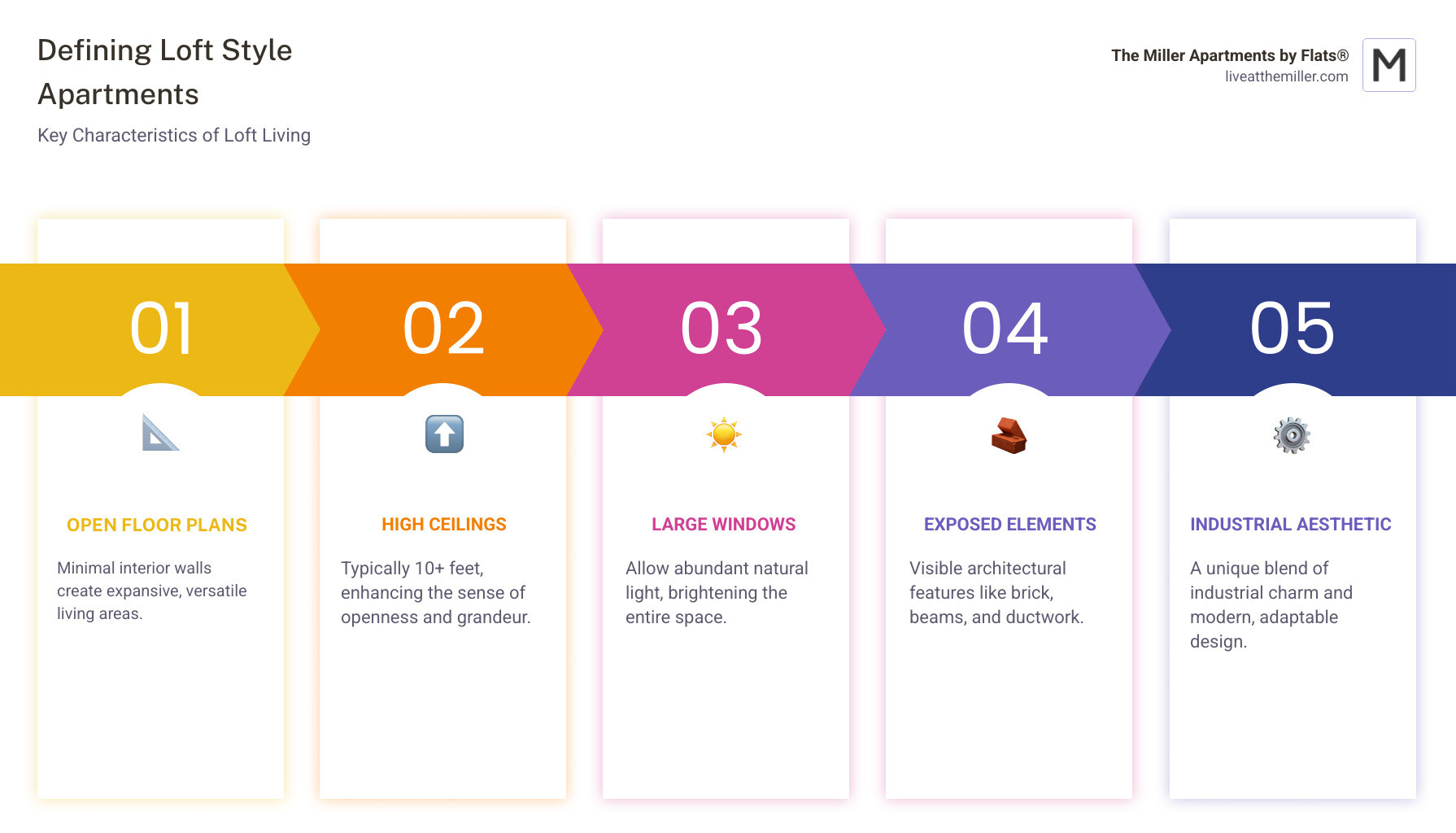
Key Features of Loft Style Apartments:
- Open floor plans with few or no interior walls
- High ceilings (typically 10+ feet, often 16-17 feet)
- Large windows providing abundant natural light
- Exposed architectural elements like brick, beams, or ductwork
- Flexible living spaces that adapt to your lifestyle
- Industrial aesthetic with modern finishes
Originally converted from warehouses, factories, and other industrial buildings in the 1960s by artists in New York City, loft apartments have evolved into sought-after urban residences. Today's loft market includes both hard lofts (authentic conversions of historic buildings) and soft lofts (newly constructed buildings designed to mimic the loft aesthetic).
Whether you're drawn to the creative freedom of an open canvas or the sophisticated urban vibe these spaces provide, understanding what makes a loft unique will help you make an informed decision about this distinctive housing option.
What Defines a Loft Style Apartment?
Picture walking into a space where the ceiling soars high above your head, sunlight streams through massive windows, and you can see clear across the entire home without a single wall blocking your view. This is the magic of a loft style apt - a living space that's as far from cookie-cutter as you can get.
The story of loft living begins in 1960s New York City, where creative artists faced a housing crisis. Traditional apartments were often too small for their needs, so they turned to abandoned warehouses, factories, and industrial buildings that developers had left behind. These spaces offered something precious: room to breathe, create, and live on their own terms.
What started as necessity became a movement. Loft conversion transformed these forgotten industrial spaces into homes, preserving their most striking features: those dramatic open floor plans, sky-high high ceilings, and wall-to-wall large windows that once lit factory floors. The exposed elements that might seem rough around the edges - think brick walls and visible pipes - became the very soul of loft living.
The Unique Characteristics of a loft style apt
Step into a loft style apt and you'll immediately understand why people fall in love with these spaces. The most obvious difference? The sheer openness. Where traditional apartments chop up space with walls and doors, lofts accept the beauty of uninterrupted flow.
Exposed brick walls tell stories of the building's industrial past, adding warmth and character that you simply can't replicate. Visible ductwork snakes across ceilings, turning functional elements into design features. Concrete floors provide a sturdy, modern foundation, while original wood beams - once structural necessities - now serve as stunning architectural focal points.

The natural light in these spaces is truly spectacular. Those enormous windows weren't just for show - they were designed to illuminate entire factory floors, and now they flood your home with sunshine from dawn to dusk. This abundance of light, combined with the flexible space, means you can reimagine your layout whenever inspiration strikes.
Every loft style apt becomes a blank canvas for personal expression. Want to move your living room to catch the morning sun? No problem. Dreaming of a home office with a view? The space adapts to your vision. For ideas on how to make the most of these unique features, you can View our gallery for inspiration.
Loft vs. Studio vs. Traditional Apartment
Understanding the differences between apartment types helps clarify what makes a loft style apt special. Each offers urban living, but the experience varies dramatically.
Traditional apartments follow a familiar blueprint: separate bedrooms, living rooms, and kitchens, all neatly divided by walls and doors. They offer defined spaces and conventional privacy - you know exactly where the bedroom ends and the living room begins.
Studio apartments combine living, sleeping, and cooking areas into one efficient space, typically ranging from 400 to 600 square feet. They're designed for streamlined living, perfect for those who value location over space. If you're curious about these compact options, take A look at studio apartments.
A loft style apt shares the open-concept nature of a studio but amplifies everything else. Think of it as a studio's sophisticated older sibling. Lofts typically span 1,000 to 2,000 square feet or more, with ceilings that can reach 16 to 17 feet high. The design aesthetic leans heavily into industrial chic, celebrating those raw, authentic elements rather than hiding them.
The key layout differences come down to scale and intention. While studios maximize efficiency in small spaces, lofts celebrate vastness. The square footage allows you to create distinct zones for different activities - a reading nook by the windows, a dining area under exposed beams, a sleeping space tucked into a cozy corner.
Privacy levels differ too. Traditional apartments offer the most privacy with separate rooms, while studios provide the least. Lofts fall somewhere in between - their size allows for creative room separation using furniture, curtains, or decorative screens, giving you privacy when you want it and openness when you don't.
The Pros and Cons of Loft Living
Choosing a loft style apt is like deciding whether to accept a completely different way of living. These unique spaces aren't for everyone, but for the right person, they can be absolutely transformative. Before you fall head over heels for those soaring ceilings and exposed brick walls, it's worth understanding both the magic and the reality of loft life.
The decision ultimately comes down to how well this distinctive living arrangement matches your lifestyle, budget, and daily needs. Urban dwellers who thrive in open, creative environments often find lofts irresistible, while others find that the lack of traditional room boundaries doesn't suit their living preferences.
Advantages: Why People Love Lofts
There's something undeniably captivating about walking into a loft style apt for the first time. The sheer sense of possibility hits you immediately – all that open space just waiting for your personal touch.
The spacious feel is perhaps the most obvious draw. Even a modestly sized loft feels grand thanks to those high ceilings and minimal walls. You're not just renting an apartment; you're getting a true blank canvas where traditional room layouts don't apply. Want your bed in the center of the space? Go for it. Dreaming of a massive dining table that seats twelve? You've got the room.
This creative freedom extends far beyond furniture placement. Many loft dwellers become amateur interior designers, using room dividers, strategic lighting, and furniture groupings to create distinct zones within their open space. The personalization possibilities are endless – something that appeals strongly to artists, entrepreneurs, and anyone who sees their home as an extension of their personality.
The abundant natural light streaming through those oversized windows creates an atmosphere that's hard to replicate in traditional apartments. During the day, you might find yourself needing fewer artificial lights, and the connection to the outdoors feels more immediate and present.
Perhaps most compelling is the unique character these spaces possess. Living in a converted warehouse or factory means your home has history. Those exposed beams once supported manufacturing equipment, and those brick walls witnessed decades of industrial activity. There's a story in every architectural detail that mass-produced apartment buildings simply can't match.
For those working from home, the flexibility is invaluable. Your living room can double as a conference space, or you can set up a proper studio area without feeling cramped. If you're looking to make the most of these design opportunities, you can Get modern interior design ideas or Find decor inspiration to help transform your space.
Disadvantages: Potential Drawbacks to Consider
While loft living has its devoted fans, it's important to acknowledge the practical challenges that come with all that open space and industrial charm.
Utility costs can be a real eye-opener. Heating and cooling a space with sixteen-foot ceilings and massive windows requires more energy than a conventional apartment. That gorgeous industrial aesthetic sometimes comes with older, less efficient building systems, meaning your monthly bills might be higher than expected.
Storage limitations catch many new loft dwellers off guard. These spaces weren't originally designed for residential living, so built-in closets and storage areas are often minimal or nonexistent. You'll need to get creative with armoires, shelving units, and storage solutions that work within the open layout.
The noise levels in lofts can be surprising. Sound travels freely across open spaces, so your upstairs neighbor's late-night movie marathon or your roommate's early morning workout routine becomes everyone's business. The industrial construction that makes lofts so visually appealing doesn't always provide the best sound insulation.
Privacy concerns are real, especially if you share the space with others. Without traditional walls separating living areas, creating private retreats requires thoughtful planning and perhaps some strategic furniture placement. Overnight guests might feel like they're sleeping in a fishbowl.
Finally, fewer amenities can be an issue, particularly in older converted buildings. While newer loft-style developments often include modern conveniences, some authentic conversions prioritize character over creature comforts. It's worth checking what's included before you commit to that charming but potentially amenity-light building.
Understanding these trade-offs helps ensure that your loft living experience matches your expectations and lifestyle needs.
Hard Lofts vs. Soft Lofts: What's the Difference?
The term "loft" has evolved, encompassing two distinct categories: hard lofts and soft lofts. Understanding their differences is key to finding the loft style apt that best suits your preferences and expectations.

Hard Lofts: Authentic Industrial Charm
Hard lofts are the original, authentic loft style apts. They are housed within historic buildings that were genuinely converted from their industrial or commercial past—such as former warehouses, factories, or even old schools. These conversions retain much of the original building's character and structural elements.
Key features of hard lofts include:
- Original Exposed Materials: You'll find genuine exposed brick, concrete floors, large wood beams, and visible plumbing or electrical conduits. These elements are not decorative additions; they are part of the building's original structure.
- Unique Character: Each hard loft often has its own unique quirks and historical details, reflecting the specific nature of the building it once was. This can include service-like elevators, unique window placements, and irregular floor plans.
- Large Square Footage: Hard lofts often boast exceptionally large square footage, providing expansive, open spaces.
While hard lofts offer unparalleled charm and a sense of history, they might also come with certain considerations such as potentially older infrastructure or less modern amenities compared to newer constructions.
| Feature | Hard Lofts | Soft Lofts |
|---|---|---|
| Origin | Converted industrial/commercial buildings | Purpose-built residential buildings (new construction) |
| Authenticity | Authentic, retains original building elements | Mimics industrial aesthetic, modern interpretation |
| Exposed Elements | Genuine exposed brick, beams, pipes, concrete | Designed to look exposed, but often decorative/finished |
| Layout | Very open, minimal walls, large, irregular | Often more defined rooms, sometimes with separate bedrooms |
| Amenities | Can be limited due to age of building | Typically full suite of modern amenities |
| Insulation/Efficiency | Can be less energy efficient (older structures) | Generally more energy efficient (newer construction) |
Soft Lofts: The Modern Take on a Classic
Soft lofts are the modern interpretation of the loft style apt. These are newly constructed residential buildings that are designed to mimic the aesthetic and feel of traditional hard lofts, but with all the conveniences of contemporary construction.
Characteristics of soft lofts include:
- Loft-Inspired Design: They often feature high ceilings, large windows, and an open-concept layout, but the exposed elements (like brick or ductwork) are typically decorative or purposefully integrated rather than being original structural components.
- Modern Finishes: Soft lofts often come with sleek, updated finishes, modern kitchens and bathrooms, and energy-efficient appliances.
- Defined Rooms: While still open, many soft lofts incorporate more defined spaces, sometimes even with separate bedrooms, offering a balance between open-plan living and conventional privacy.
- Amenities: These buildings are typically equipped with a full range of modern Community amenities such as fitness centers, co-working spaces, and resident lounges. They are also generally more energy efficient due to newer building codes and materials.
Soft lofts offer the best of both worlds for those who love the loft aesthetic but prefer the comfort, efficiency, and amenities of a newly built residence.
How to Find Your Ideal Loft Apartment
Starting on the search for your ideal loft style apt can be an exciting trip. The apartment hunting process involves careful planning, thorough due diligence, and understanding the rental market.

Tips for a Successful loft style apt Search
To ensure a smooth and successful search for your perfect loft style apt, consider these practical tips:
- Start Your Search Online: Public online listing services are a great starting point. Use specific filters for "loft" or "loft style" apartments. This will give you a broad overview of what's available in your desired locations. You can Explore available floorplans and even Take a virtual tour of our spaces to get a feel for potential homes.
- Research Locations: Lofts are predominantly found in urban areas, often in formerly industrial zones that have undergone revitalization. Research different neighborhoods in your city to find areas that align with your preferences for commute, lifestyle, and amenities. Walking around neighborhoods during different times of the day can give you a better sense of the vibe, atmosphere, and noise levels.
- Determine Your Budget: The cost of lofts can differ from traditional apartments due to their size and unique features. Factor in not just the rent, but also potential higher utility costs due to the large, open spaces. Being prepared with a clear budget will help you narrow down your options.
- Set Your Apartment Priorities: Before you start touring, make a list of your non-negotiables. Is abundant natural light a must? Do you need specific amenities? How important is privacy? Having your wants and needs nailed down will streamline your search.
- Schedule Tours and Be Prepared: When you find listings that catch your eye, schedule apartment tours. Be ready to ask questions, verify details from the listing, and pay attention to the overall condition of the building, not just the unit. If you're serious, be prepared to apply quickly, especially in competitive markets.
Questions to Ask Before You Rent
Before signing a lease for a loft style apt, asking the right questions can save you from future headaches and ensure a comfortable living experience.
- What is included in the rent? Clarify what utilities (water, gas, electricity, internet) are included and which you will be responsible for. This is especially important for lofts, given their potential for higher utility bills.
- What is the pet policy? If you have beloved companions, inquire about the building's specific pet policy. Are there size or breed restrictions? Are there additional fees or deposits for having pets?
- What is the parking situation like? Urban areas can have limited parking. Ask about on-site parking, designated spots, or street parking options.
- What is the building maintenance like? Especially for older hard lofts, inquire about how maintenance issues are handled. Who is responsible for repairs? How quickly are issues typically addressed?
- Are there any upcoming building renovations or repairs? Knowing about planned construction or maintenance can help you anticipate potential disruptions.
- What are the noise levels like in the building and neighborhood? Due to their open nature, lofts can be susceptible to noise. Ask about soundproofing, and if possible, visit at different times of day to gauge noise levels.
- Is there any additional storage space? Given the typical lack of built-in storage in lofts, ask if there are storage lockers or other options available.
As a prospective resident, you have rights. It's always a good idea to Know your rights under the Fair Housing Act to ensure a fair and equitable rental process.
Frequently Asked Questions about Lofts
Are loft apartments more expensive than other apartments?
The cost of a loft style apt can differ from that of a traditional apartment or a studio. Think of it like this: you're often paying for more space! Lofts typically boast larger square footage, those fantastic high ceilings, and unique architectural features that set them apart. Their desirable locations, often nestled in vibrant, revitalized urban areas, also play a big role.
The buzz and demand for these distinctive living spaces contribute to their value. While prices can swing quite a bit based on the city, the neighborhood, and the specific features of each unit, the pricing often reflects these unique qualities. It's also worth remembering that because of their generous size and open layouts, utility costs for heating and cooling can sometimes be higher, which is another factor to consider in the overall expense. Pricing is always fluid and subject to market changes, so it's good to keep that in mind as you explore your options.
How do you create privacy in an open-plan loft?
One of the joys of a loft style apt is that wide-open feel, but sometimes you just need a little personal space! Since traditional walls are often missing, getting creative with privacy is part of the fun.
You can use room dividers, like stylish screens or sliding panels, to section off areas without making anything feel too permanent. Large, freestanding bookshelves or storage units are fantastic for this; they act as functional "walls" while giving you extra storage - a win-win! Another popular trick is to install floor-to-ceiling curtains on a track. These can be easily drawn for instant privacy, especially for sleeping areas, and then opened up again when you want that expansive feeling back.
Think about strategic furniture placement too. A tall headboard or a large sofa can naturally define a living or sleeping zone. And while they don't block sound, using different rugs and lighting can help create distinct "zones" within your loft, making each area feel like its own cozy nook. It's all about playing with the space and finding what works best for your lifestyle!
Are lofts energy efficient?
The energy efficiency of a loft style apt can really depend on its age and how it was built or renovated. It's not a one-size-fits-all answer!
If you're looking at a hard loft, which is a converted industrial building, they weren't originally designed with modern energy efficiency in mind. Those beautiful large windows might be single-pane, and insulation could be less robust, potentially leading to higher heating and cooling costs. However, many hard lofts have undergone amazing renovations that include updated insulation, energy-efficient windows, and modern heating and cooling systems, which can significantly improve their efficiency.
On the other hand, soft lofts are newer buildings designed to mimic the loft aesthetic. Because they're built to current standards, they generally come with better insulation, double or even triple-paned windows, and up-to-date HVAC systems. This usually makes them more energy-efficient from the start.
While those high ceilings mean there's more air to heat or cool, the open layout can also allow for excellent natural light and air circulation, sometimes reducing the need for artificial lighting. When you're touring a loft style apt, it's always a smart idea to ask about the insulation, windows, and HVAC system, and if possible, get an idea of past utility costs to help you budget.
Conclusion
So, there you have it! A loft style apt truly offers a one-of-a-kind living experience. It's where industrial history meets modern urban sophistication, creating spaces that are both grand and incredibly personal. Think wide-open floor plans, ceilings that seem to touch the sky, and windows that invite the city lights right in. Lofts are like a blank canvas, just waiting for you to add your unique splash of personality. They really are a refreshing change from typical apartment living.
Whether you're enchanted by the authentic, storied charm of a hard loft, or you prefer the sleek, convenient vibe of a soft loft, now you have the insights to make a smart choice. For anyone who loves expansive spaces, creative freedom, and that undeniable urban cool, diving into loft living can be an incredibly rewarding trip.
If this sounds like your dream home, look no further than The Miller Apartments. Nestled in the vibrant Vancouver Waterfront neighborhood of Vancouver, WA, The Miller offers exceptional living spaces that beautifully blend modern design with the area's rich industrial past. Here, you'll find fantastic amenities like a relaxing day spa, a state-of-the-art fitness center, and a convenient coworking lounge, all designed to support your wellness and foster a strong community spirit. The Miller’s special touch comes from its perfect mix of convenience, comfort, and sophistication, all wrapped up in a prime location.
Ready to find your next home? Explore and Find our modern design apartments that promise a truly divine living experience.