

Loft Living: Unpacking the 'Weirdness'
Many people wonder are loft style apartments weird? Not at all. They're simply different from traditional homes. What seems 'weird' to some is actually their unique blend of open space, industrial charm, and creative potential.
Here's a quick look at what sets lofts apart:
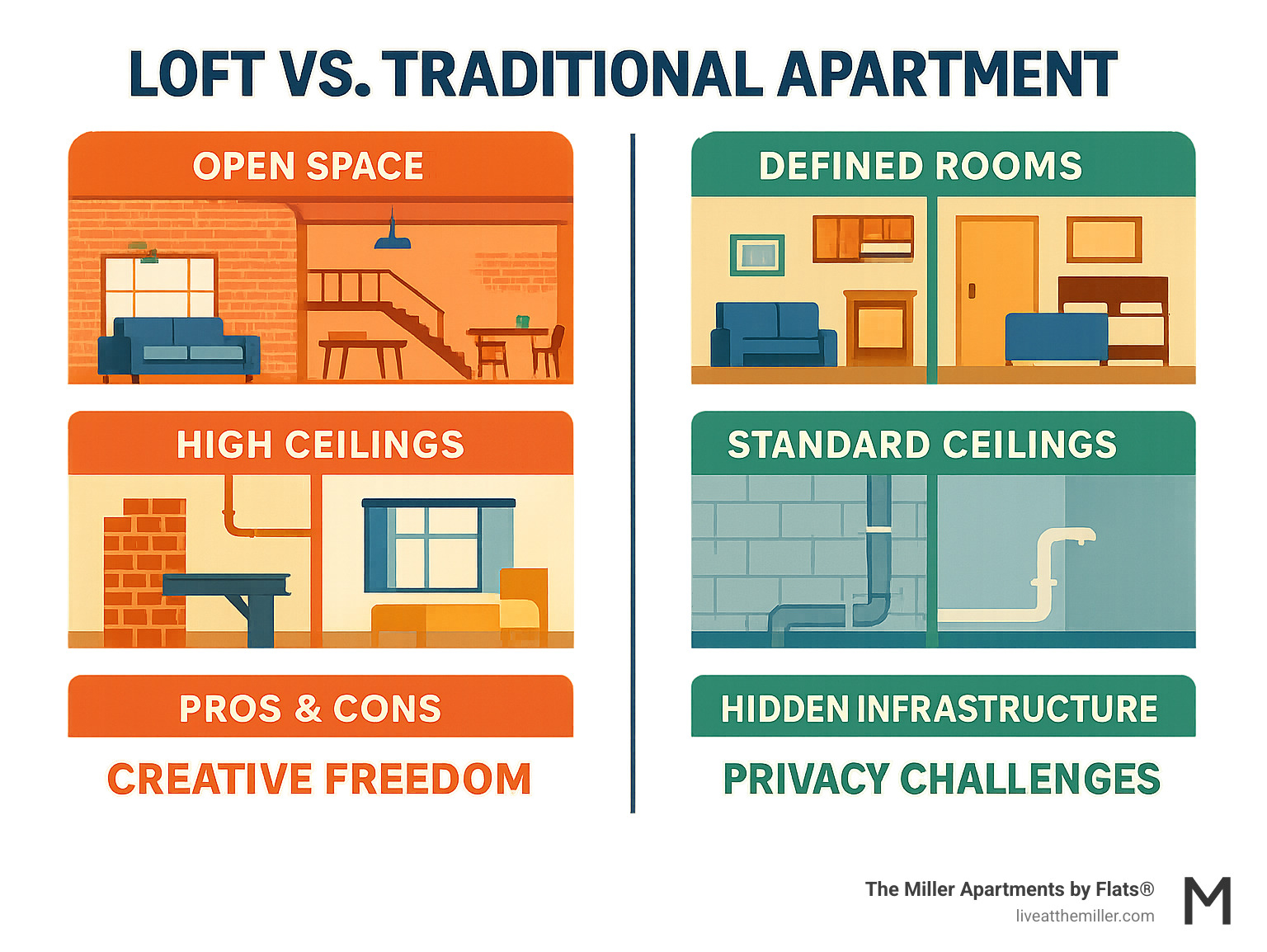
- Open Layouts: Few or no interior walls mean living, sleeping, and kitchen areas often flow together.
- High Ceilings: Often 10 to 17 feet tall, creating a vast sense of space.
- Exposed Elements: You'll often see exposed brick, pipes, or beams, a nod to their industrial past.
- Large Windows: Bringing in tons of natural light.
- Unique Challenges: They can be noisy, hard to heat/cool, and offer less privacy or built-in storage.
If the first image that pops into your head when you hear 'loft' is a cool apartment from a TV show like New Girl, you're on the right track. Lofts have a distinct look. They blend history with modern design.
They started as old industrial buildings. Think factories and warehouses. Artists in places like New York City first turned these big, open spaces into homes and studios. They liked the more accessible rent and huge rooms for their work. Over time, this style caught on.
Today, lofts offer soaring ceilings and exposed elements like brick or pipes. They are often one large, open area. This can feel very different from a standard apartment with separate rooms. This difference is what makes some people ask if they are 'weird'. But for many, it's this very uniqueness that makes them so appealing.
The "Weird" Factor: What Makes Lofts So Different?
The perception of lofts being "weird" often stems from their stark contrast to conventional living spaces. Imagine stepping into an apartment where the walls don't quite reach the ceiling, or where exposed pipes and brick are not just decorative, but part of the building's very bones. This is the essence of a loft, an open-concept industrial space transformed into a residential apartment.
Traditional lofts are characterized by their very open-concept design, featuring high ceilings and often exposed elements like brick, metal beams, and polished concrete floors. Walls typically do not go all the way to the ceiling, creating an expansive, flowing environment. This lack of traditional partitioning is a major departure from standard apartments, which usually have clearly defined rooms for living, dining, and sleeping. This unique architectural history and commitment to openness are what truly set lofts apart, making them a distinctive choice in urban living. Those seeking Modern Design Apartments often find lofts to be an intriguing option.

From Factories to Funky Homes: A Brief History
The story of loft living is a fascinating journey from necessity to luxury. It began not in glamorous design studios, but in the gritty industrial landscapes of major cities. In the 1950s and 1960s, particularly in New York City and London, artists and bohemians found a hidden gem: abandoned factories and warehouses. These spaces, once busy with machinery and labor, offered vast, low-cost, and often derelict environments.
Artists, driven by the need for large, low-cost spaces to create their increasingly expansive and expressionist art (think Jackson Pollock, who needed room for his large-scale canvases), began to convert these industrial shells into combined live-work studios. They accepted the raw, unfinished aesthetic-the high ceilings, exposed brick, and abundant natural light from enormous windows-as part of their creative environment.
This movement, driven by urban pioneers and creative communities, slowly gained traction. By the 1970s, the trend began to evolve beyond the purely artistic, as more people recognized the unique charm and potential of these converted spaces. The "cool factor" of these industrial conversions, once seen as unconventional, started to appeal to a wider urban demographic, changing them into sought-after homes and luxury rentals by the 1980s. The traditional "raw" lofts of the past, with their peeling paint, have largely given way to upscale residences, but their industrial heritage remains a core part of their appeal.
Hard Lofts vs. Soft Lofts: The Authenticity Debate
As loft living grew in popularity, two distinct categories emerged: hard lofts and soft lofts. Understanding the difference is key to appreciating the "authenticity" of a loft space.
Hard Lofts are the OGs of the loft world. These are authentic industrial spaces-former factories, warehouses, schools, or commercial buildings-that have been directly converted into residential units. They embody the true spirit of loft living, preserving much of their original character.
- Characteristics:
- Exposed brick walls, concrete floors, and visible ductwork and piping.
- Massive, often original, industrial windows.
- High ceilings (often 10-17 feet or more).
- Minimal interior walls, maintaining a wide-open floor plan.
- Often located in historic urban industrial districts.
- Each unit tends to be unique, reflecting the original building's layout.
Soft Lofts, on the other hand, are new constructions designed to mimic the aesthetic and feel of traditional hard lofts. They are built from the ground up with the loft concept in mind, often featuring similar visual cues but with modern construction advantages.
- Characteristics:
- High ceilings and large windows, designed to flood the space with light.
- Open-concept layouts, though they may have more defined bedroom areas or separate bedrooms compared to hard lofts.
- Newer, more efficient systems (HVAC, plumbing, electrical) and potentially better soundproofing and insulation.
- Often include modern amenities like fitness centers, rooftop decks, and dedicated parking.
- While they may incorporate exposed elements like faux brick or polished concrete, these are typically designed features rather than original structural components.
Here's a table summarizing their key differences:
| Feature | Hard Lofts | Soft Lofts |
|---|---|---|
| Origin | Converted industrial/commercial buildings | New construction designed to look like lofts |
| Authenticity | True industrial conversions, original features | Mimic industrial aesthetic, modern construction |
| Materials | Original exposed brick, concrete, wood, metal | Often new materials, sometimes mimicking industrial |
| Efficiency | Can be less energy-efficient, older systems | Generally more energy-efficient, modern systems |
| Amenities | Fewer built-in amenities, focuses on raw space | More likely to have modern amenities (gym, parking) |
| Uniqueness | Each unit often has unique historical quirks | More uniform, designed for modern residential needs |
| Privacy | Very open, minimal privacy | May offer more defined spaces, potentially better soundproofing |
While some purists might argue that soft lofts lack the "authenticity" of their hard loft counterparts, both types offer a distinct living experience. Soft lofts provide a way to enjoy the aesthetic appeal of a loft with the comforts and efficiencies of modern construction, making them a popular choice for those who appreciate the style but prefer contemporary amenities.
The Allure of the Unconventional: Why People Love Loft Living
Beyond any perceived "weirdness," there's a profound allure to loft living that draws many. It's not just about a trendy look; it's about a lifestyle that champions creativity, openness, and a unique connection to your home. As one enthusiast put it, "An apartment designs you, but you design a loft." This captures the main appeal: lofts are like a blank page, a huge stage for your personal style.
The sheer amount of space, especially those soaring high ceilings and large windows, creates an amazing feeling of openness. This isn't just in your head; it means tons of natural light pours into every corner. This makes your home bright and welcoming. If you love having friends over, the open floor plan is a dream. It lets everyone move freely between the living, dining, and even kitchen areas. It's perfect for get-togethers, creating a sense of togetherness that traditional apartments often miss.
What's more, lofts naturally encourage a simpler way of living. Since there's often less built-in storage, people often find themselves getting creative with storage and decluttering. This leads to a more thoughtful approach to what you own. This mix of space, light, and the freedom to truly make the place your own is a huge draw for many. You can explore the possibilities in an Apartment Photo Gallery to truly see the potential.

A Canvas for Your Creativity
A loft's open layout is truly a designer's dream. Unlike regular apartments with set walls and rooms, a loft gives you amazing freedom. You become the designer of your own space. You decide where your living, dining, sleeping, and even work areas will be.
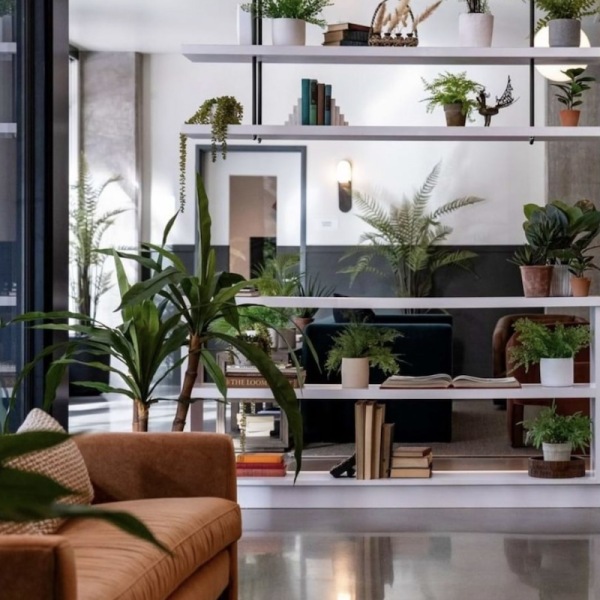
This creative freedom means your furniture isn't just for sitting. It's a tool to mark off different areas. A big sofa can show where the living room is. A cleverly placed bookshelf can create a cozy reading spot or even a semi-private sleeping space. Area rugs are another great way to visually define different "rooms" within the large open plan.
The tall walls offer plenty of room for big art pieces, huge murals, or even a projector screen for an impressive home theater. Imagine using bookcases and shelving units to divide a space while still letting light through. Or how about using floor-to-ceiling curtains or drapes to create soft, temporary walls for privacy? You could even use folding screens for privacy on demand, or large area rugs to visually anchor different zones. Modular furniture can be moved easily to change the space for different needs. Even plants and green walls can make natural, living dividers, or a series of art installations can visually break up a long wall. This ability to make the space truly yours is a big reason why people love lofts. For more ideas, check out Modern Apartment Interior Design Ideas.
The Ideal Loft Dweller: Who Thrives in Open Spaces?
Loft living isn't for everyone, and that's perfectly okay. But for a certain type of person, it's absolutely wonderful. The ideal loft dweller is someone who truly enjoys and thrives in open, flexible spaces. They often have a creative spirit, perhaps artists, designers, or simply those who enjoy a unique and expressive home.
Generally, lofts appeal to individuals or couples who prefer urban living. This group often looks for lively city areas with easy access to restaurants, entertainment, and cultural events. This is exactly where many lofts are found. They accept the energy of the city and value the convenience of living right in the middle of it all.
Also, people who like a minimalist lifestyle often find lofts very appealing. Since there isn't a lot of built-in storage, it encourages a more thoughtful way of dealing with your belongings. This leads to a cleaner and simpler life. The perfect loft resident sees the open space not as a problem, but as an exciting chance to design their home to perfectly fit their unique personality and needs. They don't mind the unconventional; instead, they see its beauty.
So, Are Loft Style Apartments Weird? Unpacking the Challenges
While the allure of lofts is undeniable, it would be disingenuous to ignore the practical challenges that lead some to wonder are loft style apartments weird. These unique characteristics, while part of their charm, can present real-world issues that prospective residents should be aware of. The very openness that defines a loft can also be its Achilles' heel when it comes to privacy, noise, and even basic comfort.
Imagine living in a space where sound travels unimpeded, where heating and cooling costs can skyrocket, and where finding a place for all your belongings becomes a daily puzzle. These are the "quirks" of loft living that require thoughtful consideration and creative solutions.

The "Echo Chamber" Effect: Why are loft style apartments weird for privacy?
One of the most frequently cited drawbacks of loft living is the significant challenge of privacy and noise control, giving rise to the question of why are loft style apartments weird in this regard. The open-concept design, with few or no interior walls, means that sound travels easily throughout the entire space. It's often said that "even a small whisper at one end can be heard at the other end." This creates an "echo chamber" effect, where everyday sounds-conversations, music, even the clatter of dishes-can permeate every corner of the apartment.
This lack of soundproofing is particularly problematic when sharing a loft with others or when hosting guests. Bedrooms may not have full walls, and bathrooms can sometimes be located in less secluded areas, leading to awkward moments. If one person is working remotely or needs a quiet space, the open layout makes separation almost impossible. Residents have reported frustration, especially if they live with a significant other and need different levels of quiet or privacy at various times.
Beyond internal noise, lofts, often located in urban environments and housed in older industrial buildings, can also suffer from a lack of soundproofing against external sources. Street traffic, neighborly activities, or even the general hum of a busy city can intrude more readily than in a traditional apartment with more layers of walls and insulation. This constant exposure to sound, both internal and external, is a primary reason why some find loft living to be "weird" or simply unsuitable for their lifestyle.
Comfort and Costs: The Practical Quirks of Loft Life
Beyond the noise, lofts come with a set of practical quirks that can significantly impact comfort and budget. Chief among these are the challenges related to heating, cooling, and storage.
The soaring high ceilings and large, often industrial-style, windows that give lofts their grand aesthetic can be a nightmare for temperature regulation. Warm air naturally rises, meaning that in winter, heat congregates at the ceiling, leaving the living areas below feeling chilly. One anecdotal account noted a significant increase in electricity for heating during winter, leading some residents to resort to space heaters to create warm pockets. Conversely, in summer, these vast, sun-drenched spaces can become stifling hot. While modern lofts may have better HVAC systems, older conversions are notoriously difficult to heat or cool efficiently, leading to higher utility bills. It's a common complaint that heating costs can be a challenge in the winter.
Another recurring issue for loft dwellers is the limited built-in storage solutions. Unlike traditional apartments with dedicated closets and cabinets, lofts often come with minimal, if any, enclosed storage. This necessitates creative storage strategies, turning the act of organizing into a constant challenge. Residents might find themselves needing to implement vertical storage units, multi-functional furniture, or even external storage units to keep clutter at bay in their otherwise open space.
These practical considerations-the potential for discomfort due to temperature extremes, the higher utility bills, and the perpetual quest for storage-are significant factors that contribute to the perception of lofts as unconventional or "weird" for many. Understanding these aspects is crucial for anyone considering this unique living style. For a better understanding of what you might expect, you can Explore Our Floorplans.
Making the "Weird" Work: Tips for a Functional Loft Home
The challenges of loft living, while very real, are far from impossible to overcome. For those who truly love the unique look and creative freedom these spaces offer, there are many practical ways to turn a potentially "weird" living situation into a wonderfully comfortable and functional home. It's all about smart design and seeing your loft as a blank canvas ready for your personal touch.
Creating Zones and Sanctuaries
Living happily in an open-concept loft means making clear, distinct areas for different activities, even without physical walls. This helps each part of your home feel special and useful.
You can use large pieces of furniture to create these zones. Think of a big, comfy sofa, a sleek credenza, or a tall bookcase. These can act like invisible walls, neatly marking off your living room, dining area, or even your sleeping space. Bookshelves, especially, are great for this; they divide a room while still letting light and air move freely. For more flexible or temporary separation, consider freestanding room dividers or folding screens. These can be easily moved or put away when you want to use the whole open space.
In sleeping areas, floor-to-ceiling curtains on a track can offer instant visual privacy when you need it most. They can turn an open corner into a cozy bedroom sanctuary. Remember to also use strategic furniture placement to guide people through your home and clearly mark areas for different activities. Maybe a work-from-home desk tucks neatly into a quiet corner, or your dining table clearly shows where meals are enjoyed.

Taming the Echo and Temperature
Controlling noise and keeping your loft at a comfortable temperature are key for truly enjoying the space.
To reduce echoes, bring in plenty of soft furnishings. Large area rugs on hard floors will make a huge difference in cutting down on sound bounce. Upholstered furniture, heavy drapes, and wall hangings or tapestries can also soak up sound waves. This makes the whole space feel warmer and much quieter. You can even hang big pieces of fabric art or special acoustic panels (which can look quite decorative) on bare walls to further quiet the room.
When it comes to temperature, ceiling fans are your best friend. They help move air around, especially those with a reverse setting. In winter, they can push warm air that rises up back down, making the entire space feel more evenly heated. In summer, they help circulate cool air. For those large windows, invest in energy-efficient window treatments. Heavy, insulated drapes or blinds create a barrier against heat loss in winter and heat gain in summer. This really helps manage those utility bills. It’s also smart to ask about the HVAC system's design for maximum efficiency before you move in.
Smart Storage for an Open Concept
The idea of limited storage in lofts can seem worrying, but it’s actually a chance to get creative with your organization.
Accept those high ceilings by choosing vertical storage units. Think tall, narrow shelving units or custom built-ins that reach far upwards. This uses the abundant vertical space lofts offer. Look for multi-functional furniture that does double duty, like ottomans with hidden storage, coffee tables with drawers, or beds with built-in storage underneath. Your bed’s base is often an overlooked spot; use under-bed storage with rolling bins or drawers to tuck away extra items.
Wall-mounted shelving or cabinets are another great idea. They provide storage without taking up valuable floor space, and they can even be stylish decorative elements. Finally, many loft dwellers find that the open environment naturally encourages a more minimalist lifestyle. By decluttering and being thoughtful about what they own, they need less storage space. As some suggest, "Skipping extra closets and opening up areas like the space under the stairs adds to the open feel of a home." This approach leads to a more streamlined and beautiful living space, proving that even the perceived "weirdness" of a loft's lack of built-in storage can lead to a more intentional way of life.
The Verdict: Weird, Wonderful, or a Bit of Both?
After diving deep into loft living-from their gritty industrial origins to their modern-day appeal-the question can finally be answered: are loft style apartments weird? The honest answer is both refreshingly simple and beautifully complex: they're not weird at all. They're just wonderfully different.
What some might call "weird" is really just a departure from the conventional. The open floor plans, exposed brick walls, and soaring ceilings that define loft living aren't strange-they're simply a unique approach to urban housing that celebrates space, light, and creative freedom.
The beauty of loft living lies in its contradictions. Yes, they can be challenging. The lack of privacy might drive some people crazy, and those heating bills can definitely sting. But for the right person, these very "quirks" become the foundation of an extraordinary lifestyle.
Lofts demand a certain mindset. They're perfect for those who see an empty canvas rather than an unfinished space. If you're someone who thrives on creative freedom, loves abundant natural light, and enjoys the process of designing your own unique environment, then a loft's so-called "weirdness" becomes its greatest strength.
Personal preference is absolutely key here. If you need clearly defined rooms, crave absolute quiet, or require tons of built-in storage, a traditional apartment might suit you better. But if you're drawn to urban living, appreciate industrial charm, and want a home that's truly a reflection of your personality, then loft living might be exactly what you're looking for.
The Miller Apartments understands this balance perfectly. Located in Vancouver's vibrant Waterfront neighborhood, it offers spaces that blend modern design with the area's rich industrial history. Its community features amenities like a day spa, fitness center, and coworking lounge that emphasize both wellness and connection-perfect complements to the loft lifestyle.
For the right person, a loft isn't just different-it's transformative. It's a space where you truly design your home rather than simply decorating a predetermined layout. Find a home that blends history with sophistication in our Modern Design Apartments.