


Why Apartments with Walking Trails Are Changing Modern Living
Apartments with walking trails offer the perfect blend of urban convenience and natural wellness that today's renters crave. These communities place scenic paths and nature loops right outside your door, eliminating the need to drive to parks or gyms for daily exercise.
Top Benefits of Trail-Adjacent Living:
- Health & Wellness: Easy access to daily walking routines and fresh air
- Pet-Friendly: Convenient dog walking without leaving the property
- Community Connection: Natural spaces for meeting neighbors and socializing
- Stress Relief: Peaceful outdoor escapes from work-from-home life
- Property Value: Premium amenities that improve your living experience
Modern apartment communities are integrating everything from wooded nature loops to paved greenways with fitness stations. Some feature creek-side boardwalks, while others connect directly to regional trail networks that span miles.
Whether you're looking for a morning jog through towering trees or an evening stroll along a riverfront path, these communities deliver outdoor recreation without the commute. Many also include complementary amenities like dog parks, outdoor fitness equipment, and scenic overlooks.
As one resident at Drayton Mills in South Carolina shared: "After the rush of the day, come home to serenity — nestled among trees and trails." This sentiment captures why trail-access living has become such a sought-after amenity.
Why Walking Trails Matter for Apartment Living
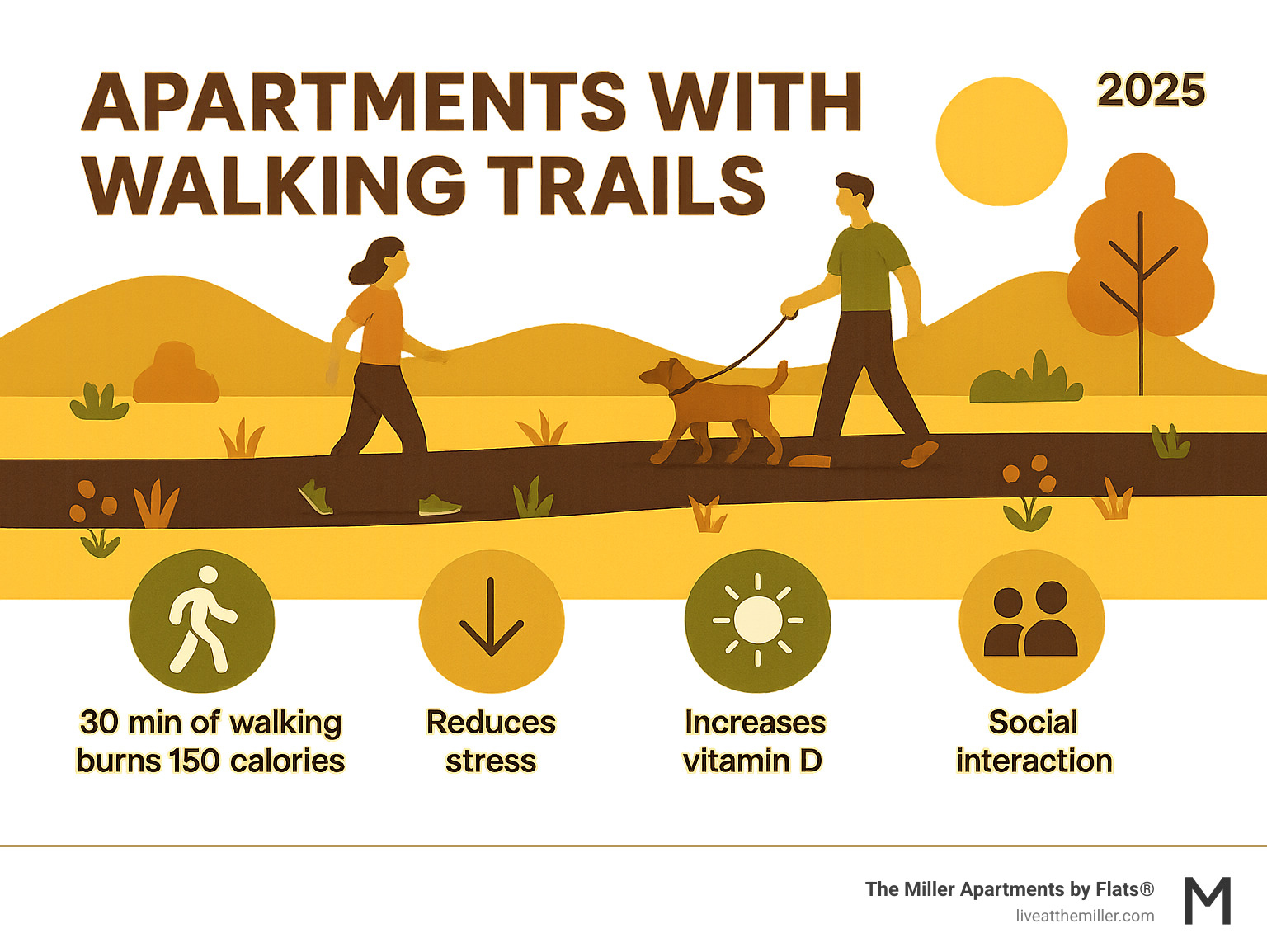
Walking trails within apartment communities are more than just a nice amenity. They signal a core commitment to wellness-focused living. Extensive research consistently shows that regular walking brings substantial health advantages. WebMD, for example, details benefits from better heart function to improved mood.
The biggest hurdle to consistent exercise? Convenience. When your apartment has walking trails right outside, that barrier disappears. You don't need a gym membership or a long drive to a park. Just step out and go. This direct access makes daily activity, like reaching that 10,000-step goal, genuinely achievable. Plus, the science is clear: even a moderate 30-minute walk daily can significantly improve your health, lowering risks for heart disease, diabetes, and depression.
Communities like Iron Horse Towers in Kitchener demonstrate this perfectly, offering residents direct access to the Ironhorse Trail system. Residents can step outside their apartments and immediately begin their daily walks, runs, or bike rides through connected parklands and recreational areas.
Beyond well-being, walking trails also boost a property's value. Think of them as a top-tier amenity. They consistently attract renters, often leading to higher occupancy and even premium rents. Plus, residents in communities with trails tend to stay longer. This means more stable neighborhoods and lower costs for property managers.
How Trails Lift Resident WellBeing
Walking trails provide immediate access to fresh air and natural light, both essential for maintaining circadian rhythms and vitamin D production. The mental health benefits are particularly pronounced regular exposure to green spaces has been shown to reduce cortisol levels and improve mood regulation.
At Waterview Apartments in Maplewood, Minnesota, residents describe their trail system as providing "serenity" after busy workdays. The community's wooded trails offer a natural buffer from urban stress, allowing residents to decompress without leaving their neighborhood.
The mindfulness aspect cannot be overlooked. Walking trails encourage residents to slow down, observe seasonal changes, and practice present moment awareness. This is especially valuable for remote workers who may spend entire days indoors.
Building a Stronger Community Through Shared Paths
Walking trails naturally foster social connections among residents. Unlike indoor amenities that may feel crowded or intimidating, outdoor paths provide comfortable spaces for casual conversations and spontaneous neighbor interactions.
Many communities organize group walks, morning jog clubs, and seasonal trail events. These shared activities not only foster connections among residents but also contribute to the well-known benefits of walking for physical and mental well-being.
Walking trails foster a vibrant dog-walking culture. More than just exercise, they're powerful community builders. Pet owners naturally connect, forming social networks and walking groups. These bonds strengthen the community, leading to happier residents and better retention. Learn more.
Types of Trails You'll Find in Modern Communities
Modern apartment communities offer diverse trail experiences to accommodate different preferences and fitness levels. Understanding these options helps renters identify communities that match their lifestyle needs.
| Trail Type | Surface | Best For | Accessibility | Maintenance |
|---|---|---|---|---|
| Wooded Loops | Natural/Gravel | Nature lovers, bird watching | Moderate | Seasonal |
| Paved Greenways | Asphalt/Concrete | All abilities, strollers | High | Year-round |
| Creek-side Boardwalks | Wooden planks | Scenic walks, photography | Variable | Regular |
| Park Connectors | Mixed surfaces | Commuting, longer walks | High | Municipal |
Wooded Loops for Nature Lovers
Wooded trail systems offer the most immersive natural experience within apartment communities. These paths wind through preserved forest areas, providing shade during summer months and spectacular color displays during autumn.
The Elms at Falls Run in Maryland exemplifies this approach, featuring 30 acres of wooded grounds with meandering trails that connect to the Cascade Falls Trail system. Residents enjoy year-round access to mature trees, seasonal wildflowers, and wildlife viewing opportunities.
Wooded loops typically feature natural surfaces like packed earth or wood chips, creating a softer walking experience that's easier on joints. The irregular terrain also provides a more challenging workout compared to flat paved surfaces.
Paved Greenways for All-Ability Access
Paved trail systems prioritize accessibility and year-round usability. These paths accommodate wheelchairs, strollers, and mobility devices while providing safe surfaces for evening walks with integrated lighting systems.
Trail West Flats in Kanata demonstrates this approach with modern paved pathways that connect to the Trans-Canada Trail system. The community's 2020-2021 construction included thoughtful grade management and lighting design to ensure safe access regardless of weather conditions.
Paved greenways often include fitness stations, benches, and distance markers to improve the exercise experience. The smooth surfaces make these trails ideal for jogging, cycling, and group fitness activities.
10 Standout Apartments with Walking Trails
The following communities represent the best examples of integrated trail living, each offering unique approaches to connecting residents with nature and wellness opportunities.
Urban Lofts with Apartments with Walking Trails Along the Riverfront
Riverfront communities offer some of the most scenic trail experiences available in apartment living. These paths typically feature boardwalks and paved sections that follow water features, providing constantly changing views and natural cooling effects.
The Club at the Park in Vancouver, Washington, exemplifies this approach with its adjacency to Columbia Tech Center Park. Residents enjoy immediate access to walking trails that wind through parkland while offering views of the surrounding landscape. The community's 96.34% resident recommendation rate reflects the high satisfaction with this trail-integrated lifestyle.

Riverfront trails often connect to broader regional networks, allowing residents to extend their walks or bike rides well beyond the immediate community. These connections are particularly valuable for commuters who can incorporate trail segments into their daily routines.
Suburban Retreat Apartments with Walking Trails Winding Through Woodlands
Woodland communities prioritize privacy and natural immersion, creating trail systems that feel like private forest retreats. These developments typically preserve existing tree canopies and integrate paths that minimize environmental impact.
Conifer Ridge Apartments in Maplewood, Minnesota, showcases this approach with trails that wind through mature trees and natural areas. The community's marketing emphasizes the "serenity" of coming home to "trees and trails," reflecting the peaceful atmosphere these environments create.

Woodland trails often feature interpretive elements like native plant identification markers, bird watching stations, and seasonal photography opportunities. These educational components improve the trail experience while fostering environmental awareness among residents.
Park-Side Residences with Integrated Loop & Fitness Stations
Communities adjacent to public parks can leverage existing trail infrastructure while adding their own improvements. This approach provides residents with extensive trail networks without requiring large private land holdings.
Ballantrae Apartments in Eagan, Minnesota, demonstrates this strategy with direct access to Eagan's trail system, parks, lakes, and wildlife reserves. The community's proximity to the new Woodhaven Park provides residents with state-of-the-art recreational facilities just minutes from their apartments.
Integrated fitness stations along these trails typically include equipment for strength training, stretching, and cardiovascular exercise. These installations create outdoor gym experiences that complement traditional indoor fitness centers.
Lake-Adjacent Communities Featuring Multi-Use Trails
Lakefront trail systems offer unique recreational opportunities including wildlife viewing, fishing access, and water sports connections. These communities often feature trails that circle water bodies, providing varied perspectives and natural cooling effects.
Multi-use trails accommodate pedestrians, cyclists, and sometimes even small watercraft portage routes. The diverse usage patterns create vibrant outdoor spaces that remain active throughout the day.
Tech-Hub Homes Connected to Regional Trail Networks
Communities in technology corridors often emphasize trail connectivity for commuting and recreation. These developments typically feature secure bike storage, electric vehicle charging stations, and coworking spaces that support the tech professional lifestyle.
Bridle Trails apartments in Washington State exemplifies this approach with proximity to Bridle Trails State Park and connections to regional trail networks. The community's smart home technology and ultrafast internet complement the outdoor amenities, creating a balanced live-work environment.
What to Look for When Touring Apartments with Walking Trails
When evaluating apartments with walking trails, specific features distinguish exceptional communities from basic offerings. Understanding these elements helps renters make informed decisions about trail-integrated living.
Trail surface quality directly impacts usability and safety. Well-maintained paved surfaces provide year-round access, while natural surfaces offer softer walking experiences but may require seasonal maintenance. Look for communities that clearly communicate their trail maintenance schedules and surface expectations.
Lighting systems are crucial for evening use and overall safety. Quality trail lighting should provide adequate visibility without creating light pollution that disturbs wildlife or nearby residents. Solar-powered lighting systems are increasingly common and demonstrate environmental consciousness.
Signage and wayfinding elements improve the trail experience while ensuring resident safety. Clear trail markers, distance indicators, and emergency contact information should be visible throughout the system. Some communities include QR codes that link to digital trail maps and community information.
Accessibility features determine whether trails accommodate all residents regardless of mobility levels. Waterfront Vancouver Washington communities often excel in this area, providing accessible pathways that connect to broader municipal trail networks.
Emergency call boxes or cellular coverage verification ensures resident safety during trail use. Communities should be able to demonstrate reliable communication access throughout their trail systems.
Dog waste stations and pet amenities indicate thoughtful planning for pet-owning residents. Well-designed communities integrate these facilities naturally into the trail experience without creating maintenance or aesthetic issues.
Safety & Accessibility Checklist for Trail Amenities
Handrails and safety barriers should be present where trails cross elevation changes or water features. These elements should complement the natural environment while providing necessary safety features.
Grade management ensures trails remain accessible to residents with varying mobility levels. Excessive slopes can exclude wheelchair users, parents with strollers, and residents with mobility challenges.
Visibility and sightlines throughout the trail system help prevent accidents and improve security. Overgrown vegetation or blind corners can create safety concerns that well-maintained communities address proactively.
Questions to Ask the Leasing Team
Maintenance schedules reveal the community's commitment to trail upkeep. Ask about seasonal maintenance, surface repairs, and vegetation management to understand long-term trail quality expectations.
Future expansion plans indicate whether the community will continue investing in trail amenities. Some communities have phased development plans that will add trail connections or improved features over time.
Resident events and programming demonstrate how the community leverages its trail amenities for social engagement. Group walks, nature programs, and seasonal celebrations can significantly improve the trail living experience.
Frequently Asked Questions about Apartments with Walking Trails
How do walking trails influence daily fitness routines?
Walking trails transform exercise from a scheduled activity into an integrated lifestyle element. Residents report that having trails immediately accessible eliminates the mental barriers that often prevent consistent exercise. The convenience factor is particularly significant for busy professionals who can incorporate trail walks into their daily routines without additional travel time.
Research shows that residents of trail-adjacent communities average 2,000-3,000 more daily steps compared to those without immediate trail access. This increase translates to significant health benefits including improved cardiovascular fitness, better weight management, and improved mental well-being.
The variety offered by trail systems prevents exercise boredom that often derails fitness routines. Residents can vary their routes, distances, and intensity levels while maintaining the convenience of starting from their front door.
Are community trails typically open year-round?
Most well-designed community trail systems remain accessible throughout the year, though usage patterns and maintenance schedules vary by season. Paved trails generally offer the most consistent year-round access, while natural surface trails may have seasonal limitations during extreme weather conditions.
Communities in northern climates often maintain trails for winter activities like snowshoeing or cross-country skiing. Park Ridge Place in Kanata, for example, promotes year-round trail access including winter sports opportunities.
Lighting systems and surface treatments ensure safe winter use in many communities. However, residents should verify specific policies regarding winter maintenance and any seasonal restrictions during the leasing process.
Do most trails connect to other pet amenities like dog parks?
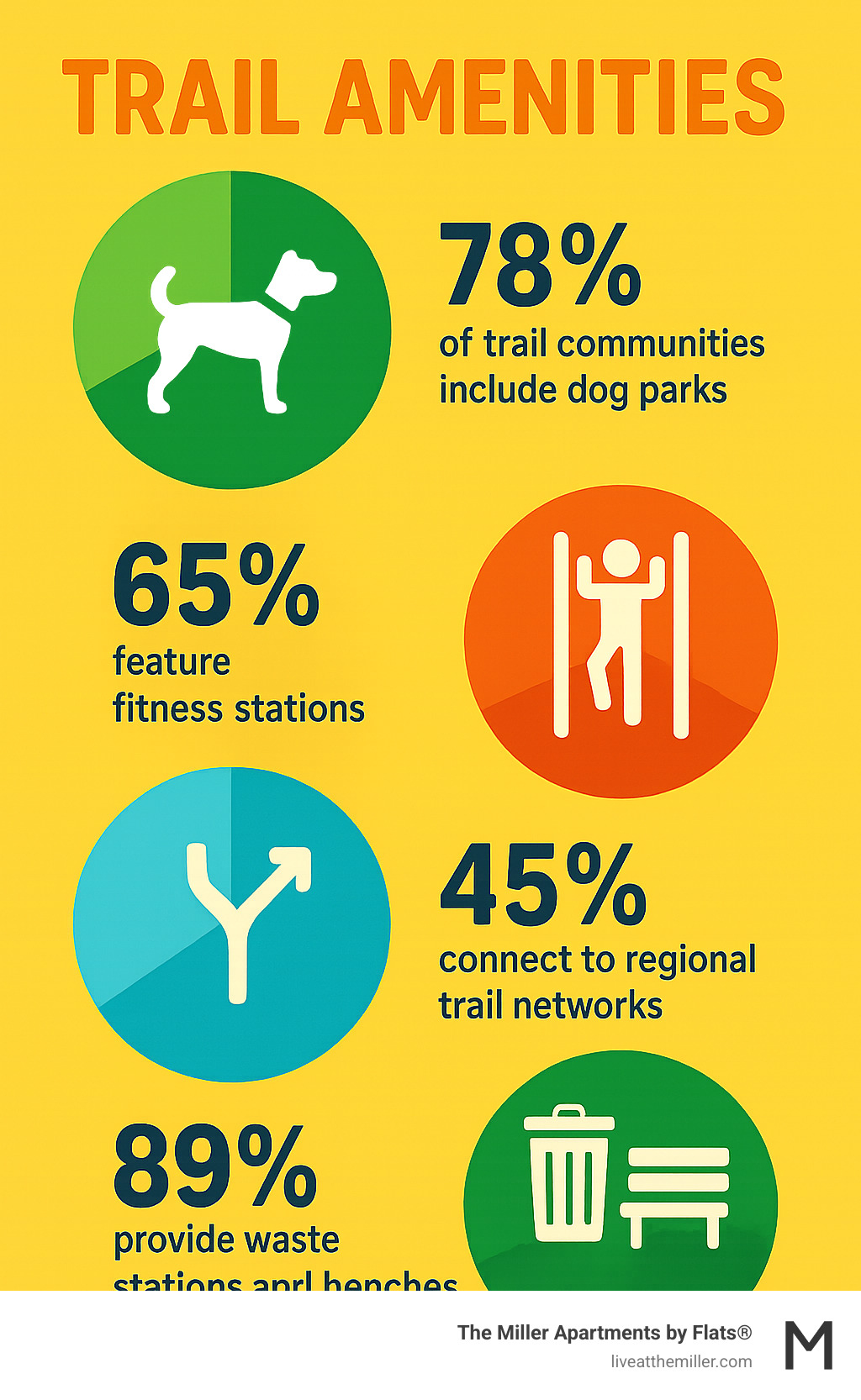
Modern trail-integrated communities typically design comprehensive pet amenity systems that include dedicated dog parks, waste stations, and pet washing facilities. The integration of these amenities creates seamless experiences for pet-owning residents.
Communities like Iron Horse Towers demonstrate this approach by combining trail access with on-site dog parks and pet-friendly policies. The trail systems provide exercise opportunities while dedicated dog areas offer socialization and off-leash play.
Well-designed communities also include pet waste stations throughout their trail systems, making it convenient for residents to maintain clean and pleasant environments for all users.
Conclusion
Apartments with walking trails represent the future of residential living, where wellness, community, and convenience converge in thoughtfully designed environments. These communities recognize that modern renters seek more than just shelter—they want lifestyles that support their health, social connections, and daily well-being.
The examples explored throughout this guide demonstrate how trail-integrated living transforms daily routines, from morning coffee walks to evening stress-relief strolls. Whether through wooded loops that provide natural serenity or paved greenways that accommodate all abilities, these communities create opportunities for residents to prioritize their health without sacrificing urban convenience.
The community-building aspect of shared trail systems cannot be overstated. When residents regularly encounter neighbors on peaceful walks, natural social connections develop that improve overall satisfaction and create lasting friendships. Pet owners particularly benefit from the social opportunities that develop around trail-based dog walking routines.
For those considering trail-adjacent living, The Miller Apartments in Vancouver, Washington, exemplifies how luxury amenities can complement natural outdoor spaces. The community's waterfront location provides residents with both sophisticated urban living and immediate access to outdoor recreation opportunities that support active lifestyles.
As the demand for wellness-centered living continues to grow, communities that successfully integrate walking trails with comprehensive amenity packages will remain at the forefront of residential innovation. These developments prove that residents no longer need to choose between urban convenience and natural recreation—the best communities provide both right outside their doors.
The investment in trail-integrated living pays dividends in improved health, stronger communities, and improved quality of life. For renters prioritizing wellness and outdoor access, Luxury Apartments for Rent in Vancouver WA offer the perfect combination of modern sophistication and natural recreation that defines the future of apartment living.