

Why Modern Minimalist Apartment Interior Design is Changing Urban Living
Modern minimalist apartment interior design is about creating intentional, uncluttered spaces that prioritize function, beauty, and calm. Here's what you need to know:
Core Elements:
- Clean lines and simple forms - Furniture and architecture with straightforward, unadorned shapes
- Neutral color palettes - Whites, grays, beiges, and earthy tones as your foundation
- Quality over quantity - Fewer, better-chosen pieces that serve a purpose
- Natural light and negative space - Embracing emptiness as a design feature
- Thoughtful material choices - Wood, stone, linen, and other natural textures for warmth
Step inside a minimalist apartment and you'll notice something right away: you can breathe. There's no visual clutter competing for your attention. No surfaces crowded with forgotten items. Just carefully chosen pieces that earn their place.
This isn't about deprivation or living in an empty white box. Modern minimalism is intentional living through thoughtful design. It's recognizing that your home should be a sanctuary from the chaos of daily life, not a source of additional stress.
The numbers back this up. Homes designed with minimalist principles are reported to reduce stress levels by an average of 15%. Strategic use of space and light can make small apartments feel up to 20% larger. And satisfaction rates? They're 30% higher among people who accept minimalist interior design.
Whether you're in a compact studio or a spacious one-bedroom, the principles remain the same. Start with subtraction, not shopping. Clear surfaces. Choose a limited color palette. Then add back only what truly matters-pieces that serve a purpose or bring genuine joy.
The result? A space that feels calm, looks effortlessly sophisticated, and actually functions for how you live today.
The Core Principles of Modern Minimalist Apartment Interior Design
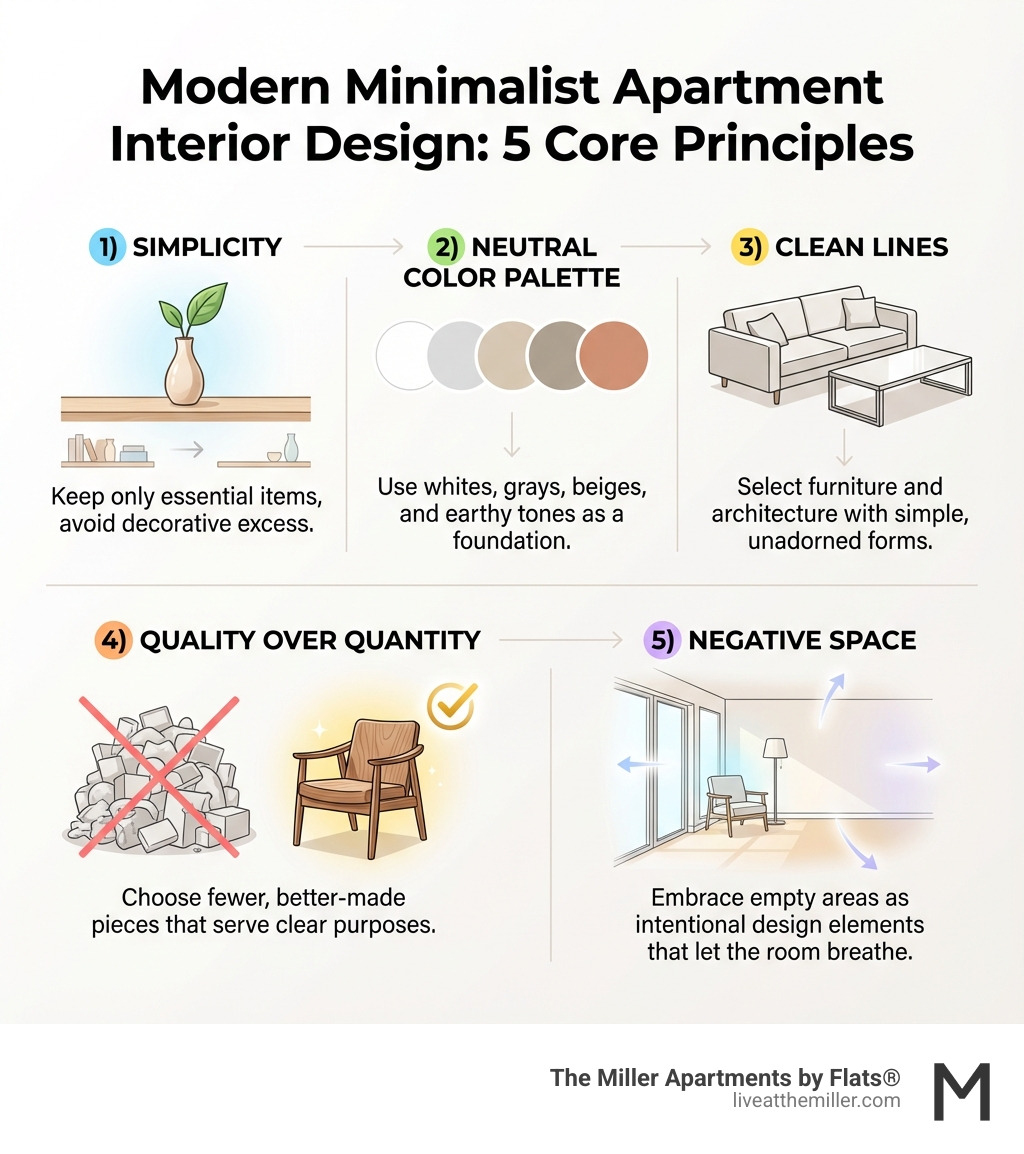
At its heart, modern minimalist apartment interior design is an art of intentionality. It's about stripping away the superfluous to reveal the essence of a space, creating environments that are both highly functional and deeply calming. The foundational principles guide every design decision, ensuring a cohesive and serene outcome.
The first principle is simplicity, manifesting through clean lines and simple forms. This means furniture and architectural elements feature straightforward, unadorned shapes. Think of a sofa with a clear silhouette or a table with smooth, uninterrupted surfaces. This simplicity creates a visual quietness that allows the eye to rest.
Next is the strategic use of negative space. This isn't just about emptiness; it's about embracing un-filled areas as intentional design elements. Negative space allows the elements within a room to breathe, prevents clutter, and contributes to an overall sense of openness and tranquility. It is often noted that "Empty spaces allow us to focus on ourselves and the people around us."
Uncluttered surfaces are paramount. This involves a ruthless approach to decluttering, keeping only items that are useful, essential, or bring genuine joy. The goal is to eliminate visual noise, making every item present feel deliberate and meaningful. This also extends to the concept of quality over quantity - investing in fewer, well-made pieces that stand the test of time and contribute to the aesthetic rather than simply filling a void.
Finally, the principle of form follows function ensures that every piece of furniture and every design choice serves a practical purpose while maintaining its aesthetic appeal. This is especially crucial in apartment living, where space is often at a premium. Each item should earn its place, contributing to both the utility and beauty of the home. These core elements are beautifully illustrated in various design traditions, as explored in Minimalist Design Style 101 .
While these principles are universal, their application can vary across cultural contexts. For instance, Japanese minimalism, often seen in the emerging "Japandi" style (a blend of Japanese and Scandinavian aesthetics), emphasizes natural materials, craftsmanship, and a deep connection to nature. Tokyo apartments, for example, often feature cleverly concealed kitchens behind folding doors inspired by traditional Japanese screens, and reconfigured floor plans to maximize natural light in dense urban environments. This approach often uses subtle wooden accents and raw materials to create serene interiors.
Scandinavian design, on the other hand, prioritizes light, warmth, and practicality, often incorporating light wood tones, simple furniture, and a focus on comfort. While both share a love for clean lines and functionality, Japanese minimalism might lean more towards starker contrasts and a more spiritual connection to space, whereas Scandinavian design often feels cozier and more hygge-inspired. These cultural interpretations demonstrate that minimalism is not a rigid set of rules, but a flexible philosophy adaptable to diverse needs and aesthetics.
Achieving a Functional Layout in Small Spaces
In apartment living, particularly in vibrant urban areas like Vancouver, WA, every square foot counts. Modern minimalist apartment interior design excels at changing smaller footprints into highly functional and aesthetically pleasing homes. The key lies in strategic planning and creative solutions.

One of the most effective strategies is strategic furniture placement. This means arranging furniture to define distinct areas within an open-concept space without using physical walls. For example, a well-chosen rug can delineate a living area, and a console table can subtly separate it from a dining nook. This creates zones for different activities, making a small apartment feel more expansive and organized.
Open-concept living, a hallmark of many modern apartments, benefits immensely from minimalist principles. By keeping visual clutter to a minimum, these spaces feel more fluid and interconnected. Designers often use a consistent material or color palette throughout an open area to create a cohesive flow, preventing it from feeling chaotic.
Maximizing vertical space is another non-negotiable hack for small apartments. Tall, slender shelving units draw the eye upward, making ceilings appear higher and providing ample storage without encroaching on floor space. Built-in solutions, floating shelves, and even wall-mounted furniture are excellent ways to use vertical real estate. For more custom advice, consider exploring Modern Studio Apartment Ideas.
To make rooms feel larger, designers often employ a few clever tricks:
- Light colors: A neutral palette reflects light, contributing to an airy feel.
- Multi-functional furniture: Pieces that serve more than one purpose are invaluable. A storage ottoman, a dining table that doubles as a workspace, or a sofa bed are prime examples.
- Mirrors: Strategically placed mirrors can reflect light and views, creating the illusion of a larger, deeper space.
- Integrated furnishings: As seen in some minimalist designs, integrated units can house multiple functions (kitchen, bedroom, office) within a single, cohesive structure, maximizing every inch.
These practical hacks are especially beneficial for renters, who often face limitations on structural changes. Instead of permanent fixtures, renters can opt for freestanding pieces, temporary wall coverings, and innovative storage solutions that can be easily moved or removed.
Integrating a Seamless Home Office
The rise of remote work has made the home office an essential component of many apartments. In a minimalist setting, the goal is to integrate this workspace so seamlessly that it doesn't detract from the overall serene aesthetic.
One popular approach is the concealed workspace. This involves designing a desk area that can be hidden away when not in use. This could be a desk tucked into a closet, a fold-down desk integrated into a wall unit, or a "box" structure that houses the entire office setup, as seen in some innovative apartment designs. When closed, these solutions maintain the clean lines and uncluttered look of the minimalist apartment.
Multi-functional desks are another smart choice. A sleek desk can double as a console table in a living room, a vanity in a bedroom, or a dining table when needed. The key is to choose a desk with a simple, neat design that complements the existing decor. Often, a desk positioned in front of a window can create an inspiring workspace with a view, as demonstrated in some minimalist apartment changes.
When selecting office furniture, prioritize pieces that are both ergonomic and stylish. A Navy Office Chair Navy Office Chair with a clean design can blend into a living space, rather than standing out as a purely utilitarian item. Similarly, a Grey Ash Rotating Desk offers flexibility and a modern touch.
For apartments at The Miller, where residents may enjoy a balanced lifestyle, integrating a home office means creating a focused work environment that can effortlessly transition back into a relaxing personal space. For further inspiration on optimizing smaller spaces for both living and working, explore Modern Interior Design Ideas for Small Apartments.
The Minimalist's Palette: Color, Texture, and Light
In modern minimalist apartment interior design, the palette of colors, textures, and light is carefully orchestrated to create a sense of spaciousness, calm, and understated elegance. These elements are not just decorative; they are fundamental to defining the ambiance and character of the space, ensuring it feels inviting rather than stark.

By focusing on visual interest and tactile experience, designers prevent minimalist spaces from feeling cold or sterile. Instead, they become serene havens that engage the senses subtly.
Using Color and Enhancing a Neutral Scheme
The foundation of a minimalist color scheme is typically a neutral base. Whites, greys, and beiges are perennial favorites, as they reflect light, make rooms feel larger, and provide a calming backdrop. Earthy tones like chocolate brown, mossy green, and sand are also gaining popularity, offering a richer, warmer interpretation of minimalism. These muted palettes create a harmonious environment, as seen in many minimalist designs.
To prevent these neutral schemes from appearing bland, strategic pops of color are essential. The "70-20-10 rule" is a helpful guideline: 70% main neutral color, 20% supporting neutral, and 10% accent color. This accent can be introduced through:
- Artwork: A single, vibrant abstract piece can serve as a focal point, adding dynamism and warmth.
- Throw pillows and blankets: These are easy and inexpensive ways to introduce color and can be changed seasonally.
- Accent chairs or small decor items: A thoughtfully chosen piece in a bold hue can make a statement without overwhelming the space.
The key is intentionality: each splash of color should feel purposeful, enhancing the overall design rather than creating visual clutter.
Incorporating Natural Elements and Textures
To add warmth, depth, and character to a minimalist apartment, natural elements and textures are indispensable. They prevent the space from feeling sterile and invite a tactile experience. Consider the following:
- Wood: Pale timber floors, a Rectangular Coffee Table, or wooden accents bring organic warmth and a connection to nature. Live-edge furniture, for example, adds a unique, lively character.
- Stone and Concrete: These materials can provide a raw, utilitarian feel that grounds the space, as often seen in industrial-minimalist aesthetics.
- Textiles: Linen curtains, wool throws, cotton bedding, and textured rugs (like a Grey Area Rug) add softness and visual interest. Woven textures, in particular, can soften minimalist interiors.
- Houseplants: A few carefully chosen plants, such as a fiddle leaf fig or a snake plant, introduce life and freshness, energizing an ultra-minimal space. They are simple, effective decor pieces.
These elements contribute to a sophisticated, layered look, proving that minimalism doesn't have to be devoid of personality or comfort. For more ideas on integrating these elements, explore ideas for modern living.
The Role of Lighting in a Minimalist Apartment
Lighting is a powerful tool in modern minimalist apartment interior design, crucial for enhancing both ambiance and functionality. It can transform the perceived size and mood of a space.
Maximizing natural light is a top priority. This involves keeping windows unobstructed, using sheer curtains or blinds that allow light to filter in, and employing reflective surfaces like mirrors to bounce light around the room. Lighter paint colors on walls and ceilings also amplify natural illumination, making spaces feel brighter and more open.
Beyond natural light, a layered lighting scheme is essential for creating versatility and warmth. This typically includes:
- Ambient lighting: Provides overall illumination, often through recessed lights, ceiling fixtures, or Tree Floor Lamp.
- Task lighting: Focused illumination for specific activities, such as reading lamps by a sofa or under-cabinet lighting in a kitchen.
- Accent lighting: Highlights architectural features, artwork, or plants, adding depth and visual interest.
Statement light fixtures can also play a dual role as sculptural art pieces in a minimalist space. A unique pendant light or a floor lamp with a distinctive shape can add personality without clutter. Wall-mounted lighting is particularly effective in smaller apartments, as it frees up valuable floor and surface space, contributing to the uncluttered aesthetic. The careful interplay of light and shadow, as some designers treat it, becomes an object in itself, enriching the minimalist environment. For additional lighting inspiration, check out Modern Apartment Living Room Design.
Curating Your Space: Furniture, Decor, and Organization
In modern minimalist apartment interior design, every item in your home is chosen with purpose. This philosophy extends to furniture, decor, and the strategies used to keep everything organized. The goal is to create a space that feels curated, not empty, and functions seamlessly for daily life.
This section focuses on intentional curation, effective decluttering strategies, and intelligent smart storage solutions to maintain a serene and functional apartment.
Furniture and Materials for Modern Minimalist Apartment Interior Design
The selection of furniture is paramount in defining the modern minimalist style. Key pieces are chosen for their clean lines, simple forms, and often, their multi-functionality.
- Multi-functional furniture: In apartment living, pieces that serve more than one purpose are invaluable. This could be a coffee table with hidden storage, an ottoman that doubles as seating and storage, or a modular Modern Sectional Sofa that can be reconfigured.
- Low-profile sofas and beds: Furniture closer to the ground can create the illusion of higher ceilings and more open space. Platform beds with integrated storage are a prime example.
- Floating shelves: These provide display and storage without the visual bulk of traditional shelving units, maintaining an airy feel.
- Quality materials: Investing in pieces made from durable, high-quality materials like solid wood, metal, glass, and natural fabrics ensures longevity and contributes to the sophisticated aesthetic. These materials also add tactile and visual interest, preventing the space from feeling sterile. For example, a Rectangular Coffee Table in a quality finish can be a focal point.
Furniture should be chosen not just for looks, but for how it contributes to the overall calm and functionality of the apartment.
Decluttering and Smart Storage Solutions
Decluttering is the ongoing practice that maintains the minimalist aesthetic. It's not a one-time event, but a continuous process of intentional living.
- The 'one-in-one-out' rule: For every new item brought into the apartment, one old item must leave. This prevents accumulation.
- Regular purges: Schedule periodic reviews of your belongings to ensure everything still serves a purpose or brings joy.
- Keeping surfaces clear: This is a golden rule of minimalism. Countertops, tables, and shelves should be largely free of clutter, creating visual calm.
- Built-in cabinetry: Where possible, custom built-ins offer seamless storage solutions that blend with the architecture.
- Hidden storage: Opt for furniture with integrated storage, such as ottomans with lift-up tops, beds with drawers underneath, or media consoles that conceal electronics.
- Vertical storage: Use tall, slender bookshelves or wall-mounted units to store items without taking up floor space. Baskets and bins are excellent for organizing smaller items discreetly, as seen in many Storage + Organization solutions.
- The 80-20 rule: Consider keeping 80% of your items stored away and 20% immediately accessible. This approach helps maintain clear surfaces while ensuring necessary items are still at hand.
Balancing Simplicity and Personality in Modern Minimalist Apartment Interior Design
One common misconception is that minimalist design lacks personality. On the contrary, it provides a perfect canvas for balancing simplicity with personalization. By reducing visual noise, the few chosen items stand out and tell a story, making the space uniquely yours.
- Displaying meaningful objects: Instead of a multitude of knick-knacks, curate a small collection of items that hold sentimental value or aesthetic appeal. These become focal points, rather than getting lost in clutter.
- Curated art: A single, impactful piece of art can define a room's character. It can introduce color, texture, and a personal statement without needing other decorative elements.
- Books as decor: While excessive book collections can feel cluttered, a small, carefully arranged stack of favorite books on a coffee table or shelf adds warmth and intellectual charm.
- Creating a home, not a showroom: The goal is a lived-in space that feels inviting and comfortable. This means allowing for subtle signs of life-a comfortable throw blanket, a stack of current magazines, or a beloved mug-as long as they are kept tidy and intentional. The initial sparse design can be further defined and imbued with character through thoughtful decor.
By thoughtfully selecting what to display and where, you can create an apartment that embodies minimalist principles while radiating your unique personality.
Frequently Asked Questions about Minimalist Apartment Design
How can I make my minimalist apartment feel cozy and not cold?
Focus on texture by layering soft textiles like wool throws, linen curtains, and plush rugs. Incorporate warm, natural materials like wood and leather. Use a layered lighting scheme with warm-toned bulbs to create an inviting ambiance.
What are some good minimalist design hacks for renters?
Use removable wallpaper for an accent wall, swap out hardware on cabinets and doors (saving the originals), use freestanding shelves for storage and display, and invest in high-quality, multi-functional furniture that you can take with you when you move.
How do I start decluttering for a minimalist lifestyle?
Begin with one small area, like a single drawer or shelf. Use a method like the four-box system: keep, donate, discard, and relocate. The key is to be intentional, keeping only items that are useful, essential, or bring you joy.
Conclusion
Embracing modern minimalist apartment interior design is more than just a trend; it's a pathway to a more serene and intentional way of living. The benefits are clear: reduced stress, increased functionality, and a living space that feels significantly larger and calmer, even within the confines of an urban apartment.
By adhering to core principles like clean lines, neutral palettes, and quality over quantity, you create a foundation for peace. Thoughtful layouts, seamless home office integrations, and the strategic use of color, texture, and light transform an apartment into a true sanctuary. With smart storage and intentional curation, your home can reflect your personality without succumbing to clutter.
The Miller Apartments in Vancouver, WA, offer luxury living spaces that provide an ideal canvas for these design principles. With modern amenities and a focus on comfort and sophistication, residents can easily cultivate a minimalist aesthetic that complements their lifestyle.
Begin your journey towards a more intentional and beautiful living space by applying these minimalist principles today. Explore available floorplans and find how effortless modern minimalist living can be.