

Introduction: The Allure of Open-Concept Living
Ever wonder what are loft style apartments? These unique living spaces have captivated urban dwellers for decades, offering a distinct blend of history and modern design. They stand out from traditional apartments with their expansive open layouts and industrial charm.
Here's a quick look at what defines a loft apartment:
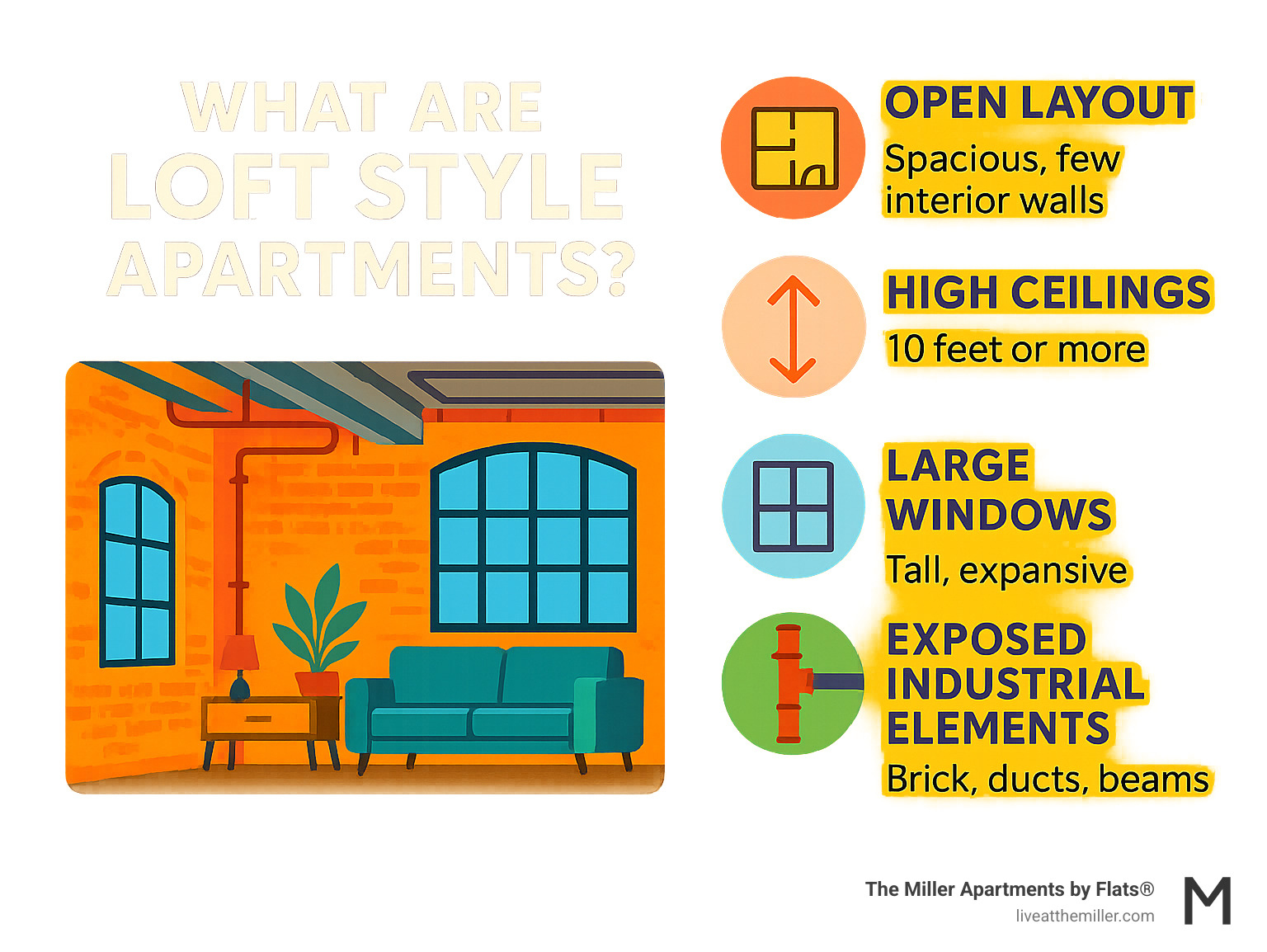
- Large, open spaces: They are typically quite spacious, often ranging from 1,000 to 2,000 square feet. They have very few, if any, interior walls.
- High ceilings: Lofts often boast impressive ceiling heights, commonly 10 feet or more, and sometimes up to 20 feet.
- Large windows: Expect tall, generous windows that flood the space with natural light.
- Industrial origins: Many lofts are converted from old commercial or industrial buildings, like factories or warehouses.
- Exposed features: You might find exposed brick walls, visible pipes, or structural beams, showcasing their architectural history.
It's easy to romanticize living in a loft. These homes offer a unique personality and character. They invite creativity and personal expression. They are a "blank canvas" for your style.
This guide explores the history of loft apartments, the different types, how they compare to other homes, and the advantages and challenges of loft living.
The History and Evolution of Loft Living
The history of what are loft style apartments is a story of urban adaptation. The concept of large, flexible live/work spaces dates back to 19th-century Parisian ateliers, where artists sought room and light for their work.
The modern loft apartment, however, emerged in the United States in the mid-20th century, particularly in New York City's SoHo district during the 1960s and 70s. As industries relocated, they left behind empty factories and warehouses. Artists, seeking large spaces, moved into these neglected buildings. The combination of vastness and incredible natural light was perfect for both living and creating art, giving rise to the "live/work" loft.
This movement of artists converting industrial buildings was a form of "urban pioneering." They transformed raw, functional spaces into vibrant homes and studios. This organic change revitalized these industrial areas, and soon, the unique charm of lofts appealed to a wider audience. The concept of Loft living: culture and capital in urban change became a significant part of urban evolution. Viewing an apartment photo gallery can provide a better feel for these spaces.
From Industrial Grit to Residential Gem
Converting old manufacturing facilities, warehouses, and factories into homes was a challenge. These buildings were designed for heavy machinery, not comfort. However, their core features, such as soaring high ceilings, massive windows, and strong structures, proved ideal for residential use.
During conversion, many original architectural elements were preserved. Exposed brick walls, concrete floors, sturdy wooden beams, and visible piping were often part of the building's structure or impractical to hide. This industrial "grit" became a key part of the loft's appeal, offering a connection to the past that traditional apartments lack.
The Modern Interpretation of Loft Style
As loft living grew in popularity, developers took notice. By the 1980s, they began constructing new buildings designed to capture the loft aesthetic. These "soft lofts" offered the open layouts, high ceilings, and large windows of traditional lofts but with modern amenities and finishes.
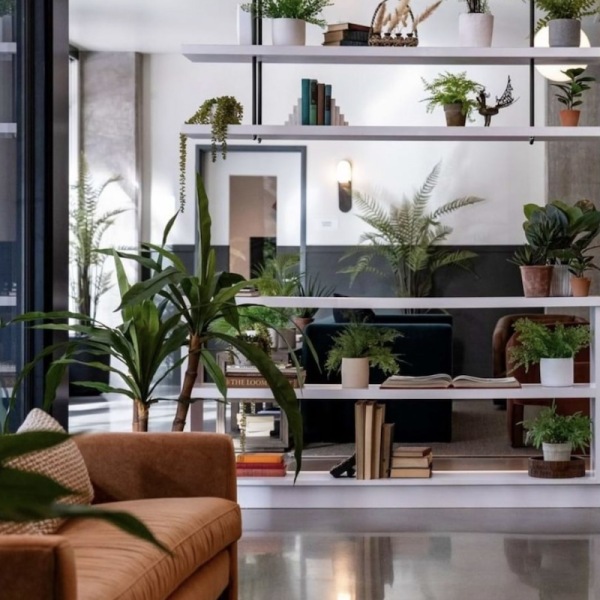
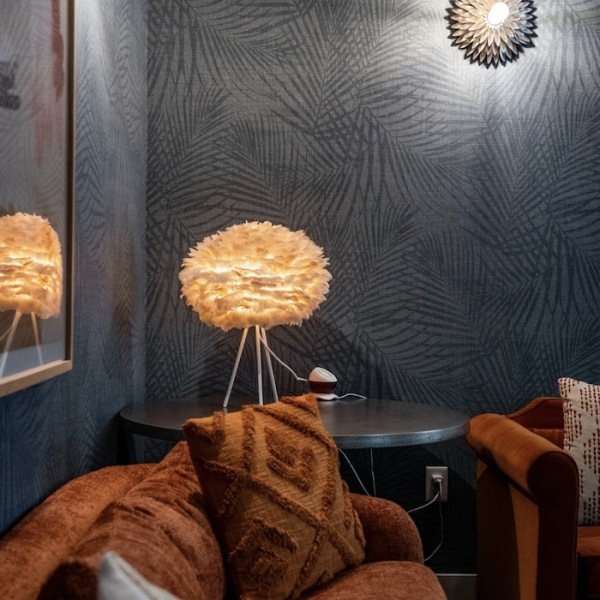
Today, what are loft style apartments are not confined to converted industrial zones. Urban development in cities like Vancouver, WA, has acceptd this style, blending historical inspiration with contemporary design. The Miller Apartments, for example, offers luxury apartments that combine modern aesthetics with the city's industrial past, showing how the loft spirit can be translated into new constructions. These modern interpretations provide the spaciousness and character of a loft with the convenience of cutting-edge residential buildings. You can explore how this style comes to life in their Modern Design Apartments.
What are Loft Style Apartments?: Defining Features and Key Types
When people ask what are loft style apartments, they're thinking of a space that breaks from conventional layouts, defined by characteristics from its industrial heritage or intentional design.
At their core, loft apartments are about openness and scale. They typically feature:
- High ceilings: Soaring to 10 feet or more, sometimes reaching 20 feet, contributing to the spacious feel.
- Large windows: Originally designed for factory floors, these oversized windows now flood lofts with natural light.
- Exposed ductwork and piping: A nod to their utilitarian past, visible mechanical systems add to the industrial-chic aesthetic.
- Concrete floors: Durable and common in converted spaces, though modern lofts might feature polished concrete or hardwood.
- Open floor plan: The most defining feature. With few, if any, interior walls (other than for bathrooms), the living, dining, and sleeping areas flow seamlessly.

Hard Lofts vs. Soft Lofts: What's the Difference?
Lofts are broadly categorized as hard lofts and soft lofts. Understanding their distinctions is key.
Hard Lofts: These are the original, authentic lofts: conversions of existing industrial or commercial buildings like warehouses or factories.
- Original architectural elements: They retain raw, historical character, including exposed brick, original wood or steel beams, and visible piping.
- Historical significance: Living in a hard loft means residing in a piece of urban history.
- Unique aesthetic: They have an undeniable "cool" factor associated with artists and innovators.
Soft Lofts: These are newly constructed buildings designed to mimic the aesthetic of hard lofts.
- Loft-inspired design: They feature high ceilings, large windows, and open floor plans but are built from the ground up as residential spaces.
- Modern amenities: They typically offer contemporary finishes, new appliances, and a wider range of building amenities.
- Consistent quality: They often provide better insulation, climate control, and soundproofing than their historical counterparts.
Here's a quick comparison:
| Feature | Hard Lofts | Soft Lofts |
|---|---|---|
| Origin | Converted industrial buildings | Newly constructed residential buildings |
| Architectural Elements | Exposed brick, wood/steel beams, pipes | Mimicry of exposed elements, modern finishes |
| Historical Character | High (authentic) | Low (designed to look historic) |
| Amenities | Limited, often original building features | Modern, purpose-built amenities |
| Insulation/Soundproofing | Can be challenging | Generally better |
| Layout | Very open, few internal walls | Open, but may have more defined areas |
Live/Work Lofts and Other Variations
Beyond hard and soft lofts, other variations cater to specific lifestyles.
Live/work lofts: These units are zoned for both residential and incidental commercial use, ideal for entrepreneurs and artists who want to integrate their living and working environments.
Loft conversions: This term can refer broadly to repurposing non-residential buildings (like schools) into homes, or even renovating attic spaces.
Loft-style apartments: This term is often used by developers for standard apartments that incorporate some loft-like features, such as higher ceilings or open-concept living areas, but are not true lofts.
No matter the type, lofts offer a unique canvas for personal expression. Many modern apartment communities, like The Miller Apartments, accept the spirit of loft living by offering spacious layouts and sophisticated design elements. You can explore More info about apartment amenities that complement this lifestyle.
How Lofts Compare to Other Living Spaces
Understanding what are loft style apartments involves comparing them to other homes. The primary differences are layout, size, and natural light. Lofts prioritize openness, creating an expansive feel that contrasts with the compartmentalized nature of traditional apartments.

Loft vs. Studio Apartment
While both lofts and studios feature an open-concept design combining living, sleeping, and kitchen areas, their similarities end there. A loft is essentially a super-sized studio.
Lofts are significantly larger in size and scale. While a studio is designed for efficiency, a loft offers much more square footage. Another key difference is ceiling height. Lofts boast soaring ceilings (10-20 feet), while studios typically have standard heights. This vertical space makes a loft feel airy and grand. In terms of architectural style, lofts often have an industrial or historical charm with exposed elements, whereas studios usually have a more conventional residential look. For those seeking options in Vancouver, WA, it's helpful to explore what differentiates Studio Apartments in Vancouver WA from larger loft-style units.
Loft vs. Traditional Apartment
The main distinction between a loft and a traditional apartment is the presence of interior walls.
A traditional apartment is divided into separate rooms (bedrooms, living room, kitchen). A loft is one large space with minimal walls, usually just for the bathroom. This open nature offers very little privacy, making it a unique choice for multiple occupants. Traditional apartments, with their walled-off rooms, provide more inherent privacy.
However, a loft excels in customization potential. Its open floor plan is a "blank canvas," allowing residents to creatively configure their space using furniture or dividers. Lofts also derive their unique origin and character from converted industrial buildings, showcasing exposed brick or ductwork, while traditional apartments have more conventional finishes.
What are loft style apartments vs. apartments with a 'loft space'?
This is a common point of confusion. A loft style apartment refers to the entire dwelling: a large, open-concept unit, often a converted industrial building (hard loft) or a new build mimicking that style (soft loft).
An apartment with a 'loft space' refers to a specific feature within a standard apartment. This "loft space" is an liftd nook or mezzanine level, accessed by a staircase or ladder, and open to the main living area below. It's often used for sleeping or storage, particularly in smaller apartments, as a way to maximize vertical space. These nooks have lower ceilings and are not full rooms.
In short, a loft apartment is the entire spacious, open unit, while a 'loft space' is a raised area within a more conventional apartment.
The Loft Lifestyle: Advantages and Challenges
Living in a loft apartment is a unique lifestyle choice that appeals to those who value spaciousness, character, and flexibility.

The vast, unpartitioned space offers incredible design flexibility, and the abundant natural light from massive windows can significantly impact your daily mood. However, this openness also presents challenges. Space planning is crucial to prevent chaos, heating and cooling large volumes can be inefficient, and noise can travel easily. Storage also requires creativity, as built-in closets are often scarce.
The Benefits of Open-Plan Living
The advantages of a loft apartment are often what draw people to them:
- Spacious feel: Minimal internal walls make lofts feel much larger and more open.
- Versatile layouts: The "blank canvas" floor plan allows for endless possibilities in arranging your home.
- Abundant sunlight: Large windows bathe the space in natural light, making it feel inviting.
- Perfect for entertaining: The open layout is ideal for hosting gatherings where guests can mingle freely.
- Unique character: Exposed brick, beams, and industrial elements offer a distinctive personality.
- Potential for live/work setups: The adaptable space is ideal for integrating work and life.
For inspiration on how to maximize the aesthetic appeal of such spaces, you might explore Modern Apartment Interior Design Ideas.
Common Challenges and Creative Solutions
Be aware of the potential challenges and how to address them:
- Privacy considerations: The lack of interior walls means little privacy, which can be a drawback if you live with others.
- Solution: Use creative partitions like room dividers, large bookshelves, tall plants, or ceiling-mounted curtains to create "rooms."
- Heating and cooling can be tricky: High ceilings and large windows can make temperature control difficult.
- Solution: Use thermal curtains, ceiling fans to circulate air, and consider portable heating/cooling units for specific zones.
- Potentially higher noise levels: Sound echoes in large, open spaces with hard surfaces.
- Solution: Incorporate soft furnishings like rugs, thick curtains, and upholstered furniture to absorb sound.
- Lack of built-in storage: Many lofts lack closets.
- Solution: Use armoires, dressers, and open racks. Maximize vertical space with tall shelving. Multi-functional furniture with hidden storage is also a great option.
Here is a list of creative storage ideas for lofts:
- Vertical shelving units
- Storage ottomans and benches
- Under-bed storage drawers or bins
- Freestanding wardrobe systems
- Decorative baskets and bins
- Wall-mounted racks and hooks
- Room dividers with built-in storage
- Stylish open clothing racks
By proactively addressing these challenges, loft dwellers can create a comfortable and personalized living space.
Frequently Asked Questions about Loft Style Apartments
Thinking about making a loft your next home? It's natural to have questions about these unique spaces. Here are some of the most common inquiries, designed to help determine if loft living is the right fit.
What are the most common characteristics of loft style apartments?
When discussing what are loft style apartments, the image is usually of a very distinctive kind of home. The most striking features are almost always a large, open floor plan with very few (if any!) interior walls, save for the bathroom. Imagine one big, flowing space where living, dining, and sleeping areas blend seamlessly. You'll also find impressively high ceilings, often soaring from 10 to 20 feet, which adds to that incredible sense of spaciousness.
Another hallmark is the presence of oversized windows. These were originally designed to let light into busy factories or warehouses, and now they flood your home with abundant natural light, making the space feel even bigger and brighter. The cool, industrial charm is another key feature. You'll frequently see exposed brick walls, sturdy concrete or hardwood floors, and visible elements like ductwork, pipes, or support beams. These features aren't just decorative; they reflect the building's historical roots as a converted commercial or industrial space.
Are lofts suitable for sharing with roommates?
This is a really important question for many, and the honest answer is: it depends on your comfort with privacy. Because of their open-concept nature and minimal interior walls, lofts typically offer very limited privacy. Sharing a true hard loft can sometimes feel a lot like sharing a very large studio apartment, as there are often no separate bedrooms or distinct private areas beyond the bathroom.
This can be a significant challenge for roommate situations, as sounds and activities travel freely throughout the space. While some soft lofts (which are newer constructions) might offer slightly more defined bedroom areas or the possibility of adding temporary partitions, true lofts are generally not the most private setup for multiple occupants seeking their own individual zones. It is truly crucial to have an open conversation about everyone's privacy needs before deciding on a loft for shared living.
What should I look for in a loft building's rules?
Before you fall head over heels for a loft, it is super important to review the building's guidelines. These are often managed by a condo board or homeowners' association and can vary quite a bit. Paying close attention to these rules now can save you headaches later!
Here are some key things to look for:
First, understand the rules around renovations and alterations. Can you add partitions to create more defined spaces? Are there restrictions on changing or covering up those cool exposed elements? Next, consider noise policies. Given the open nature of lofts, sounds can carry easily, so some buildings might have specific rules about noise levels to ensure peace among residents.
Do not forget to clarify pet policies, including any restrictions on the type, size, or number of pets allowed. Most properties have a two-pet limit. You will also want to familiarize yourself with the regulations for use of common elements, such as rooftops, gyms, or communal lounges. Knowing how to use these shared spaces responsibly is key. For more details on what common elements entail, you can look up information here.
Finally, if there are plans to rent out the loft in the future, check for any subletting or rental restrictions. Taking the time to thoroughly review these bylaws and regulations will help ensure your new loft home truly aligns with your lifestyle and expectations.
Find Your Perfect Space
So, you've journeyed through loft apartments, from their gritty industrial past to their current status as highly sought-after urban homes. You now know what are loft style apartments and what makes them truly special. They offer a unique blend of history, bold style, and incredible spaciousness, perfect for anyone seeking a home with true character. Whether you're captivated by the raw charm of a hard loft or the sleek appeal of a soft loft, these spaces offer a blank canvas for your personal style and a truly distinctive living experience.
By understanding the different types and what to consider, you're now well-equipped to find a space that perfectly fits your lifestyle. Maybe it's the industrial vibe that calls to you, or perhaps the flood of natural light and the endless possibilities of an open floor plan. Whatever your preference, loft living offers a refreshing take on urban life.
For those who are drawn to this unique blend of modern design and a rich sense of place, The Miller Apartments by Flats offers an exceptional opportunity. Located in the vibrant Vancouver Waterfront neighborhood of Vancouver, WA, these apartments capture the spaciousness and sophisticated style reminiscent of lofts. They blend modern design with a nod to the city's industrial past, creating homes that feel both expansive and inviting.
Imagine enjoying top-tier amenities right at your doorstep, like a relaxing day spa, a state-of-the-art fitness center, and a convenient coworking lounge. The Miller is designed with wellness and community in mind, providing a prime location that perfectly combines convenience, comfort, and an liftd living experience.
Ready to find a living space that feels both wonderfully expansive and exquisitely designed? Explore the options available. Explore Modern Design Apartments and find your perfect home today.