

Defining the Modern One-Bedroom Apartment
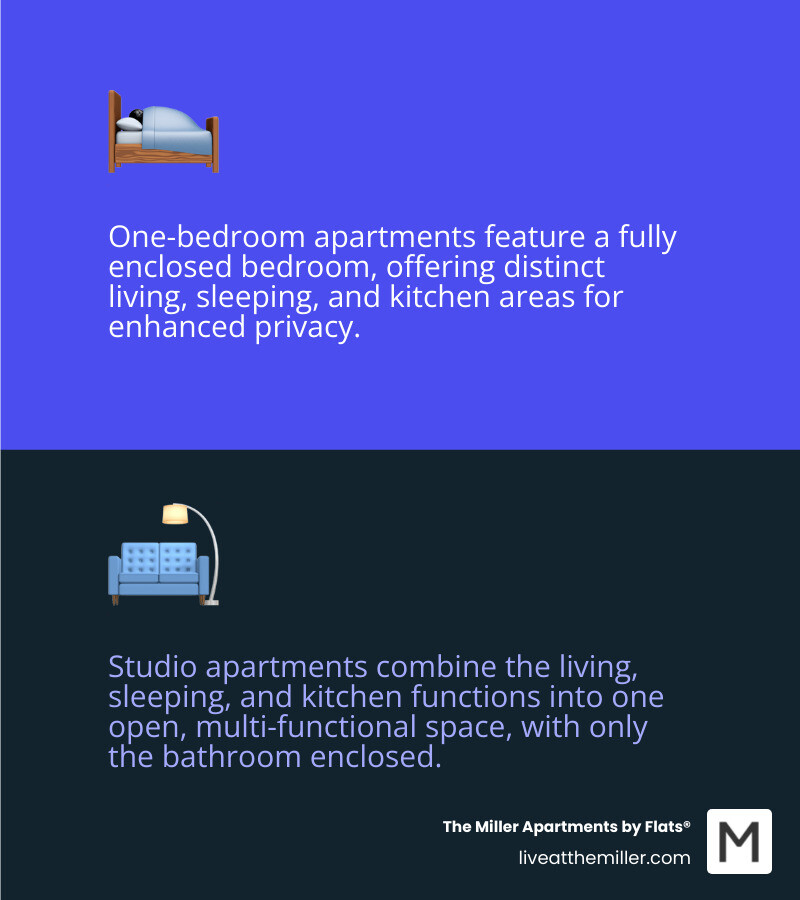
Building plans for one bedroom apartments offer versatile solutions for individuals, couples, and anyone seeking compact yet functional living spaces. These plans typically range from 450-750 square feet and feature a separate enclosed bedroom, living area, kitchen, and bathroom—distinguishing them from studio apartments where all spaces flow together.
Key components of one-bedroom apartment building plans:
- Separate bedroom - Enclosed by walls and door for privacy
- Living area - Open space for relaxation and entertaining
- Kitchen - Can be galley-style, L-shaped, or include an island
- Bathroom - Often accessible from hallway or bedroom
- Storage - Walk-in closets, built-ins, or entry closets
- Optional features - Balconies, in-unit laundry, home office nooks
One-bedroom plans work well for various building types, from standalone cottages and garage apartments to multi-unit complexes and Accessory Dwelling Units (ADUs). The typical resident profile includes young professionals, couples, or anyone prioritizing efficient living without sacrificing comfort.
Modern one-bedroom designs focus on maximizing space through open-concept layouts, smart storage solutions, and architectural elements like high ceilings and large windows. These plans balance privacy with functionality, creating homes that feel spacious despite their compact footprint.
Exploring Types of One-Bedroom Apartment Building Plans
The beauty of building plans for one bedroom apartments lies in their incredible versatility. Whether you're dreaming of your own private cottage or developing a multi-unit property, one-bedroom layouts adapt beautifully to countless building types and living situations.
Standalone Units
There's something special about having your own independent space, and standalone one-bedroom units deliver exactly that. Cottages represent the charming end of this spectrum - think cozy starter homes, peaceful vacation retreats, or even that perfect pool house you've always wanted. Their compact size makes them surprisingly manageable while still offering all the essentials for comfortable living.
Accessory Dwelling Units (ADUs) have become incredibly popular for good reason. These secondary units, sometimes called "backyard cottages," sit on the same lot as your main home. The one-bedroom format works beautifully for ADUs, creating flexible spaces that can house visiting family, serve as a home office retreat, or function as a rental unit. It's a smart way to maximize your property's potential without overwhelming your lot.
Garage apartments offer another clever solution, combining practical storage with living space by placing a complete one-bedroom unit above a detached garage. This arrangement works wonderfully for guest accommodations or as a rental opportunity, and some designs even accommodate larger vehicles or RVs below.
Multi-Unit Buildings
When it comes to multi-unit construction, one-bedroom plans shine as efficient building blocks for larger developments. Duplexes often feature two mirror-image one-bedroom units, either side-by-side or stacked, creating housing for two households within a modest footprint.
Fourplexes take this concept further, housing four separate one-bedroom units in a single structure. This configuration appeals to developers looking to increase the number of available units while keeping the project manageable. The compact nature of one-bedroom plans allows for higher density without sacrificing livability.
Larger apartment complexes incorporate one-bedroom units as essential components of their overall design. These buildings might house dozens of units, with one-bedroom plans often serving as the backbone of the development alongside other configurations. Modern complexes frequently include shared amenities and community spaces that improve the living experience for residents.
The consistent thread across all these building types is how well the one-bedroom floor plan adapts to different scales and purposes, proving its enduring appeal in today's housing market.

Maximizing Space and Functionality in Your Layout
When working with building plans for one bedroom apartments, the magic happens in making every square foot count. The best one-bedroom designs don't just fit everything in—they make you forget you're living in a compact space.
Open-Concept Design
Think of open-concept design as removing the walls that box you in. Instead of separate rooms that feel cramped, you get one flowing space that breathes.
Creating flow means you can move naturally from cooking dinner to chatting with friends without bumping into walls or doorways. When your kitchen flows into your living area, the whole apartment feels connected and spacious.
Enhancing light becomes much easier when walls aren't blocking sunshine from traveling through your home. That morning light from your bedroom window can brighten your entire living space, making everything feel more open and welcoming.
The beauty of open-concept living is how it transforms daily life. You can prep dinner while watching TV, or work at your kitchen island while natural light pours in from multiple directions.
Smart Storage Solutions
In a one-bedroom apartment, storage isn't just helpful—it's essential for keeping your space feeling calm and organized.
Walk-in closets can be game-changers when space allows. Even a well-designed reach-in closet with smart organization can hold more than you'd expect. The key is using vertical space and choosing systems that work with your lifestyle.
Built-ins are like custom-fitted solutions for your exact space. Think floor-to-ceiling shelving that doesn't waste an inch, or a window seat with hidden storage underneath. These features blend seamlessly into your apartment while solving real storage challenges.
The smartest storage solutions often hide in plain sight. A kitchen island with drawers, a coffee table that opens up, or floating shelves that draw the eye upward—these choices keep your belongings organized without cluttering your visual space.
Multi-Functional Spaces
One-bedroom living is all about spaces that work overtime, adapting to whatever your day brings.
Home office nooks have become essential in modern apartment living. A corner of your living room can transform into a productive workspace with the right desk setup. Some layouts even include built-in desk areas that feel intentional rather than squeezed in.
Your dining area might be a kitchen island for quick breakfasts, a proper table for weekend dinners, or even extra counter space when you're cooking for friends. The best one-bedroom plans anticipate these different needs.
Architectural Elements
Certain design features can make your one-bedroom apartment feel dramatically larger and more luxurious than its square footage suggests.
High ceilings create an immediate sense of grandeur. When you walk into a space with soaring ceilings—sometimes reaching 16 feet—your eye travels upward, making the room feel expansive and airy.
Large windows do more than just let in light. They connect your indoor space with the world outside, making your apartment feel like part of something bigger. Multiple windows or floor-to-ceiling glass can completely transform how spacious a room feels.
Balconies extend your living space beyond your walls. Even a small outdoor area gives you a place to enjoy morning coffee, tend a few plants, or simply step outside for fresh air without leaving home.

Designing efficient building plans for one-bedroom apartments
The layout details in building plans for one bedroom apartments can make or break your daily experience. Smart planning means anticipating how you'll actually live in the space.
Kitchen layout choices shape how comfortable cooking and entertaining feel. An L-shaped kitchen gives you counter space and storage while often leaving room for a small dining area. A galley kitchen works beautifully in narrower spaces, with everything within easy reach. A kitchen island can serve triple duty as prep space, storage, and casual dining spot.
Bathroom access might seem like a small detail, but it affects daily life. An en-suite bathroom accessed directly from the bedroom offers maximum privacy, while hallway access makes guests more comfortable since they don't need to walk through your private space.
Furniture placement should feel natural, not forced. The best floor plans leave obvious spots for your bed, sofa, and dining table without creating awkward traffic patterns. Look for layouts that include enough wall space for your furniture and smart details like sliding doors that save space.
For inspiration on bringing these functional layouts to life with style, exploring ideas for modern interiors can spark ideas for making your one-bedroom apartment both beautiful and practical.
Essential Features and Universal Design Considerations
Creating building plans for one bedroom apartments means thinking beyond just the basic layout. Today's residents expect certain features that make daily life smoother and more enjoyable. At the same time, thoughtful design considers everyone who might call these spaces home.
Key Amenities
Modern one-bedroom apartments shine when they include features that truly matter to residents. In-unit washer and dryer consistently tops the wish list - there's something wonderful about doing laundry in your own space rather than trekking to a shared facility. Stacked units work beautifully in compact layouts, tucking neatly into closets or alcoves.
The kitchen deserves special attention in building plans for one bedroom apartments. Modern appliances including stainless steel finishes, reliable dishwashers, and functional ranges (often with microwaves mounted above) have become standard expectations. Quartz countertops add both durability and elegance, while a kitchen island or breakfast bar creates extra counter space and a casual dining spot.
Outdoor space transforms the living experience entirely. Whether it's a cozy balcony perfect for morning coffee or a small patio where you can grow herbs, that connection to fresh air and natural light makes even compact spaces feel expansive.
Flooring choices matter too. Vinyl wood plank flooring offers the warmth and beauty of hardwood with easier maintenance - perfect for busy lifestyles. These details might seem small, but they create the difference between a place to stay and a place to truly live.
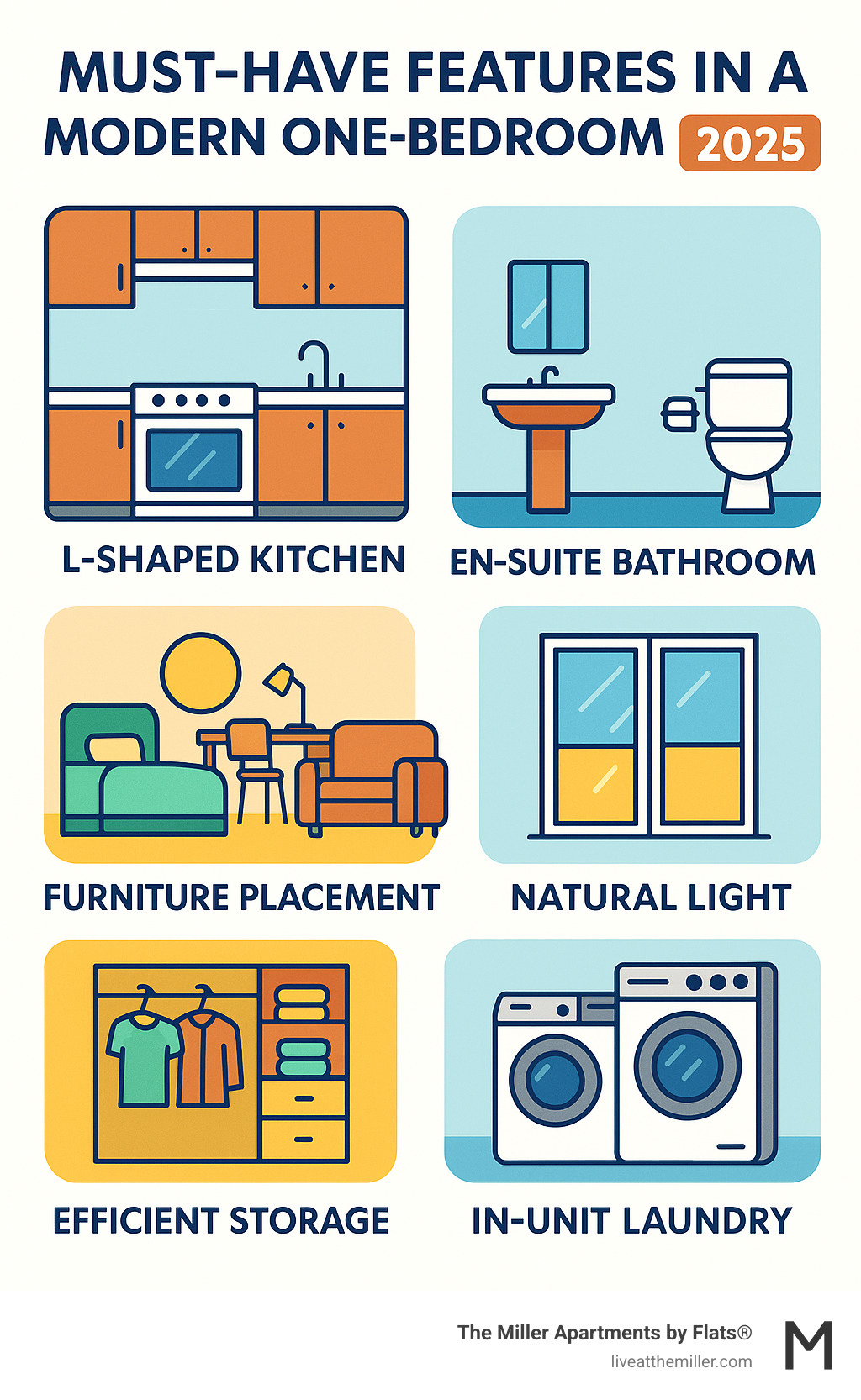
Natural light deserves its own spotlight. Ample windows don't just brighten spaces - they make them feel larger and more connected to the world outside. Combined with efficient storage solutions like walk-in closets and built-in shelving, these elements create homes that feel spacious despite their compact footprint.
Soundproofing becomes especially important in multi-unit buildings. Nobody wants to hear every footstep from upstairs or conversation next door. Quality construction that considers acoustic privacy helps residents feel comfortable and relaxed in their own space.
Accessibility in building plans for one bedroom apartments
Designing with accessibility in mind isn't just about following rules - it's about creating spaces that welcome everyone. Universal design principles benefit far more people than you might expect. That parent maneuvering a stroller, the friend helping you move furniture, or anyone dealing with a temporary injury all appreciate thoughtful design choices.
Wider doorways of 32 inches or more make navigation easier for everyone. Zero-step entries eliminate tripping hazards and create smoother transitions throughout the home. These features often go unnoticed until you need them, which is exactly the point.
Accessible bathrooms deserve careful planning. Roll-in showers eliminate barriers, while reinforced walls can accommodate grab bars when needed. Lower sinks and adequate turning space create comfort for users of all abilities.
ADA compliance provides excellent guidelines even when not legally required. The Americans with Disabilities Act sets standards that create safer, more usable spaces for everyone.
Fair Housing Act requirements apply to many multi-family buildings, mandating features like accessible routes, properly positioned light switches and outlets, and usable kitchens and bathrooms. These requirements ensure that new construction welcomes residents regardless of their physical abilities.
For detailed guidance on creating accessible spaces, the Information on accessible housing design provides comprehensive resources. It's always important to verify compliance requirements with local building officials during the planning process.
When building plans for one bedroom apartments incorporate both desired amenities and universal design principles, they create homes that truly work for the people who live in them. These thoughtful touches transform functional spaces into places where residents can thrive.
From Blueprint to Build: Finding Plans and Key Considerations
Once you've settled on your vision for building plans for one bedroom apartments, the exciting journey from concept to construction begins. This phase involves sourcing the right blueprints, understanding what those technical drawings actually mean, and navigating the practical realities that turn paper plans into livable spaces.
Sources for Plans
Finding the perfect plan feels a bit like house hunting itself - you'll know it when you see it. The good news is that you have several excellent paths to explore.
Online architectural resources have revolutionized how people find building plans. Specialized websites offer extensive catalogs where you can filter by bedroom count, square footage, architectural style, and specific building types like garage apartments or ADUs. These platforms often include virtual tours and detailed specifications, making it easy to envision your future space from your current couch. Many sites offer flexible purchasing options, from basic PDF sets to comprehensive CAD files that allow for customization.
For those with unique visions or challenging sites, hiring an architect opens up endless possibilities. A skilled architect can craft custom building plans for one bedroom apartments that perfectly match your specific needs, site conditions, and local requirements. While this is a more involved process, it delivers a truly personalized solution that considers everything from maximizing natural light based on your lot's orientation to incorporating special features that matter most to you.
Reading a Floor Plan
Think of a floor plan as the universal language of building - once you learn to speak it, a whole world of possibilities opens up. These detailed drawings serve as the roadmap for your entire project.
Understanding symbols is your first step toward fluency. Floor plans use standardized symbols to represent everything from doors and windows to plumbing fixtures and electrical outlets. Once you recognize these symbols, you can mentally walk through the space and understand how it flows.
Scale might seem intimidating at first, but it's actually quite straightforward. When you see "1/4" = 1'-0"" on a plan, it simply means that every quarter-inch on the paper represents one foot in real life. This scaling allows you to accurately assess room sizes and imagine how your furniture might fit.
Dimensions provide the concrete numbers you need for planning. These measurements typically show the clear space between interior walls, giving you the actual usable area for each room. You'll also find overall building dimensions that show the total width and depth of the structure.
A complete plan set includes much more than just the floor layout. You'll receive foundation plans, exterior elevations showing how the building will look from outside, electrical layouts, roof plans detailing pitch and framing, and building sections that reveal the vertical relationships between spaces. However, it's equally important to understand what's typically not included: site plans, detailed mechanical and plumbing drawings, energy calculations, and professional stamps usually require separate arrangements.
Construction Factors
Even the most beautiful plan needs to work in the real world, and that means considering the nuts and bolts of actual construction.
Foundation types vary based on your specific site conditions and local climate. You might need a simple slab foundation for level lots, a crawlspace foundation for moderate slopes, or CMU block foundations for more challenging conditions. Some sites even require engineered retaining walls for proper stability.
Wall framing typically involves either 2x4 or 2x6 exterior walls, a choice that affects both structural integrity and insulation capabilities. Roof pitch - expressed in ratios like 8/12 or 4/12 - influences everything from the building's appearance to how well it sheds rain and snow.
Understanding typical construction considerations helps set realistic expectations. Beyond the plan itself, a successful project also involves selecting materials, securing permits, and addressing any site-specific engineering requirements.
Local Regulations
This is where the rubber meets the road - or more accurately, where your dream plan meets local reality. Navigating regulations isn't the most exciting part of the process, but it's absolutely critical.
Building codes establish the minimum standards for safety, structural integrity, and energy efficiency. Most quality plans conform to widely accepted codes like the International Residential Code, but your local jurisdiction may have specific amendments that apply.
Zoning laws determine what you can actually build on your specific lot. These regulations cover building height, setbacks from property lines, and the number of units allowed. They're particularly important if you're considering an ADU or multi-unit structure.
Professional stamps represent another crucial consideration. Many states require construction drawings to be reviewed and stamped by a licensed architect or structural engineer, especially in areas prone to earthquakes, high winds, or unique soil conditions. Stock plans typically don't include these stamps, so you'll need to work with a local professional.
The permitting process caps off your preparation phase. Before any construction begins, you'll need approval from your local building department. This typically involves submitting your detailed plans, a site plan, and documentation proving compliance with all relevant codes and regulations.

Frequently Asked Questions about One-Bedroom Apartment Plans
What is the main difference between a studio and a one-bedroom apartment?
The difference between these two layouts comes down to one key feature: privacy. When you look at building plans for one bedroom apartments, you'll notice a fully separate bedroom enclosed by walls and a door. This creates a distinct sleeping space that's completely separate from your living area.
In a studio apartment, everything happens in one open room - your bed, sofa, dining table, and often your kitchen all share the same space. The only private area is typically the bathroom. While studios can feel spacious and modern, a one-bedroom gives you the luxury of shutting the door on your unmade bed when guests come over!
This separation also means better sleep quality, since you can keep your bedroom dark and quiet while still having lights on in the living area. For more details on compact layouts, you can Learn about studio layouts.
How small can a one-bedroom apartment be?
Here's where things get interesting - building plans for one bedroom apartments can be surprisingly compact while still feeling comfortable. The typical sweet spot ranges from 450 to 750 square feet, but some clever designs push the boundaries much further.
Some micro-cottage plans squeeze everything into just 238 to 287 square feet. These tiny spaces often use creative solutions like Murphy beds or furniture that serves multiple purposes. However, these ultra-compact units sometimes blur the line between studio and one-bedroom living.
For a truly separate bedroom that doesn't feel cramped, most people find that 450 square feet is the practical starting point. This gives you enough room for a proper bed, a small living area, a functional kitchen, and a bathroom without everything feeling squeezed together.
What is an ADU and how does it relate to one-bedroom plans?
An Accessory Dwelling Unit (ADU) is essentially a small, complete home built on the same property as a main house. Think of it as a legal way to add a second residence to your backyard or above your garage.
Building plans for one bedroom apartments are perfect for ADUs because they offer everything someone needs in a compact package. These units work beautifully as guest houses for visiting family, private spaces for family members, quiet home offices, or as rental units.
The compact size makes ADUs practical for most residential lots. You can tuck them into a backyard corner, build them above a detached garage, or even convert existing structures. They're becoming increasingly popular as families look for creative ways to use their property more efficiently.
Conclusion: Creating Your Ideal One-Bedroom Living Space
The world of building plans for one bedroom apartments opens up a field of possibilities that's both exciting and practical. Whether you're dreaming of a cozy cottage tucked away in a backyard or envisioning a sleek unit in a modern complex, these versatile layouts prove that good things really do come in smaller packages.
Throughout this exploration, we've seen how thoughtful design transforms compact spaces into homes that feel anything but cramped. The magic happens through clever planning - those open-concept layouts that let light dance through every corner, smart storage solutions that make clutter disappear, and architectural elements like soaring ceilings that draw your eyes upward and make spaces feel twice their actual size.
The versatility of one-bedroom plans continues to amaze. Today's unit might serve as your first independent home, tomorrow it could become a guest retreat for visiting family, and down the road, it might function as a rental unit, such as an ADU. This adaptability makes them a practical choice for various lifestyle needs.
Functionality remains at the heart of every successful one-bedroom design. From L-shaped kitchens that maximize counter space to bathrooms with dual access points, every square foot works harder when it's planned with purpose. Modern amenities like in-unit washers and dryers aren't just luxuries - they're game-changers that make daily life smoother and more enjoyable.
Perhaps most importantly, successful planning bridges the gap between dreams and reality. Understanding blueprints, navigating local regulations, and considering construction factors might not be the most glamorous parts of the process, but they're what turn those beautiful floor plans into actual homes where memories are made.
For those seeking inspiration from well-designed layouts, exploring communities that showcase modern design principles can provide valuable insights into how sophisticated living spaces come together. The Miller, nestled in Vancouver's vibrant Waterfront neighborhood, demonstrates how industrial history and contemporary comfort can blend seamlessly. With thoughtful amenities and a focus on community wellness, it exemplifies how convenience and sophistication can create truly exceptional living experiences.
Ready to see these design principles in action? Explore our one-bedroom floor plans and find how the right layout can transform your vision of home into something even better than you imagined.