

Embracing the Modern Studio Lifestyle
Modern studio apartment interior design focuses on maximizing limited space through smart zoning, multifunctional furniture, and strategic use of light and color to create a home that feels both spacious and stylish.
Quick Design Essentials for Modern Studio Apartments:
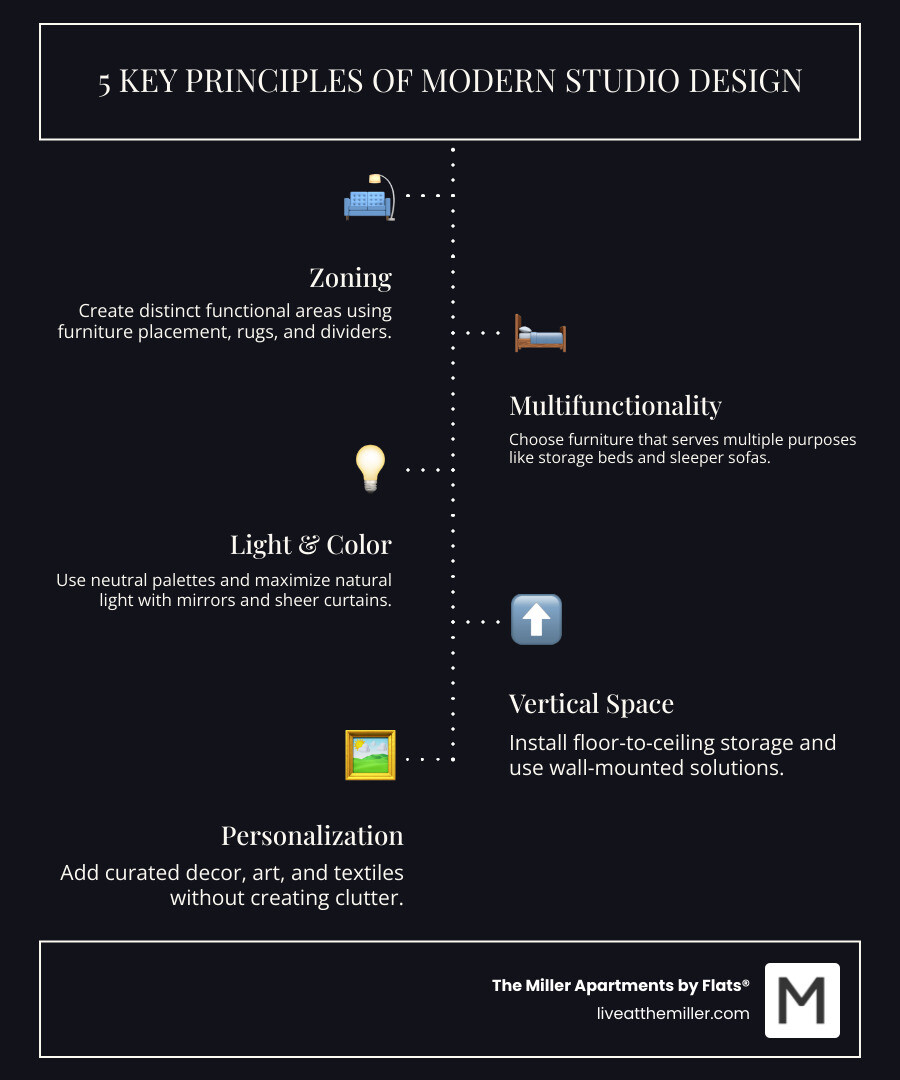
- Zone Your Space - Use furniture placement, rugs, and dividers to create distinct living, sleeping, and working areas
- Choose Multifunctional Furniture - Invest in sleeper sofas, storage beds, lift-top coffee tables, and convertible dining tables
- Maximize Vertical Space - Install floor-to-ceiling shelving, use wall-mounted desks, and hang curtains high
- Accept Light Colors - Stick to neutral palettes (whites, grays, light woods) to make spaces feel larger
- Layer Your Lighting - Combine natural light, ambient fixtures, task lighting, and mirrors to brighten every corner
- Store Strategically - Use hidden storage in ottomans, under beds, and behind closed cabinets to minimize clutter
Living in a studio apartment presents unique challenges. You're fitting your entire life, including your bedroom, living room, kitchen, dining area, and sometimes even a home office, into one open space. Studios under 600 square feet don't have to feel cramped, though. With clever design choices, even a 272-square-foot NYC studio can feel surprisingly spacious.
The key to modern studio apartment interior design lies in three core principles: intentional zoning, multifunctional furniture, and visual expansion through light and color. Every design decision must serve a purpose. There's no room for "junk drawer" tendencies when everything is on display.
Modern design aesthetics work particularly well in small spaces because they emphasize clean lines, minimal visual clutter, and furniture with sleek profiles. This approach helps your studio feel open and airy rather than cramped and chaotic.
Whether you're furnishing your first studio or reimagining your current space, this guide will walk you through practical strategies that real people have used to transform compact apartments into functional, beautiful homes.
Zone Your Space: Creating Harmony in an Open Layout
One of the primary challenges of designing a modern studio apartment is defining distinct functional zones within a single open room. Without traditional walls, it can feel like everything blends together. However, with strategic planning, you can effectively carve out areas for living, sleeping, working, and dining, making your studio feel more organized and expansive.
Furniture placement is a powerful tool for zoning. For instance, positioning the back of a sofa towards the sleeping area can create a subtle, conceptual barrier for the living room. Similarly, a console table can serve as a visual divider while also functioning as a dining or workspace. Another effective technique is using area rugs. A large area rug, appropriately sized to anchor the furniture in a specific zone, can visually define that space and make it feel larger and more intentional. This is particularly useful in studios where you want to distinguish a living area from a sleeping space.
The Power of Physical and Visual Dividers
Room dividers play a crucial role in modern studio apartment design, offering both privacy and organization. The most effective types create separation without completely blocking light or airflow, maintaining the open feel that many modern studios accept.
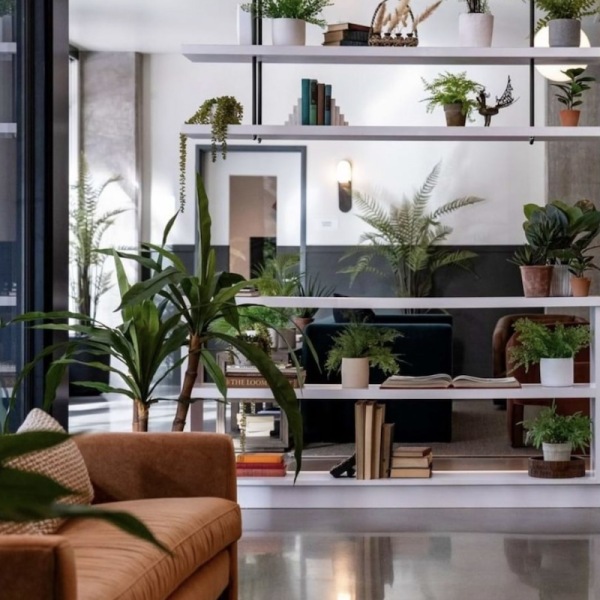
- Open Bookcases: These are fantastic for adding definition between a bed and a sofa, providing both display space and a sense of separation. They allow light to pass through, keeping the space airy.
- Curtains: Floor-to-ceiling curtains can be drawn for privacy around a sleeping area or pulled back to open up the space. Solid white curtains can also draw the eye upward, visually expanding the room.
- Folding Screens: Portable and versatile, folding screens offer flexible privacy and can be moved as needed.
- Sliding Partitions: For a more permanent but still adaptable solution, sliding metal partitions can separate a sleeping area while still feeling integrated into the overall design.
- Open Shelving: An open shelf system acts as an airy room divider that doesn't block light, ideal for defining zones like a bed and living area in a 450-square-foot apartment.
These dividers help create separate "rooms" within your studio without the commitment or cost of building actual walls. For more ideas on how to make the most of your space, explore strategies for decorating a loft-style apartment.
Carving Out a Nook for Every Need
Even in a compact studio, you can create dedicated nooks for various activities.
- Bed Nooks for Privacy: If your studio has an architectural alcove or a natural recess, use it for your bed. This instantly creates a more private sleeping area, making a 300-square-foot studio feel more like a one-bedroom. In some cases, a temporary wall can even be built to separate spaces, as seen in a 248-square-foot apartment with high ceilings.
- Creating a Home Office Corner: With the rise of remote work, a dedicated workspace is essential. A compact desk placed in a corner, perhaps with a wall-mounted shelf above, can serve this purpose. For those working from home, finding apartments for remote workers that offer flexible layouts is key.
- Compact Dining Solutions: Forget bulky dining sets. Drop-leaf tables that can be expanded when needed and folded away when not in use are perfect. Bistro sets or a kitchen island with bar stools can also define a dining space without consuming too much floor area.
Furnish with Function: Smart and Stylish Space-Saving Solutions
The importance of multifunctional furniture cannot be overstated in a modern studio apartment. Every piece should ideally serve more than one purpose. This deliberate approach ensures that your limited square footage is maximized efficiently. When selecting furniture, prioritize pieces with a low profile, as these tend to maintain visual flow and prevent the space from feeling heavy or cramped.
Essential Furniture for Modern Studio Apartment Interior Design
Choosing the right furniture is critical for both functionality and aesthetics. Here are some indispensable pieces for any modern studio apartment interior design:
- Convertible Sofas: A high-quality sleeper sofa is a game-changer. It provides comfortable seating during the day and transforms into a bed for guests at night, eliminating the need for a separate guest room.
- Beds with Integrated Storage: Beds with drawers underneath or hydraulic lift storage are excellent for stashing away linens, seasonal clothing, or other items, essentially turning your bed into a large storage unit. Loft beds are another brilliant solution, like the one in a 350-square-foot studio that doubles the usable floor space by allowing a desk or seating area underneath.
- Nesting Tables & Lift-Top Coffee Tables: Nesting tables can be pulled apart for extra surface area when entertaining and tucked away to save space. A lift-top coffee table offers hidden storage and can even double as a workspace or a casual dining spot.
- Expandable or Wall-Mounted Dining Tables: These tables can be folded down or pushed against a wall when not in use, freeing up valuable floor space.
Top 5 Multifunctional Furniture Pieces for a Studio:
- Sleeper Sofa: Seating + Guest Bed
- Storage Bed: Sleeping + Hidden Storage
- Lift-Top Coffee Table: Surface + Storage + Workspace
- Nesting Tables: Multiple Surfaces + Compact Storage
- Drop-Leaf/Wall-Mounted Dining Table: Dining + Workspace + Space-Saving
Mastering Smart and Aesthetic Storage
Storage solutions in a studio apartment must be both functional and aesthetically pleasing. The goal is to keep clutter out of sight, maintaining the clean lines characteristic of modern design.
- Vertical Space: Don't underestimate your walls. Floor-to-ceiling shelving, tall bookcases, and ladder desks that combine shelving with a workspace are excellent for utilizing vertical space. This keeps items off the floor, making the studio feel larger and more open.
- Hidden Storage: Look for furniture with built-in storage. Ottomans that open up, banquette seating with drawers, and media consoles with doors are perfect for discreetly stashing away everyday items. A 296-square-foot Brooklyn studio effectively used IKEA cabinets up to the ceiling and a banquette with drawers for product storage.
- Aesthetic Choices: Floating shelves provide display space without adding visual weight. Minimalist media consoles help keep entertainment areas tidy. The key is to select storage solutions that blend seamlessly with your overall design aesthetic, rather than standing out as purely utilitarian. See how architects like Tsai Design transformed a 50sqm apartment into a minimalist, multifunctional studio home by reconfiguring the layout and focusing on integrated solutions.
The Art of Illusion: Using Light and Color to Expand Your Space

One of the most effective ways to make a modern studio apartment feel larger and more open is through the strategic use of light and color. These elements work together to create an illusion of spaciousness, turning a compact area into an inviting sanctuary.
Strategic Color Palettes for a Modern Feel
Color plays a significant role in how expansive a space feels.
- Light and Neutral Base Colors: Opt for a base palette of whites, grays, and light beiges for walls and large furniture pieces. These colors reflect light, making the room appear brighter and more open. A unified color palette also helps prevent the small space from feeling overwhelmed.
- Unified Color Schemes for Cohesion: Sticking to a consistent color scheme throughout your studio creates a sense of flow and continuity, which can make the entire space feel more cohesive and larger. This doesn't mean everything has to be the same shade; rather, choose colors that complement each other harmoniously.
- Using Accent Colors Through Decor: Once you have your neutral base, introduce pops of color through smaller decor items like pillows, artwork, and throws. This adds personality without making the space feel cluttered. Modern design often incorporates subtle rustic details and clean lines, which can be improved by a carefully chosen color palette.
Illuminating Your Studio for Maximum Impact
Lighting is equally crucial for making a studio feel spacious and welcoming.
- Maximizing Natural Light: Keep windows unobstructed. Use sheer curtains or blinds that can be easily pulled back to let in as much natural light as possible. Clean windows also make a difference! Natural light not only brightens the space but also connects the interior with the outside, making the room feel less enclosed.
- The Role of Mirrors: Mirrors are a designer's best friend in small spaces. Strategically placed, they reflect light, create depth, and trick the eye into perceiving more space. A large mirror opposite a window can double the perceived light and expand the view. A full-length mirror in a hallway can instantly make that narrow space feel wider.
- Layered Lighting:Relying on a single overhead light can make a studio feel flat. Instead, layer your lighting:
- Ambient Lighting: General illumination from ceiling fixtures or floor lamps.
- Task Lighting: Focused light for specific activities, like a desk lamp for working or a sconce for reading in bed.
- Accent Lighting: Highlights architectural features or artwork, adding depth and interest.
- Using Vertical Elements: Floor-to-ceiling curtains, hung as high as possible, draw the eye upward, making the ceilings appear taller and the room feel grander. This simple trick can visually expand a studio room dramatically.
Personalize and Perfect: Final Touches and Common Pitfalls
After laying the groundwork with smart zoning, multifunctional furniture, and strategic lighting, the final step in creating your dream modern studio is to infuse it with personality. This is where your space truly becomes a home, reflecting your unique style while maintaining its functional efficiency.
Infusing Personality into Your Modern Studio Apartment Interior Design
Personalization is key, but in a small space, it's a delicate balance to avoid clutter.
- Personalization Without Clutter: The trick is "curated decor." Instead of many small items, choose a few larger, impactful pieces that you truly love. Every item should either be functional or bring you joy. This approach prevents visual chaos and highlights the items that matter most to you.
- Using Art to Define Spaces: Artwork can do more than just decorate; it can help define zones. A large piece or a gallery wall above your sofa can anchor the living area, while a smaller, more intimate piece can designate your sleeping nook. In a 315-square-foot studio, artwork and wallpaper were used to visually break up spaces, proving that you don't need physical dividers to create distinct zones.
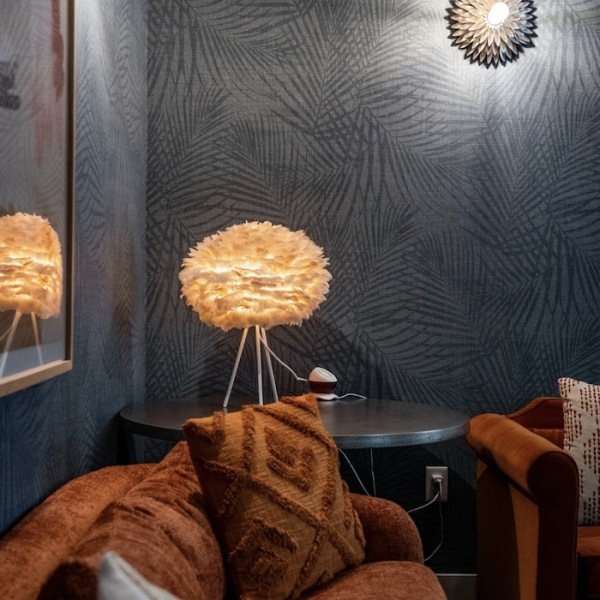
- Textiles for Warmth and Texture: Throws, pillows, and rugs add layers of texture and warmth, making a modern, minimalist space feel cozy and inviting. These are easy to swap out to refresh your decor seasonally or as your style evolves.
- Incorporating Plants for Life and Color: Plants bring life, color, and a touch of nature into your studio. Choose plants that fit the scale of your space, perhaps a tall floor plant in a corner or smaller plants on shelves, to add freshness without overwhelming the room.
Common Mistakes to Avoid (and How to Fix Them)
Even with the best intentions, it's easy to fall into common design traps in a studio apartment.
- Oversized Furniture:This is perhaps the most common mistake. Bulky, disproportionate furniture can quickly make a small studio feel cramped and unusable.
- Fix: Measure your space carefully and choose appropriately scaled pieces. Look for slim profiles, exposed legs, and modular designs that can be rearranged.
- Visual Clutter:When everything is on display, a studio can quickly become messy.
- Fix: Accept the "a place for everything, and everything in its place" rule. Invest in smart storage solutions like hidden compartments, closed cabinetry, and vertical shelving to keep surfaces clear and maintain a clean aesthetic.
- Blocking Natural Light:Placing large furniture directly in front of windows can severely limit natural light, making the studio feel dark and small.
- Fix: Arrange furniture to keep window areas clear. Use sheer curtains or blinds that can be easily opened.
- Ignoring Vertical Space:Forgetting to use walls and ceiling height is a missed opportunity for both storage and visual expansion.
- Fix: Install floor-to-ceiling shelving, hang artwork at varying heights, and use tall, narrow furniture pieces to draw the eye upward.
Integrating Technology Seamlessly
Modern living often means integrating technology, and your studio apartment is no exception. The challenge is to do so without adding to visual clutter.
- Smart Home Devices: Incorporate smart lighting, thermostats, and speakers. These devices are often compact and can be controlled wirelessly, minimizing visible wires and remotes.
- Concealing Technology: Use media consoles with doors or drawers to hide electronics and cables. Frame TVs that display art when off can blend seamlessly into your decor, eliminating the black rectangle that often dominates living spaces.
- Compact Entertainment Solutions: Consider a projector and a pull-down screen for movie nights. This offers a large-screen experience without a large, permanent television taking up space.
Frequently Asked Questions about Modern Studio Apartment Design
How do I make my studio feel more like a one-bedroom apartment?
To make your studio feel more like a one-bedroom, the key is creating distinct, private zones. Use substantial dividers like tall, open bookcases, sliding partitions, or floor-to-ceiling curtains to physically separate your sleeping area from the rest of the apartment. Positioning your bed in a natural nook or alcove, if available, can further improve this separation. The goal is to create the illusion of a separate room, even if it's not fully enclosed.
What is the most important piece of furniture for a studio apartment?
While many pieces are crucial, a high-quality, multifunctional piece like a sleeper sofa or a storage bed often provides the most value. A sleeper sofa addresses both seating and guest sleeping needs, while a storage bed combines sleeping with essential hidden storage. These pieces tackle multiple challenges simultaneously, making them indispensable in a compact living space.
How can I create a workspace in my studio without it looking cluttered?
Creating a functional yet uncluttered workspace involves smart furniture choices. Opt for a floating or wall-mounted desk to save floor space. A ladder desk that integrates shelving and a work surface is another excellent option. Alternatively, a secretary desk can be closed up when not in use, completely concealing your work items and maintaining a clean aesthetic. Use vertical space above the desk for storage to keep the desktop clear.
Conclusion: Your Modern Studio Awaits
Designing a modern studio apartment is an exciting opportunity to blend creativity with practicality. By implementing strategic zoning, investing in multifunctional furniture, and mastering the art of light and color, you can transform any compact space into a functional, stylish, and deeply personal home. A well-designed studio is a testament to ingenuity, proving that limited square footage doesn't mean limited style or comfort.
The Miller Apartments, located in the vibrant Vancouver Waterfront neighborhood of Vancouver, WA, offer a perfect foundation for these design ideas. With their modern design and amenities, they provide a canvas ready for your personal touch.
Explore available layouts and find the perfect canvas: View studio floorplans.