

Why Steam Room Amenities Are Changing Modern Apartment Living
Apartments with steam room facilities are becoming the gold standard for luxury living, offering residents a spa-like escape without leaving home. These wellness-focused communities combine the convenience of urban living with resort-style amenities that promote daily relaxation and health benefits.
Key Features of Steam Room Apartments:
- Shared amenities: Community steam rooms in clubhouses or spa floors
- Private options: In-unit steam showers in luxury condos and penthouses
- Complementary facilities: Often paired with saunas, pools, and fitness centers
- Premium locations: Found in high-rise towers, converted historic buildings, and resort-style communities
- Health benefits: Muscle recovery, improved circulation, and stress relief
The research shows that properties like Toronto's Maple House feature nearly 40,000 square feet of amenities including steam rooms, while luxury vacation rentals in San Francisco showcase private steam showers as premium selling points. Historic buildings like converted Russian Turkish bathhouses in Chicago now offer residents unique steam room experiences within their apartment complexes.
Steam rooms work differently than saunas - they use 100% humidity and moist heat around 100-120°F, created by vapor generators that produce therapeutic steam. This creates an environment that's easier on breathing while still providing the detoxification and relaxation benefits that busy urban professionals crave.
Whether you're looking at luxury high-rises with shared spa floors or private in-unit steam showers, these amenities are reshaping how we think about apartment living and daily wellness routines.
What Is a Steam Room and How Is It Different from a Sauna?
Understanding the distinction between steam rooms and saunas is crucial when evaluating apartments with steam room amenities. While both provide heat therapy benefits, they operate on fundamentally different principles that affect the user experience.
Steam rooms create their therapeutic environment through moist heat and 100% humidity. The temperature typically ranges from 100-120°F, which feels warm due to the saturated air. A vapor generator produces continuous steam that fills the sealed enclosure, creating an atmosphere that promotes perspiration and detoxification while being gentler on the respiratory system.
Saunas, in contrast, use dry heat with minimal humidity - usually less than 20%. The temperature runs much higher, often 150-200°F, creating a different type of heat stress on the body. The dry air allows for higher temperatures while still being tolerable, but can feel harsh on breathing for some people.
| Feature | Steam Room | Sauna |
|---|---|---|
| Temperature | 100-120°F | 150-200°F |
| Humidity | 100% | 10-20% |
| Heat Type | Moist | Dry |
| Breathing | Easier | Can be harsh |
| Detox Method | Steam-induced sweating | Heat-induced sweating |
Key Design Elements
Steam rooms in apartment complexes require specific design considerations that differ from traditional saunas. The sealed enclosure must be completely waterproof to contain the steam and prevent moisture damage to surrounding areas. Most residential steam rooms feature tile or acrylic surfaces that can withstand constant moisture exposure while remaining easy to clean.
The vapor generator serves as the heart of the system, typically installed in a utility closet or mechanical room nearby. These units heat water to create steam that's piped into the steam room through discrete outlets. Bench seating is usually made from materials that won't become uncomfortably hot or slippery when wet.
Proper ventilation becomes critical in apartment buildings to prevent moisture from affecting other units. Most installations include exhaust fans and moisture barriers to protect the building structure.
Typical Usage Guidelines
Residential steam rooms come with recommended usage patterns that maximize benefits while ensuring safety. Sessions typically last 10-20 minutes, which provides sufficient time for the body to respond to the heat therapy without overexertion.
The research indicates that regular users often incorporate cool-down periods between sessions, either through cold showers or simply resting in a cooler environment. This thermal contrast improves circulation benefits and makes the experience more comfortable.
Hydration becomes particularly important with steam room use, as the high humidity environment can mask the body's natural thirst response. Users should drink water before, during, and after sessions to maintain proper hydration levels.
Health & Wellness Benefits of Daily Steam Sessions

The therapeutic benefits of steam rooms extend far beyond simple relaxation, making them valuable amenities for health-conscious residents. Regular steam sessions provide measurable improvements in physical and mental well-being that complement an active lifestyle.
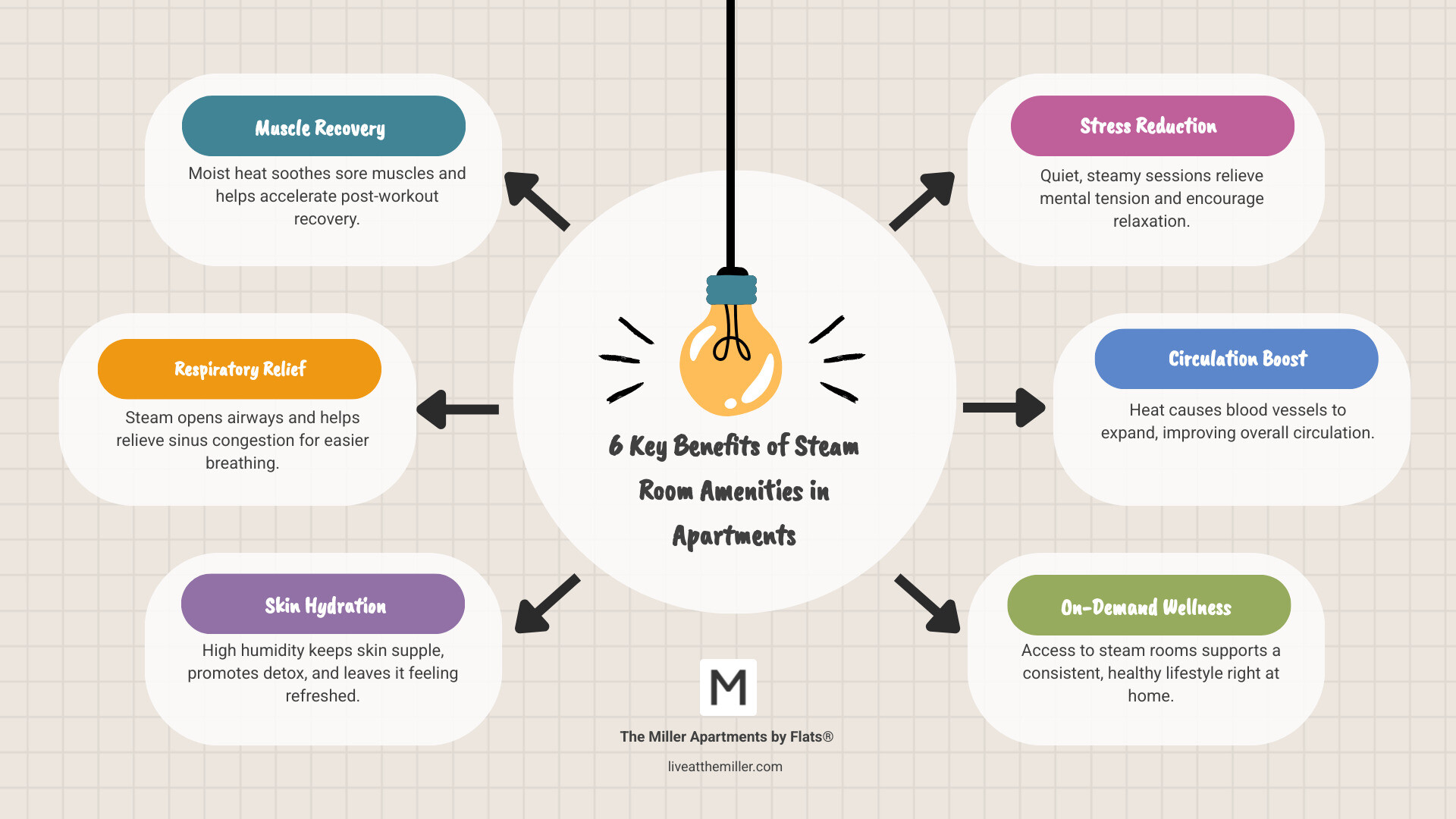
Muscle recovery represents one of the most immediate benefits for apartment residents who exercise regularly. The moist heat penetrates deep into muscle tissue, promoting blood flow and reducing inflammation. This makes steam rooms particularly valuable for residents who use building fitness centers or participate in outdoor activities.
Skin hydration improves dramatically with regular steam exposure. The humid environment helps open pores and promotes natural moisture retention, which can be especially beneficial for residents living in dry climates or air-conditioned environments.
Respiratory relief occurs naturally in the steam-saturated air. The warm, moist environment can help clear congestion and ease breathing, making steam rooms valuable for residents dealing with seasonal allergies or urban air quality concerns.
Mental calm and stress reduction happen through multiple mechanisms. The heat promotes relaxation response in the nervous system, while the ritual of taking time for self-care provides psychological benefits. The research shows that steam rooms are positioned as essential spaces for "escape and relaxation" in residential settings.
Circulation boost occurs as blood vessels dilate in response to the heat, improving overall cardiovascular function. This improved circulation can help with everything from muscle recovery to mental clarity.
Video walkthrough of rooftop steam room
Scientific Insights on Heat Therapy
The physiological mechanisms behind steam room benefits are well-documented in heat therapy research. Vasodilation - the widening of blood vessels - occurs as the body attempts to cool itself, resulting in improved circulation throughout the body. This process can help reduce blood pressure and improve oxygen delivery to tissues.
Cortisol reduction happens as the heat stress triggers the body's relaxation response. Regular heat therapy has been shown to help regulate stress hormones, contributing to better sleep quality and overall mood stability.
Joint flexibility increases as the warmth helps relax connective tissues and reduce stiffness. This makes steam rooms particularly valuable for residents with arthritis or those who spend long hours at desk jobs.
Complementary Amenities That Amplify Results
The most effective apartments with steam room amenities pair steam facilities with complementary wellness features. Cold plunge pools or cold showers provide thermal contrast that improves circulation benefits and makes the steam experience more invigorating.
Yoga studios allow residents to combine flexibility work with the joint-loosening benefits of steam sessions. Many residents find that gentle stretching after steam sessions maximizes the mobility benefits.
Massage suites provide professional therapy that works synergistically with steam room benefits. The combination of heat therapy and skilled bodywork can address muscle tension more effectively than either treatment alone.
More info about wellness spaces
Apartments with Steam Room Amenities: Types, Access & Value

The landscape of apartments with steam room facilities spans multiple property types, each offering different access models and value propositions. Understanding these variations helps prospective residents make informed decisions about their wellness-focused living arrangements.
Luxury high-rise buildings often feature steam rooms as part of comprehensive spa floors or wellness centers. These facilities typically offer the most sophisticated equipment and design, with professional-grade vapor generators and premium finishes. The research shows examples like Toronto's Maple House, which includes steam rooms within its 40,000 square feet of amenities.
Condo towers frequently incorporate steam rooms into their amenity packages as a way to differentiate from standard rental properties. These buildings often feature both steam rooms and saunas, giving residents multiple heat therapy options.
Rental communities are increasingly adding steam rooms to compete for wellness-minded residents. These facilities help justify premium rents while improving resident satisfaction and retention rates.
Townhome clusters sometimes include shared steam facilities in clubhouse settings, providing single-family home residents with resort-style amenities they couldn't install individually.
Resale lofts in converted buildings offer unique opportunities, as seen in the research example of apartments in historic Russian Turkish bathhouses in Chicago. These properties combine architectural character with authentic spa heritage.
Shared Building Steam Suites vs. Private In-Unit Rooms
The choice between shared and private steam facilities significantly impacts the living experience. Shared building steam suites offer professional-grade equipment and lower individual maintenance responsibilities, but require coordination with other residents and adherence to building policies.
Access hours vary by property, with some offering 24/7 availability while others restrict usage to specific times. The research indicates that reservation systems are becoming common for shared facilities, allowing residents to book time slots through building apps.
Cleaning protocols for shared steam rooms typically involve both professional maintenance and user responsibility. Most buildings provide sanitizing supplies and expect residents to wipe down surfaces after use.
Guest policies differ significantly between properties. Some buildings allow residents to bring guests to steam facilities, while others restrict access to residents only for privacy and capacity reasons.
Private in-unit steam rooms offer maximum convenience and privacy but come with higher maintenance responsibilities and energy costs. These installations work best in larger units with adequate ventilation and utility capacity.
How Steam Rooms Influence Lease Value
Steam room amenities command premium rents in competitive markets, as they provide tangible lifestyle benefits that justify higher housing costs. The research shows that properties market steam rooms as key differentiators, particularly in luxury segments.
The premium amenity factor extends beyond the steam room itself to encompass the overall wellness lifestyle that these facilities represent. Properties with comprehensive spa amenities can position themselves as health-focused communities rather than simple housing.
Wellness appeal has grown significantly as residents prioritize health and self-care in their living decisions. Steam rooms signal that a property understands and caters to these priorities, attracting residents who value wellness amenities.
Resident retention improves when buildings offer amenities that residents use regularly. Steam rooms provide year-round value that keeps residents engaged with their building community.
Market differentiation becomes crucial in competitive rental markets. Steam rooms help properties stand out from standard fitness center and pool amenities that have become commonplace.
Apartments with Steam Room for Families, Couples & Solo Residents
Steam room suitability varies based on household composition and lifestyle needs. Families with children need to consider age restrictions and supervision requirements, as most steam rooms are not recommended for young children due to their inability to regulate body temperature effectively.
Couples often find steam rooms improve their shared wellness routines, providing a private space for relaxation and conversation. The research shows examples of luxury vacation rentals marketing steam facilities specifically for romantic getaways.
Solo residents may particularly value steam rooms as spaces for meditation and stress relief, especially in urban environments where finding quiet, private spaces can be challenging.
Session supervision becomes important for families, as steam rooms require awareness of heat exposure limits and proper hydration. Most buildings provide usage guidelines and safety information for resident education.
Inclusive design considerations ensure that steam rooms accommodate residents with different mobility needs and comfort levels. This includes appropriate seating, grab bars, and accessible entry points.
How to Evaluate, Use & Maintain Steam Rooms in Your Building

Evaluating steam room quality and maintenance standards is crucial when considering apartments with steam room amenities. The long-term value and safety of these facilities depend heavily on proper installation, maintenance, and usage protocols.
Material durability should be assessed through visual inspection and building management inquiries. High-quality installations use non-porous tiles or solid surface materials that resist mold and mildew growth. The research indicates that professional installations often feature specialized waterproof membranes and vapor barriers to protect building structures.
Ventilation systems require adequate capacity to handle moisture removal and air circulation. Proper ventilation prevents condensation problems in adjacent areas and maintains air quality within the steam room itself. Buildings should have exhaust fans rated for high-humidity environments and moisture detection systems.
Mildew prevention depends on both design and maintenance protocols. Well-designed steam rooms include antimicrobial surfaces and proper drainage to prevent standing water. Regular cleaning schedules and user education help maintain hygienic conditions.
Certified installers should have handled the original installation and any major repairs. Steam room systems require specialized knowledge of plumbing, electrical, and HVAC systems to function safely and efficiently.
Safety features must include emergency shut-off switches, temperature controls, and proper lighting. Most residential steam rooms include automatic shut-off timers and temperature limiters to prevent overheating or extended exposure.
Water and energy consumption varies significantly based on system design and usage patterns. Efficient vapor generators and proper insulation help minimize operating costs while maintaining performance.
Must-Ask Questions Before Signing a Lease for Apartments with Steam Room
Prospective residents should clarify maintenance responsibilities before committing to a lease. Some buildings include steam room maintenance in rent, while others charge additional fees for premium amenity access.
Operating hours need to be clearly understood, as they affect the practical value of the amenity. Buildings may restrict steam room access during maintenance periods or limit hours to reduce energy costs.
Guest rules should be established upfront to avoid conflicts later. Some buildings allow residents to bring guests to steam facilities, while others restrict access to residents only.
Emergency shut-off procedures should be explained during building orientation. Residents need to know how to safely exit the steam room and whom to contact if equipment malfunctions.
Reservation systems, if applicable, should be demonstrated so residents understand how to book time slots and what happens if they need to cancel or reschedule.
Daily Best-Practice Routine for Residents
Pre-heat time varies by system, but most residential steam rooms require 10-15 minutes to reach optimal temperature and humidity levels. Residents should plan accordingly and avoid wasting energy by starting the system before they're ready to use it.
Towel etiquette includes bringing clean towels for sitting and drying, as well as wiping down surfaces after use. Most buildings provide sanitizing supplies and expect residents to clean up after themselves.
Cooldown zones should be used properly to maximize health benefits and ensure safety. Gradual temperature transitions help the body adjust and prevent dizziness or discomfort.
Cleaning wipe-down should be performed after each session to maintain hygiene for the next user. This includes benches, walls, and any surfaces that came into contact with the user.
Product Roundup: Stand-Out Apartments with Steam Room Options Across North America
The market for apartments with steam room amenities spans diverse property types and locations, each offering unique approaches to residential wellness. This roundup highlights exceptional examples that demonstrate the range of options available to wellness-focused residents.
Maple House West — Community Steam & Sauna Pavilion
Toronto's Maple House represents the pinnacle of amenity-rich apartment living, with nearly 40,000 square feet of wellness facilities distributed across three towers. The steam room forms part of a comprehensive spa experience that includes saunas, fitness centers, and outdoor terraces spanning over 17,000 square feet.
The property's approach to wellness amenities demonstrates how modern apartment buildings can compete with luxury hotels and resorts. Residents enjoy access to professional-grade steam facilities without the ongoing costs of spa memberships or the inconvenience of traveling to external wellness centers.
The building's location in Toronto's Canary District provides exceptional walkability and transit access, with a Walk Score of 95 and Transit Score of 94. This combination of wellness amenities and urban convenience represents the ideal integration of healthy living with city life.
Luxury Lake-View Condo — Private Steam Sauna & Terrace
The research reveals luxury vacation rentals that showcase private steam facilities in residential settings. A 4-bedroom lakefront property demonstrates how steam rooms can be integrated into individual units, providing ultimate privacy and convenience for residents.
This configuration appeals particularly to families and couples who prefer private wellness experiences. The combination of steam facilities with outdoor terraces creates a comprehensive relaxation environment that rivals high-end resort accommodations.
The lakefront location adds natural beauty to the wellness experience, allowing residents to combine steam sessions with outdoor activities like swimming or waterfront relaxation. This integration of indoor and outdoor wellness represents a growing trend in luxury residential design.
Vancouver WA Picks for "Apartments with Steam Room"
The Vancouver, Washington market offers several examples of wellness-focused apartment communities that incorporate steam rooms into their amenity packages. These properties demonstrate how smaller markets can compete with major metropolitan areas by offering comprehensive wellness amenities.
Properties like The Miller Apartments by Flats® exemplify this approach, combining modern design with dedicated spa facilities in the Vancouver Waterfront neighborhood. The integration of steam rooms with fitness centers and coworking lounges creates a holistic lifestyle environment that appeals to health-conscious professionals.
The proximity to the Columbia River provides additional wellness opportunities, with properties offering both indoor steam facilities and outdoor recreation access. This combination of built and natural amenities creates a comprehensive wellness lifestyle for residents.
How Residents Actually Use Apartments with Steam Room Amenities
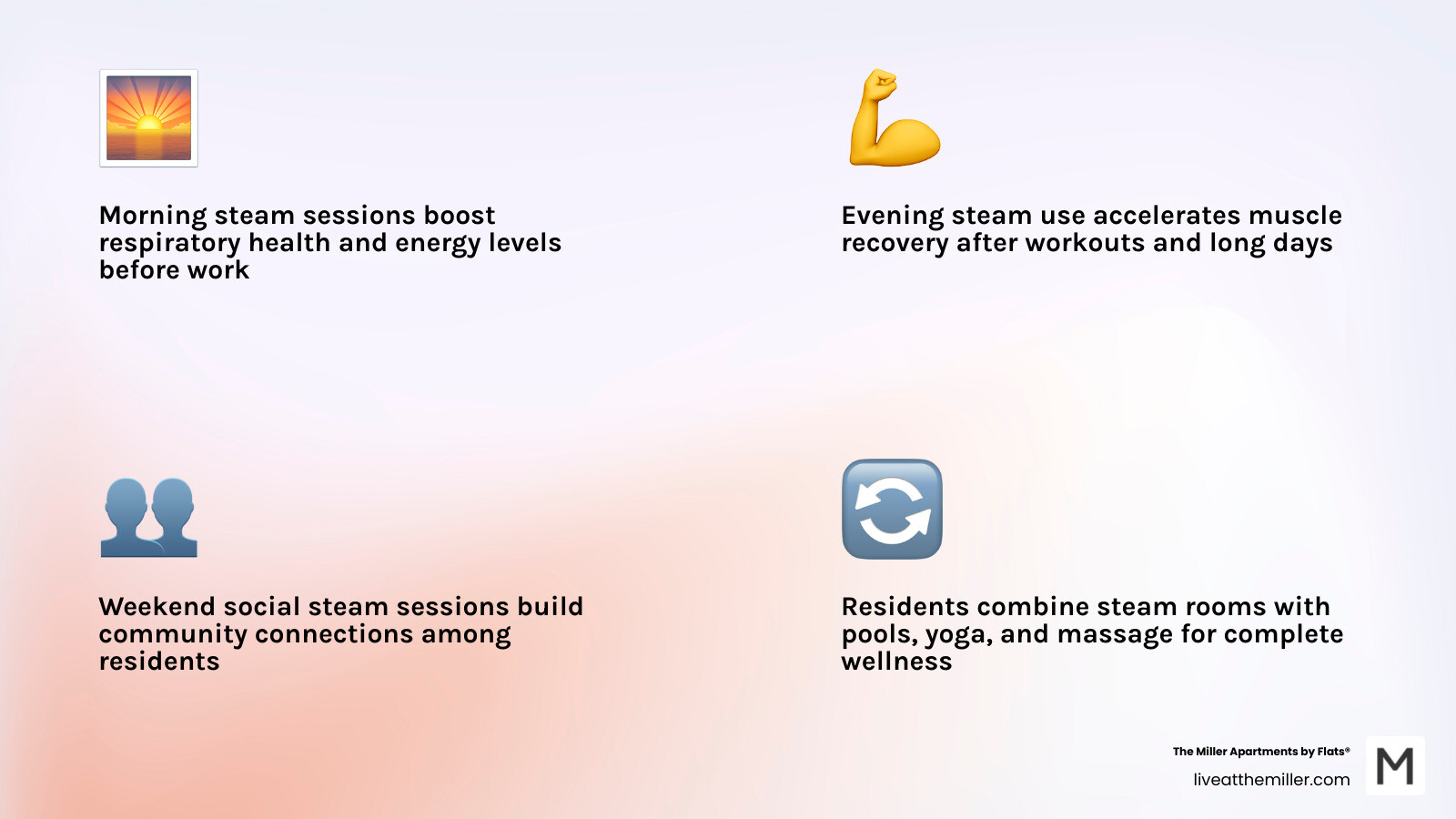
Real-world usage patterns reveal that residents incorporate steam rooms into their daily routines in diverse ways. Morning sessions provide respiratory benefits and energy boosts before work, particularly valuable for residents dealing with seasonal allergies or urban air quality concerns.
Evening muscle recovery sessions help residents unwind after workouts or long workdays. The research shows that steam rooms are often positioned near fitness centers, making them convenient for post-exercise recovery routines.
Weekend social spa sessions allow residents to enjoy steam facilities with friends or family members, creating community connections while maintaining wellness routines. Some buildings encourage this social aspect by designing larger steam rooms that accommodate multiple users comfortably.
The integration of steam rooms with other wellness amenities creates natural usage flows - residents might combine steam sessions with pool time, yoga classes, or massage appointments. This comprehensive approach to wellness amenities maximizes the value proposition for residents.
Frequently Asked Questions About Apartments with Steam Room
Are steam rooms in apartments safe for everyday use?
Steam rooms in residential settings are generally safe for daily use when proper guidelines are followed. Most healthy individuals can safely enjoy 10-20 minute sessions without adverse effects. However, residents with certain medical conditions - including pregnancy, heart conditions, or blood pressure issues - should consult healthcare providers before regular use.
Building management typically provides safety guidelines and usage recommendations to ensure resident safety. These include maximum session times, proper hydration protocols, and emergency procedures. Most residential steam rooms include automatic shut-off features and temperature controls to prevent overexposure.
The key to safe daily use lies in listening to your body and following established protocols. Signs that a session should end include dizziness, nausea, or excessive fatigue. Proper hydration before, during, and after sessions helps maintain safety and maximize benefits.
How much water and electricity does a residential steam room consume?
Water consumption for residential steam rooms varies based on usage frequency and system efficiency. A typical 15-minute session uses approximately 1-2 gallons of water, which is comparable to a short shower. Modern vapor generators are designed for efficiency and include features like automatic drain cycles to minimize waste.
Electricity consumption depends on the size of the steam room and the power rating of the vapor generator. Most residential units require 6-12 kilowatts of power during operation, similar to running a large electric dryer. The actual energy cost depends on local utility rates and usage frequency.
Many buildings include steam room operating costs in their amenity fees or rent structure, so residents don't see direct utility impacts. For buildings that charge back utility costs, the expense is typically shared among all residents rather than charged individually based on usage.
Do I need to book time slots to use a shared steam room?
Reservation requirements vary significantly between properties. Some buildings operate steam rooms on a first-come, first-served basis, while others require advance booking through building apps or concierge services. The research indicates that reservation systems are becoming more common, particularly in buildings with high resident density.
Buildings with reservation systems typically allow booking 24-48 hours in advance, with policies about cancellation deadlines and no-show penalties. These systems help ensure fair access and prevent overcrowding during peak usage times.
Properties without formal reservation systems may have informal protocols about sharing space and respecting time limits. Building management usually provides guidelines about appropriate session lengths and courteous usage practices.
The trend toward reservation systems reflects the growing popularity of steam room amenities and the need to manage demand effectively. Residents should inquire about booking procedures during their building tour to understand access requirements.
Conclusion
Apartments with steam room amenities represent a significant evolution in residential living, changing daily routines into wellness experiences that promote both physical health and mental well-being. The research demonstrates that these facilities are no longer luxury novelties but essential amenities that attract and retain health-conscious residents.
From Toronto's Maple House with its 40,000 square feet of wellness facilities to converted historic bathhouses in Chicago, the diversity of steam room options reflects the growing demand for residential wellness amenities. These properties succeed by integrating steam rooms with complementary facilities like fitness centers, pools, and massage suites, creating comprehensive wellness environments.
The health benefits of regular steam use - including muscle recovery, improved circulation, respiratory relief, and stress reduction - make these amenities particularly valuable for urban residents dealing with busy lifestyles and environmental stressors. The convenience of accessing these benefits without leaving home adds significant value to the residential experience.
For prospective residents evaluating apartments with steam room options, key considerations include maintenance quality, access policies, safety features, and integration with other wellness amenities. The most successful properties combine professional-grade equipment with thoughtful design and comprehensive resident education.
The Miller Apartments by Flats® exemplifies this approach, blending modern design with dedicated spa facilities in Vancouver's Waterfront neighborhood. The combination of steam rooms with fitness centers and coworking lounges creates a holistic lifestyle environment that supports both physical wellness and professional productivity.
As the wellness real estate trend continues to grow, steam room amenities will likely become standard features in luxury apartment communities. For residents prioritizing health and self-care in their living decisions, these facilities offer daily access to therapeutic benefits that improve overall quality of life.
The future of residential living increasingly emphasizes wellness integration, and apartments with steam room facilities lead this change by providing residents with spa-quality experiences in the comfort of their home communities.