


Finding Apartments for Rent That Accept Pets Starts With the Fine Print
Apartments for rent that accept pets are easiest to find when you filter listings for cats or dogs, then confirm the full pet policy with the leasing team before you apply.
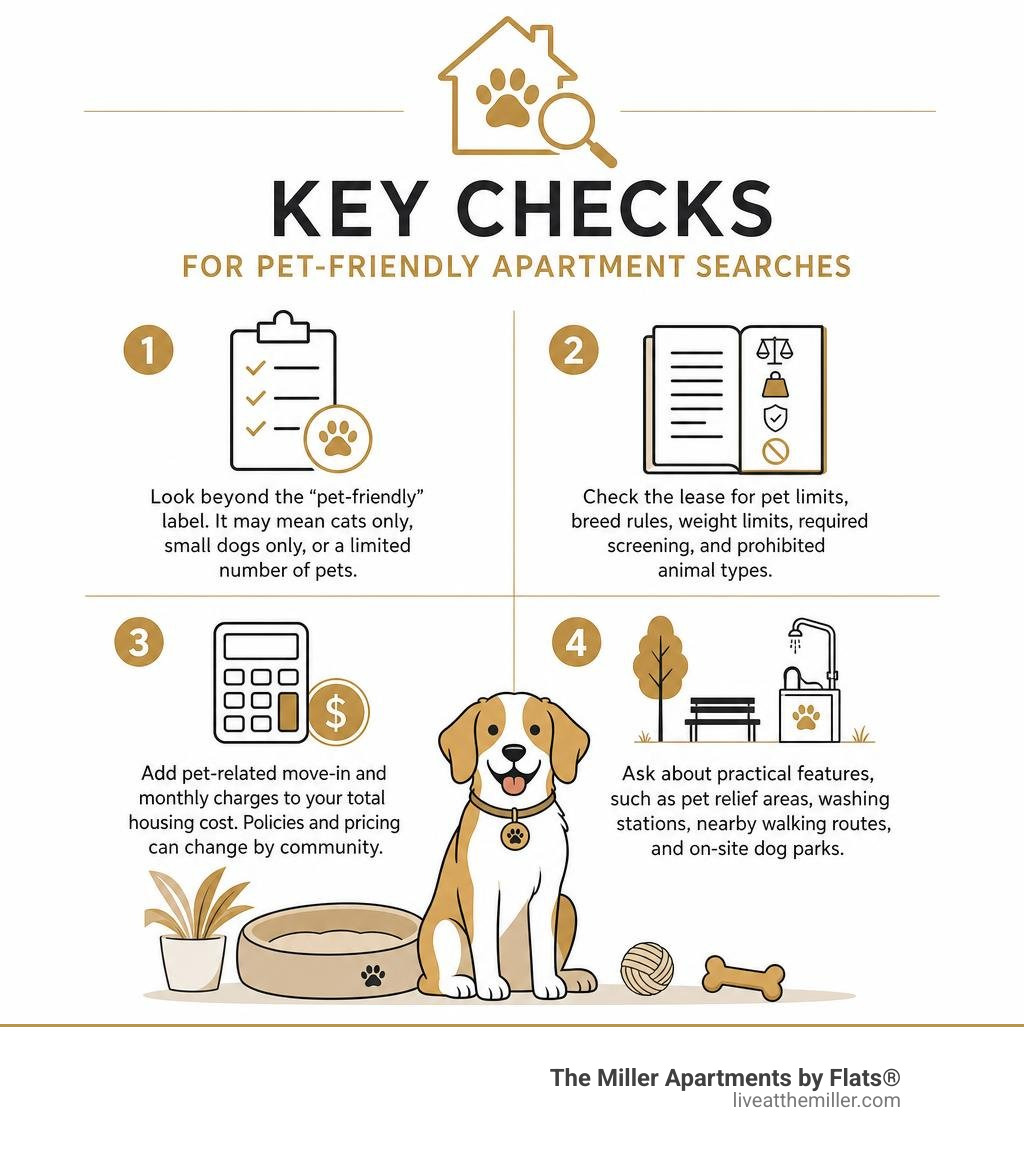
- Look beyond the general "pet-friendly" label, as it may apply only to cats, small dogs, or a limited number of household animals.
- Check the lease carefully for community pet limits, breed guidelines, weight rules, required third-party screening, and prohibited animal types.
- Factor pet-related move-in fees and monthly recurring charges into your total housing cost calculation, as pricing and policies vary across properties.
- Ask about practical on-site conveniences, such as dedicated pet relief areas, grooming washing stations, designated walking paths, and nearby green spaces.
For renters planning a move with companion animals, the fine print matters. Most apartment communities set a maximum limit of up to two pets per home, and policies often detail specific operational rules. Preparing a complete pet profile and asking early questions can prevent frustrating surprises after finding an apartment community you love.
Finding Apartments for Rent That Accept Pets with Flexible Policies
Searching for apartments for rent that accept pets requires a methodical strategy. While many rental communities advertise themselves as welcoming to animals, the actual parameters of those policies can vary significantly from property to property. Navigating these nuances starts with understanding how online search platforms categorize pet-friendly housing and knowing how to communicate directly with property management teams.
A strong search process also includes comparing policy language across several communities before touring. Phrases such as "pets considered," "cats allowed," "dogs allowed," and "pet-friendly" can each mean something different in practice. Renters should treat these labels as a starting point, then verify the details that affect daily life, including leash rules, vaccination requirements, waste disposal expectations, noise guidance, and whether pet approval must be completed before move-in. This extra step helps ensure that the apartment, community guidelines, and lease responsibilities all align before an application is submitted.
Top Search Directories for Apartments for Rent That Accept Pets
Major online listing portals allow renters to streamline their housing search by applying specific filters for dogs and cats. Major real estate aggregators feature regional directories, such as Washington Pet Friendly Apartments, where users can instantly filter available homes by animal allowance.
When utilizing online search tools, it is crucial to remember that a general "pet-friendly" checkmark does not automatically guarantee that every type or number of animals is accepted. Some directories group all animal-welcoming properties together, while others distinguish between feline-only rentals and canine-friendly communities. To learn more about navigating property listings effectively and evaluating lease terms, consult the Pet-Friendly Apartments Ultimate Guide.
It is also helpful to save screenshots or notes from listings that mention pet policies, then compare them with the information provided by the leasing office. Online listings may not always reflect the most current policy language, especially when communities update screening procedures, amenity access, or documentation requirements. A brief confirmation email from the leasing team can give renters a clear record of current expectations.
How to Filter Apartments for Rent That Accept Pets for Household Animals
For households with up to two companion animals, finding the right apartment involves narrowing down search filters beyond basic property allowances. Standard residential communities enforce a clear policy limit of up to two pets per apartment unit. When searching online platforms, look for advanced filter options that specify animal counts or allow detailed key term searches.
If an online portal does not offer a specific filter for household animal counts, checking individual property FAQ pages or reaching out directly to the leasing team is the most reliable next step. Direct communication ensures that you receive accurate information regarding community pet policies, deposits, monthly fees, and available amenities before submitting a formal lease application.
Understanding Pet Fees, Rent, and Lease Restrictions
Renting with companion animals involves specific financial and contractual considerations. Landlords and property management groups utilize structured fee frameworks to cover routine wear, specialized common area maintenance, and pet-inclusive community amenities.
Pet Deposits vs. One-Time Pet Fees vs. Monthly Pet Rent
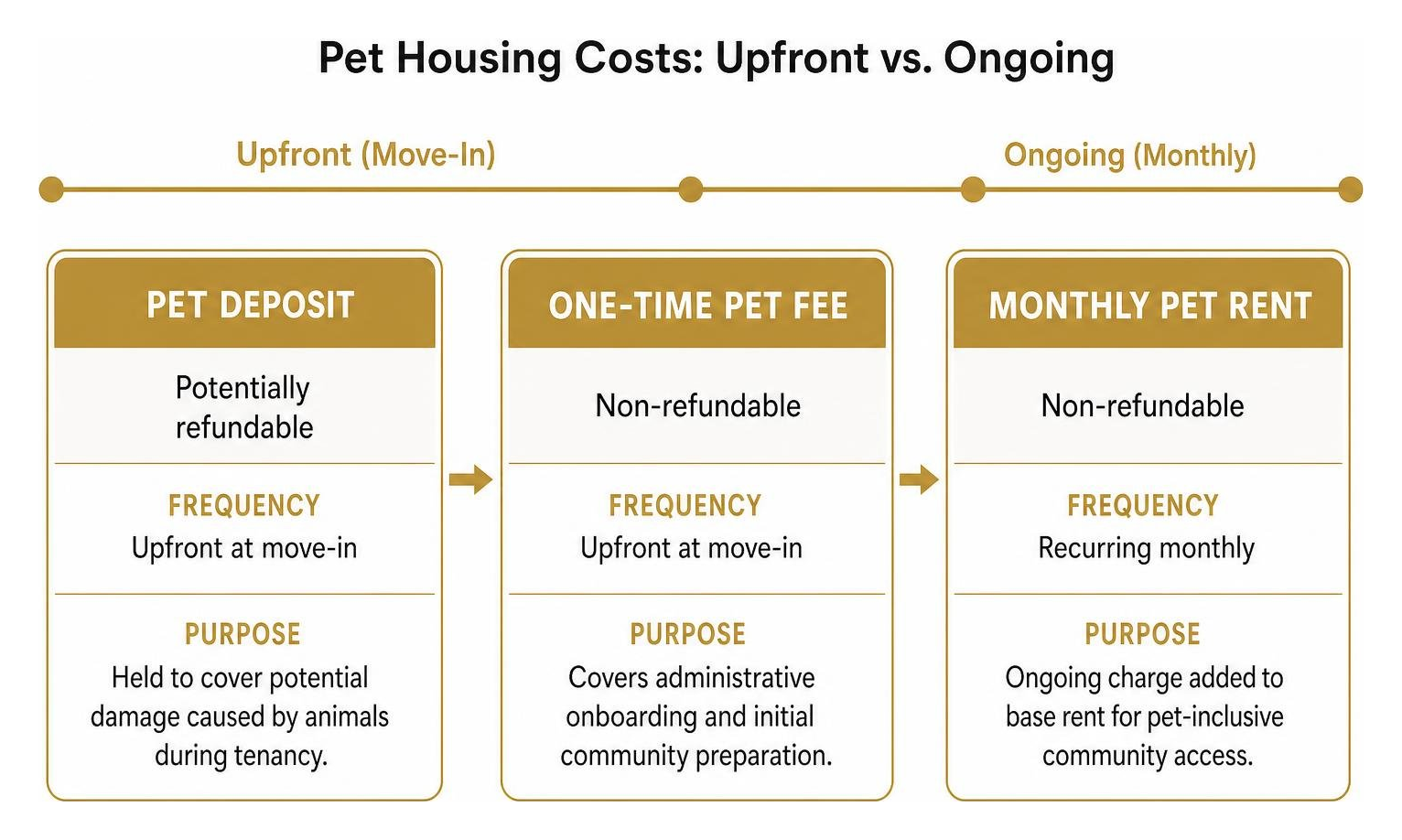
Understanding the financial structure of pet-friendly leasing is essential before submitting an application. Pricing and fee structures vary across communities and are subject to change depending on local housing regulations and property management policies.
| Fee Type | Refundable? | Frequency | Purpose |
|---|---|---|---|
| Pet Deposit | Potentially refundable | Upfront at move-in | Held to cover potential damage caused by animals during tenancy. |
| One-Time Pet Fee | Non-refundable | Upfront at move-in | Covers administrative onboarding and initial community preparation. |
| Monthly Pet Rent | Non-refundable | Recurring monthly | Ongoing charge added to base rent for pet-inclusive community access. |
A pet deposit functions similarly to a standard security deposit. If the apartment remains free of animal-related damage at move-out, these funds may be returned to the resident. Conversely, a one-time pet fee is non-refundable and pays for administrative processing and onboarding. Recurring monthly pet rent is paid alongside baseline housing costs to support dedicated community amenities and property upkeep. For details on managing housing expenses while renting with animals, visit Affordable Pet-Friendly Apartments.
Common Breed and Weight Restrictions in Rental Leases
Lease agreements frequently outline specific operational guidelines regarding dog breeds and weight thresholds. These restrictions are often tied to property insurance policies, local guidelines, or building management rules.
Standard restricted dog breeds across commercial property listings often include:
- Pit Bull Terriers (including American Staffordshire Terriers)
- German Shepherds
- Rottweilers
- Doberman Pinschers
- Chow Chows
- Akitas and Mastiffs
Weight thresholds may also apply, with some communities setting specific weight caps under standard lease terms. However, modern luxury communities increasingly adopt broader management guidelines to accommodate standard household dogs. To explore housing guidelines regarding animal size thresholds and lease terms, read about Apartments with No Pet Restrictions.
Strategies for Renting with Companion Animals
Securing a modern apartment while owning pets requires clear communication and thorough organization. Presenting complete documentation upfront demonstrates responsible tenancy and streamlines the application screening process for property managers.
Building a Standout Pet Resume Package
Creating a professional pet resume is an effective way to introduce companion animals to a leasing office. A complete pet resume package highlights responsible pet ownership, behavioral training, and full health compliance.
Key components to include in a pet resume package:
- Basic Identification: Clear photos, age, breed breakdown, and weight details.
- Veterinary Records: Up-to-date vaccination records, medical history, and official proof of spay/neuter status.
- Training & Behavior: Certificates from obedience training programs or formal behavioral assessments.
- References: Written letters from previous landlords or property managers confirming well-mannered behavior, non-disruptive conduct, and clean rental history.
For specialized guidance on presenting indoor pets to prospective landlords, see the Cat-Friendly Apartments Guide 2026.
Negotiating with Landlords and Asking the Right Questions
When evaluating a prospective home, asking detailed questions during property tours ensures complete clarity regarding community rules and daily living expectations.
Essential questions to ask the leasing team include:
- What is the precise limit on household animals per unit?
- Are pet fees charged per animal or per household unit?
- What specific documentation or third-party pet screening profiles are required?
- Are dedicated amenities available on-site, such as a pet wash station or relief area?
- What are the designated walking routes, leash requirements, and community quiet hours?
Frequently Asked Questions About Pet-Friendly Rental Housing
How many pets are usually allowed per apartment unit?
The vast majority of pet-friendly apartment communities enforce a maximum policy of two pets per apartment unit. Exotic animals, such as certain reptiles, ferrets, or potbellied pigs, are frequently restricted under standard residential lease agreements.
Can landlords legally charge extra for pets, and are there fee limits?
Yes, property owners and management companies can legally charge pet deposits, upfront pet fees, and recurring monthly pet rent, provided these charges comply with state and local housing laws. However, under federal guidelines, legally certified assistance animals and service animals are exempt from all pet fees, pet deposits, and monthly pet rent.
Do pet-friendly apartments cost more than non-pet-friendly units?
Pet-friendly apartments may involve additional monthly costs due to recurring pet rent and move-in fees. However, communities that welcome animals often provide specialized infrastructure, such as courtyard pet relief areas, grooming stations, and nearby access to parks, which add significant daily convenience for animal owners.
Conclusion

Finding apartments for rent that accept pets requires reviewing lease terms, understanding fee breakdowns, and confirming community guidelines. By organizing veterinary records, preparing a pet resume, and verifying animal limits early in the search process, renters can easily transition into a home that meets both their living preferences and their pets' needs.
For those seeking modern living in the Pacific Northwest, communities like The Miller Apartments by Flats in Vancouver, WA offer modern design, premium wellness amenities, and an ideal location along the vibrant Vancouver Waterfront. Explore modern living tailored for pet lovers by reading the guide to Ultimate Pet-Friendly Apartments.