

Is Apartment Covered Parking Worth It? Here's What You Need to Know
Apartment covered parking is one of those amenities that's easy to overlook — until your car sits baking in summer heat, gets pelted by hail, or wears a thick coat of frost every winter morning.
Quick answer: Covered parking protects your vehicle from weather, reduces wear, can lower insurance costs, and adds real convenience to daily life. For most renters, it's worth the extra monthly cost — especially in climates with extreme sun, rain, or snow.
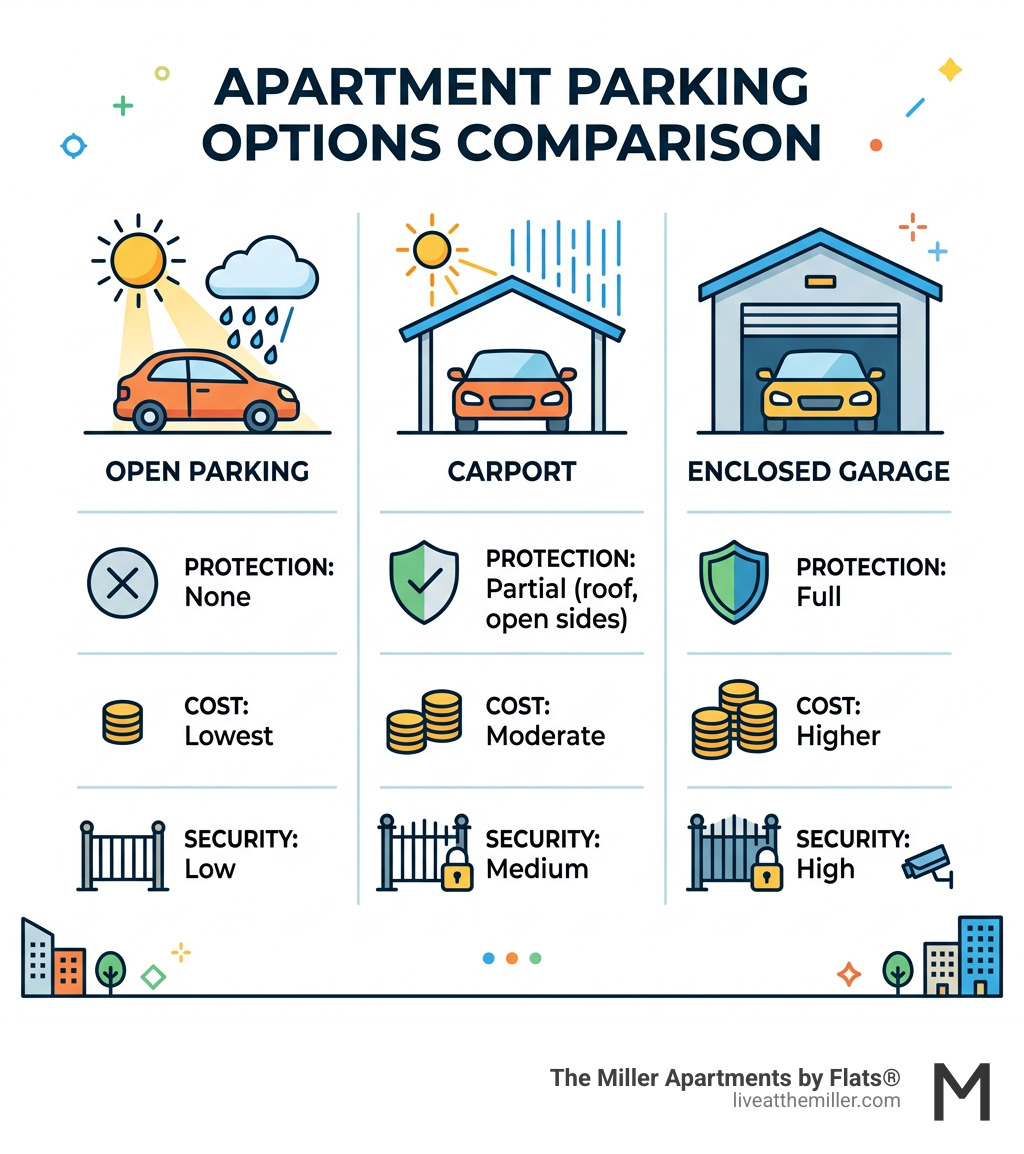
Here's a fast breakdown of how covered parking compares to your other options:
| Parking Type | Weather Protection | Security Level | Space Efficiency | Typical Cost |
|---|---|---|---|---|
| Open/Surface | None | Low | High | Lowest |
| Carport (Covered) | Partial (roof, open sides) | Medium | Medium | Moderate |
| Enclosed Garage | Full | High | Lower | Higher |
| Underground/Automated | Full | Highest | Highest | Highest |
Nearly 50% of apartment residents say parking is a top factor when deciding whether to renew their lease. And properties that offer covered parking tend to be valued 10-15% higher than those without it.
That's not a coincidence.
Whether you drive a daily commuter car or something you've invested serious money into, where you park matters more than most people realize. The right parking setup protects your vehicle, simplifies your routine, and can even save you money over time.
Understanding Apartment Covered Parking and Its Variations
When browsing for a new home in Vancouver, WA, or the surrounding areas, the term "covered parking" can mean several different things. At its most basic level, it refers to any parking space that provides a roof or overhead shelter to protect vehicles from the elements. However, the structural design and level of protection can vary significantly between properties.
Carports vs. Enclosed Garages
The most common form of apartment covered parking is the carport. These are typically permanent roof structures supported by pillars. While they offer excellent protection from vertical elements like rain, snow, and falling debris (like sap or bird droppings), they usually have open sides. This allows for great ventilation but leaves the vehicle somewhat exposed to wind-blown rain or dust.
Enclosed garages, on the other hand, provide four walls and a door. These offer the highest level of privacy and protection. While carports are excellent for daily drivers, enclosed garages are often preferred by those who want to use their parking area for a bit of extra "out of sight" storage or for maximum vehicle security. In luxury Pacific Northwest communities, you may find a mix of both, including reserved off-street options that ensure your spot is waiting for you when you get home from a long day.
The Rise of Automated Apartment Covered Parking
In dense urban environments where space is at a premium, modern technology is changing how we think about parking. Automated parking systems are becoming a hallmark of high-end urban innovation. These "robotic" systems use lifts and platforms to stack vehicles efficiently.
The benefits are impressive: automated systems require only about 225 square feet per parking space, compared to the 350 square feet needed for conventional ramps and driving lanes. Even better for the environment, these systems can cut carbon emissions by up to 83% because vehicles are turned off while being moved into their stalls. This tech-forward approach ensures that even in the heart of the city, your car remains tucked away safely without the hassle of navigating tight spiral ramps.
Key Benefits for Residents and Property Owners
Choosing a home with apartment covered parking is an investment in your vehicle’s longevity. Constant exposure to the elements is a car’s worst enemy. UV rays from the sun can fade interior upholstery and crack dashboards, while rain and snow can lead to rust and seal degradation. By keeping your car under a roof, you effectively preserve the paint and exterior finish, maintaining the vehicle's resale value over time.
For property owners, providing quality parking solutions is a major driver of tenant retention. Statistics show that covered parking creates a more harmonious living environment by resolving common parking disputes. When residents have a dedicated, protected space, they are up to 50% more likely to renew their leases. It transforms a "place to park" into a premium service that enhances the overall living experience.
Enhancing Security and Insurance Savings
Security is a top priority for anyone living in a city. A controlled-access parking garage acts as a powerful deterrent against theft and vandalism. When parking areas are gated and monitored by surveillance integration, the risk to your property drops significantly.
This increased security can actually put money back in your pocket. Many insurance providers offer discounts for vehicles parked in secure, covered, or garage locations. By reducing the likelihood of weather-related claims (like hail damage) or theft, you may qualify for lower monthly premiums. It is always worth checking with your insurance agent to see how much a "covered" status could save you.
Modern Amenities: EV Charging and Smart Tech
The future of parking is green and connected. Many modern complexes are now integrating charging stations Electric vehicle (EV)charging stations, which are a top amenity for renters who own electric cars.. Having an EV charger right at your parking stall removes the "range anxiety" of owning an electric vehicle in an apartment.
Beyond charging, smart technology is making parking areas more efficient. Smart lighting systems equipped with motion sensors can cut energy use by up to 80% by only illuminating the areas currently in use. This not only saves energy but also ensures that the area is brightly lit exactly when and where you are walking. For those interested in how these features integrate into a luxury lifestyle, you can find more info about apartment covered parking and how it fits into modern residential design.
What to Evaluate Before Choosing Your Parking Space
Not all parking spots are created equal. Before you sign a lease, it is important to walk the parking area and evaluate the specific spot you might be assigned. Consider the proximity to your unit; carrying groceries across a massive complex in the rain is no fun, even if your car stayed dry.
You should also check for height restrictions. While standard building codes require parking spots to have a minimum of 13.75 square meters of space, the vertical clearance can vary. If you drive a lifted truck or an SUV with a roof rack, ensure the carport or garage can accommodate your vehicle's dimensions. Additionally, inquire about the vehicle allowance per unit. Many properties allow one vehicle for a one-bedroom home and two for larger units, with additional vehicles requiring a separate monthly fee.
Assessing the Value of Apartment Covered Parking
When looking at the cost, pricing for parking is often fluid and subject to change based on availability and demand. While there is usually a monthly fee associated with covered options, the convenience factor is hard to quantify. Think about the time saved by not having to scrape ice off a windshield or wait for a blistering hot car to cool down in the summer. For many, the long-term savings on vehicle maintenance and the daily comfort provided make it a very high-value lifestyle fit.
Drawbacks and Limitations to Consider
While the pros are numerous, there are a few things to keep in mind. Availability can be limited, and some properties may have a waitlist for covered spots. You should also clarify if the parking is assigned or unassigned. Assigned parking gives you peace of mind that your spot is always yours, while unassigned (first-come, first-serve) can lead to frustration during peak hours. Finally, be aware of maintenance schedules; occasionally, parking areas may be closed for cleaning or resurfacing, requiring you to park elsewhere temporarily.
Frequently Asked Questions about Apartment Parking
Is covered parking better than a standard garage?
It depends on your needs! A garage offers full enclosure and the highest security, but carports (covered parking) offer better ventilation and are often more accessible for quick entries and exits. If you just want to keep the rain and sun off your car, covered parking is a fantastic, cost-effective middle ground.
Does covered parking reduce car insurance premiums?
In many cases, yes. Because covered parking reduces the risk of weather damage and often comes with better security features like gates or cameras, insurers view the vehicle as a lower risk. Be sure to mention your parking situation when getting an insurance quote.
Are there size restrictions for larger vehicles?
Yes, most structures have height clearances and specific stall widths based on local building codes. Always verify that your specific vehicle fits comfortably within the stall and under the roofline before committing to a spot.
Conclusion
At The Miller Apartments, we believe that your home should extend to every part of your daily routine, including where you leave your car. Located in the vibrant Vancouver Waterfront neighborhood, our community blends modern sophistication with the convenience you need. Whether you are coming home from a day at the office or a weekend adventure in the Pacific Northwest, having a secure, protected place to park is the ultimate lifestyle upgrade.
Don't let your vehicle suffer the wear and tear of the elements. Experience the perfect combination of comfort, security, and industrial-chic design. Explore our luxury amenities today and see how we’ve redefined sophisticated living in Vancouver, WA.