


Navigating financial obligations is a crucial step when searching for animal friendly apartments. Beyond standard monthly rental rates and security deposits, communities charging pet-related expenses structure these costs in several distinct ways. Establishing a clear budget for move-in requirements helps streamline the leasing process, ensures transparent financial planning, and prevents unexpected fees during your transition into a new home.
Understanding how property management companies structure these expenses allows renters to evaluate total monthly and upfront obligations effectively. Looking for transparent financial guidelines makes it easier to find pet friendly apartments that fit your long-term plans and lifestyle needs.
Pet Deposit vs Pet Fee vs Pet Rent
When reviewing a lease for animal friendly apartments, you will typically encounter three distinct categories of pet charges:
| Fee Type | One-Time or Recurring | Refundable? | Purpose |
|---|---|---|---|
| Pet Deposit | One-time payment at move-in | Yes (subject to inspection) | Held in reserve to cover potential damage caused by the animal during tenancy. |
| Pet Fee | One-time payment at move-in | No | A non-refundable administrative charge for processing pets into the community. |
| Pet Rent | Recurring monthly add-on | No | An ongoing fee added to the standard monthly base rent for normal wear and tear. |
Local and state guidelines govern how landlords apply these charges. For example, some jurisdictions permit landlords to collect a refundable deposit specifically for animal-related damage alongside standard security deposits, while other regions restrict non-refundable fees. Knowing local rules helps ensure terms remain fair, standard, and compliant with all local ordinances.
Budgeting and Offsetting Costs for Animal Friendly Apartments
Managing upfront and recurring fees for your pet requires careful financial planning. Many properties offer move-in specials or concession packages - such as a period of free base rent or reduced administrative fees - that help offset initial move-in costs. Furthermore, understanding the precise fee schedule before signing a contract protects your budget over the full term of the lease.
When touring properties, consider these strategies to manage costs effectively:
- Ask about lease specials: Inquire whether active leasing promotions can be applied toward initial pet fees or deposit requirements to lower your initial out-of-pocket expenses.
- Provide comprehensive documentation: Demonstrating responsible ownership through detailed medical records, vaccination history, and training certificates can support a smoother application review.
- Review fee structures: Clarify whether pet rent is charged per pet or per household, ensuring total monthly expenses align completely with your long-term housing budget.
- Inquire about fee caps: Ask management if there are maximum caps on initial deposits or processing administrative fees across different floor plans.
Evaluating Policies, Pet Resumes, and Tenant Rights

Before submitting an application, carefully review all animal policies in writing. Property managers establish clear community rules to maintain safety, cleanliness, and quiet enjoyment for all residents. Knowing what questions to ask and how to present your pet positively makes the rental application process much smoother and more efficient.
Essential Questions for Property Managers
When speaking with leasing representatives, ask specific questions about property guidelines and management expectations:
- Community Rules and Standards: What specific pet rules, leash requirements, or age guidelines does the property enforce?
- Maximum Pet Limits: What is the maximum number of pets allowed per home? Standard policies typically cap occupancy at two pets per apartment home.
- Maintenance Access Protocols: How does maintenance enter the unit when pets are present? Is the resident required to be home during scheduled service calls or routine inspections?
- Noise Guidelines: What are the community expectations regarding excessive vocalization or barking, and how are noise concerns addressed?
- Designated Relief Areas: Where are pet relief areas located throughout the grounds, and what are the community rules for waste disposal and sanitation?
Reviewing property policies early helps you select communities that align seamlessly with your lifestyle. Renters researching leasing guidelines can review our pet friendly rental options to learn more about property rules and community expectations.
Crafting a Winning Pet Resume and Credentials
Presenting a complete portfolio for your pet helps property managers evaluate your application quickly and with confidence. A structured pet resume demonstrates that your animal is well-trained, healthy, courteous, and well-suited for apartment community living.
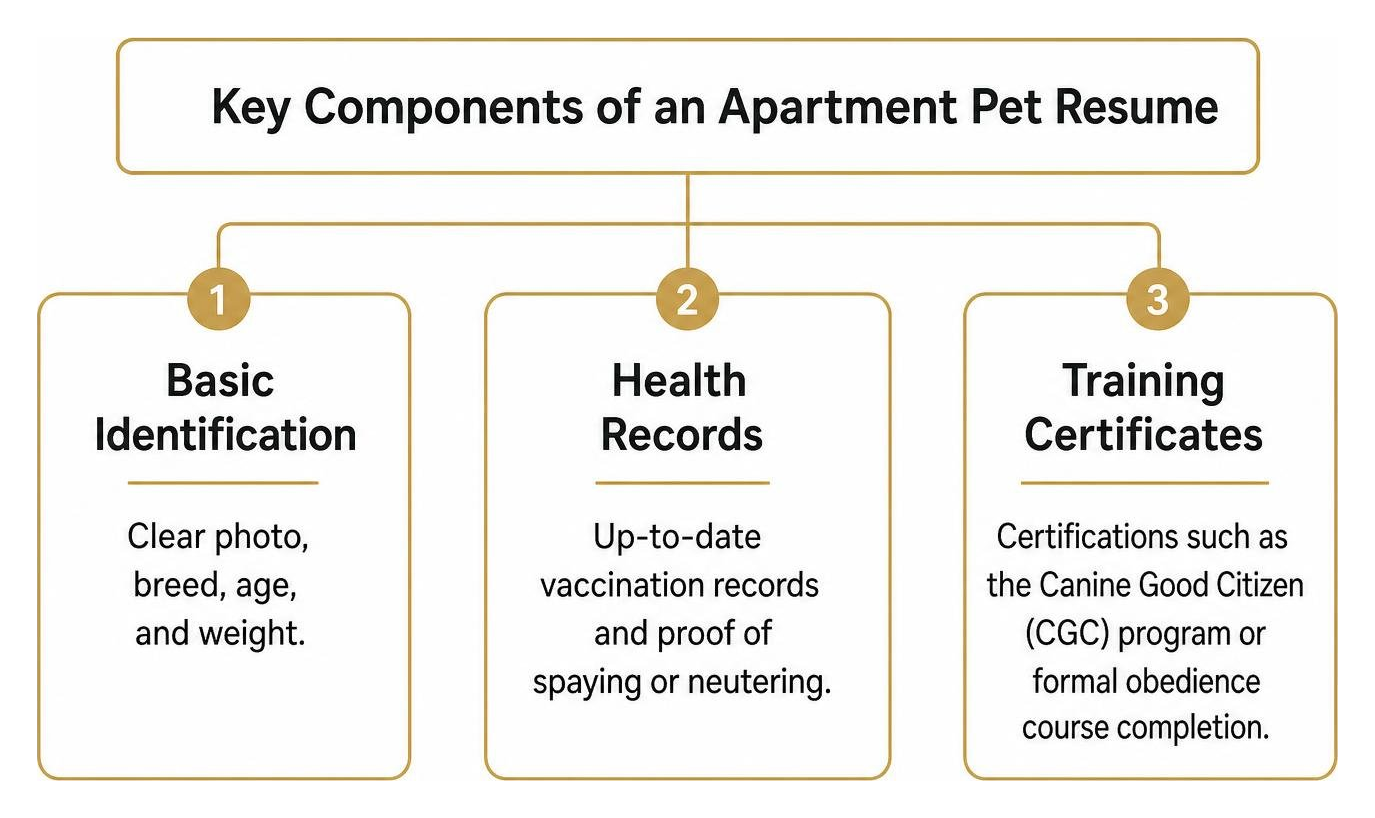
A comprehensive pet resume should include:
- Basic Identification: A clear photograph, breed description, age, and weight.
- Health Records: Up-to-date vaccination records, veterinary certificates, and proof of spaying or neutering.
- Training Certificates: Certifications such as the American Kennel Club Canine Good Citizen (CGC) program or formal obedience course completion certificates.
- Landlord References: Written statements from prior landlords confirming responsible pet ownership, lack of property damage, and courteous noise levels.
Creating a complete pet portfolio is equally helpful for cat owners. For detailed tips on preparing feline documentation, consult our cat friendly apartments guide 2026.
Assistance Animals and Fair Housing Rights
Under federal regulations, specifically the Fair Housing Act, service animals and emotional support animals (ESAs) are categorized differently than standard household pets. Assistance animals provide vital task assistance or emotional support to individuals with disabilities.
Key legal rights and responsibilities under federal housing guidelines include:
- Exemption from Pet Fees: Property managers cannot charge pet deposits, non-refundable pet fees, or monthly pet rent for documented assistance animals.
- Reasonable Accommodation: Landlords must make reasonable accommodations in rules and policies, allowing qualified assistance animals even in properties with standard animal restrictions.
- Third-Party Verification: Communities may request valid verification from a qualified healthcare professional or utilize professional third-party screening services to verify legitimate accommodation requests.
- Behavioral Standards: Assistance animals must remain under owner control at all times and adhere to community health, safety, and hygiene standards.
Top Amenities and City Strategies for Pet Owners

Finding the ideal home involves evaluating both the individual apartment unit and surrounding neighborhood amenities. Properties designed thoughtfully with pets in mind offer specialized features that make daily care convenient, efficient, and enjoyable for residents.
Finding Animal Friendly Apartments in High-Demand Markets
Competitive housing markets feature a wide selection of animal friendly apartments, but demand for well-located units remains consistently high. To secure an optimal unit in active urban settings:
- Set Up Property Alerts: Use digital listing portals to receive immediate notifications when new pet-welcoming units become available.
- Prepare Applications Early: Have your complete pet resume, health records, vaccination history, and landlord references ready to submit alongside your formal rental application.
- Tour Floor Plans Carefully: Look for apartment layouts featuring durable flooring, open living areas, efficient storage, and quick access to outdoor exits, stairs, or elevators.
- Evaluate Neighborhood Walkability: Research nearby parks, pedestrian trails, and veterinary clinics to ensure the broader community fits your daily routine.
Prioritizing Key On-Site Pet Amenities
Dedicated community amenities save valuable time and enhance daily living for both you and your pet. When visiting prospective properties, prioritize features that simplify routines and foster active lifestyles:
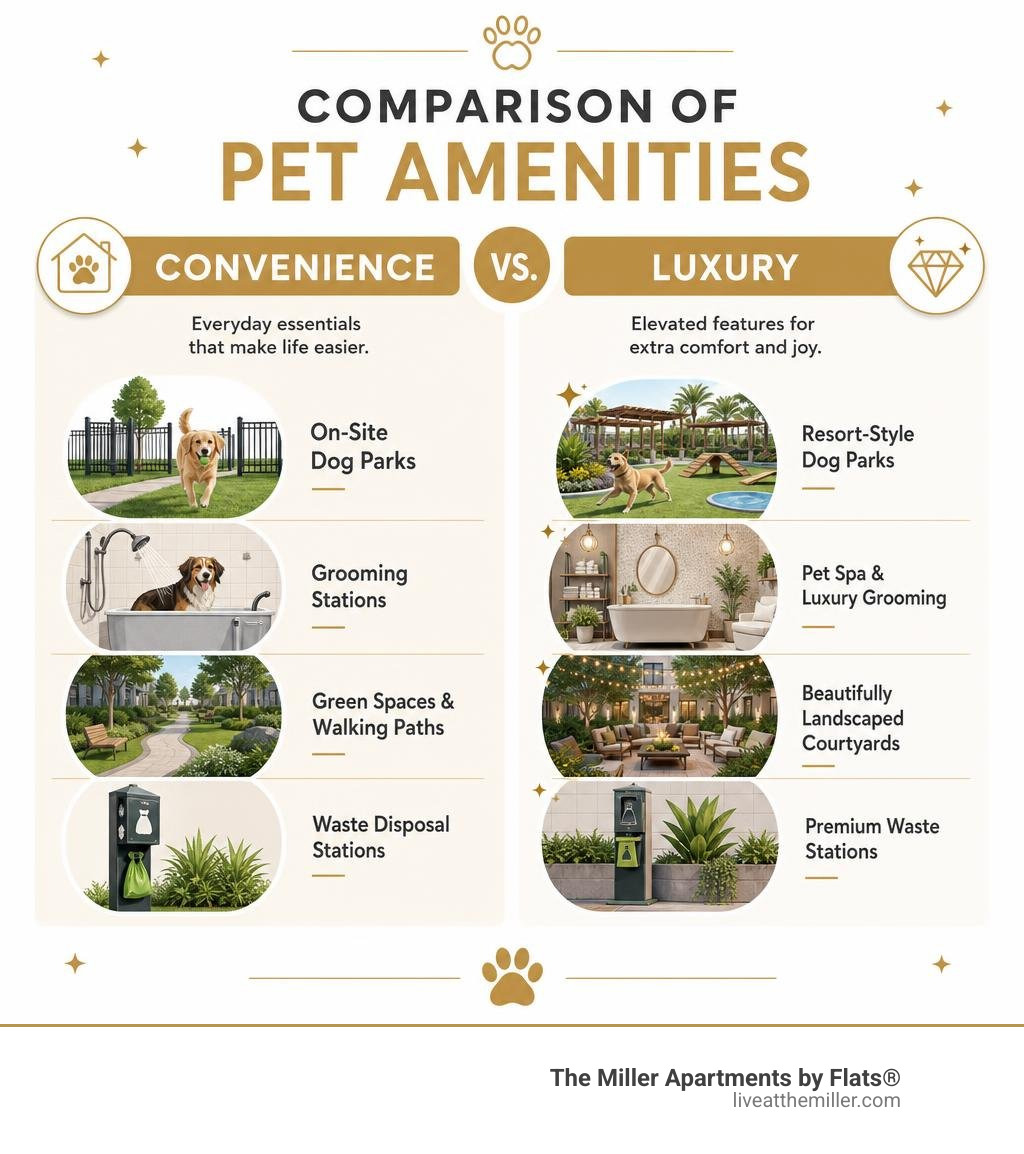
- On-Site Dog Parks: Enclosed, off-leash play areas featuring double-gated entry systems, play structures, and specialized synthetic turf offer safe environments for daily exercise and socialization.
- Grooming Stations: Dedicated pet washing tubs and drying stations keep mess completely out of your personal bathroom. Learn more about upscale bathing facilities by exploring modern apartment pet spa features.
- Green Spaces and Walking Paths: Convenient access to beautifully landscaped courtyards and nearby public parks makes morning and evening walks effortless.
- Waste Disposal Stations: Well-maintained waste stations stocked with cleanup bags keep common grounds clean, hygienic, and pleasant for all residents.
Frequently Asked Questions
Can a landlord legally deny an apartment application because of a pet?
Yes. Private property owners and management companies have the legal authority to establish community pet policies, including general rules regarding pets, unless the animal qualifies as an assistance animal under federal housing regulations. Always confirm specific pet policies directly with leasing representatives prior to submitting application processing fees.
How many pets are typically permitted per rental unit?
Most rental communities cap occupancy at two pets per apartment home. Enforcing a clear limit helps maintain community balance, manage noise levels, ensure sanitary conditions, and keep shared outdoor spaces clean and comfortable for all residents.
Are dog weight limits standard across rental properties?
Weight guidelines vary significantly across different rental properties and management companies. While some traditional communities enforce specific weight caps, many modern residential properties focus primarily on behavior, training credentials, and overall community suitability rather than weight metrics alone.
Conclusion
Finding animal friendly apartments requires careful preparation, clear communication, and a thorough understanding of lease details and fee structures. By researching deposit and rent requirements, preparing a detailed pet portfolio, and evaluating community amenities, pet owners can secure a comfortable, modern living environment with complete confidence.
For renters seeking refined contemporary living in the Pacific Northwest, The Miller Apartments offers luxury residences in the vibrant Vancouver Waterfront neighborhood of Vancouver, WA. Blending contemporary architectural design with the city's rich industrial heritage, the community features sophisticated home interiors alongside premier wellness amenities, including a peaceful day spa, high-end fitness center, and professional coworking lounge. Its prime waterfront location provides exceptional convenience, elevated comfort, and direct access to scenic outdoor walking trails, delivering an extraordinary apartment home experience for residents and their companions.